The findings of the Housing Works survey, released earlier this month, suggest that the cost of housing is a pervasive concern among Americans, even if Americans aren't sure they support the kinds of measures necessary to improve the problem.


J.B. Wogan reports on the "How Housing Works" survey, conducted by Hart Research Associates on behalf of the MacArthur Foundation. The big take away from the study: " A majority of Americans (58 percent) think their state and local governments should do more to ensure communities have enough affordable housing."
"The survey's results also suggest that the insufficient supply of affordable housing isn’t just a problem for the urban poor. About 58 percent of respondents said they thought it would be difficult for a family of four earning $50,000 a year -- about twice the poverty line -- to find quality affordable housing in their communities. Even when accounting for the type of community (city, suburbs, small town or rural), the majority of respondents said it was challenging to find quality affordable housing to rent or buy."
But here's a catch: when it came to suggesting the types of changes necessary to increase the supply of housing in some areas, the study "suggests that communities aren’t supportive of changes to zoning that would allow for increases in supply to decrease the cost of units." In fact, "[more] respondents (52 percent) said they favored keeping the current zoning in place than removing regulations (36 percent) or doing both (9 percent)."
Read the full story: Americans Say States, Localities Need to Do More to Promote Affordable Housing
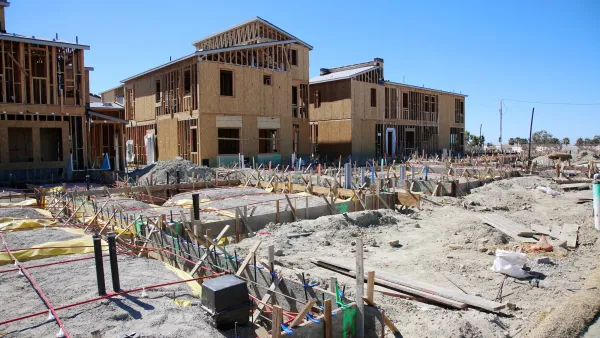
Less than 6% of California cities are building enough housing for very low-income households
Only five jurisdictions are on track to meet their housing goals for all income brackets.

Analysis: ROAD to Housing Act could take years to implement
HUD is tasked with implementing nine new rules as part of the ROAD to Housing Act — while operating with a significantly reduced staff.
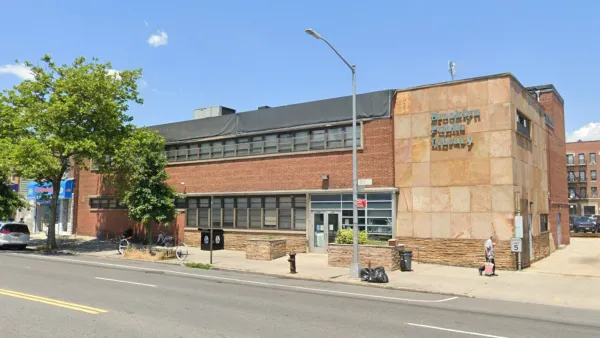
Mayor Mamdani unveils map of 100 public lots that could become housing
The city identified properties that could be available for new housing development.

Planetizen Federal Action Tracker
A weekly monitor of how Trump’s orders and actions are impacting planners and planning in America.

Eastern Nebraska is running out of electricity
Data centers and electrification are straining eastern Nebraska’s grid, throttling economic development.

Study reveals best places in the U.S. for cycling, walking
New research from Streetlight Data examines bicycle and pedestrian miles per capita in the 100 largest U.S. cities by population.

DSA members accuse Mamdani of 'abandoning values' over housing redevelopment
New York City's mayor plans to replace about 2,000 units of public housing with private, mixed-income housing.

All sides of BRT debate unhappy with CDOT’s most recent move
The Colorado Department of Transportation is no longer considering center-running bus lanes for Colorado Boulevard.

Massachusetts bogs generate both power, and cranberries
Putting solar panels above farmland is one way Massachusetts is advancing toward its goal of net-zero carbon emissions by 2050.

FREE Course: Walkable City 1: Why Walkability?
After describing his path towards focusing on walkability as the essence of good planning, Jeff Speck marches through his five principal reasons for making more walkable places.
Reinventing Malls: Planning Alchemy—Turning Gray Fields Into Gold
The course focuses on the opportunities and imperatives that shape reinvention of mall sites.

City of Rosemead
Rutgers University, Edward J. Bloustein School of Planning and Public Policy
One Hundred Miles
University of Michigan School for Environment and Sustainability (SEAS)
Hunter College, City University of New York (CUNY)
The Architects Foundation
City of Cambridge
The Pocatello Development Authority
The Urban Renewal Agency of the City of Pocatello