A Dallas News editorial supports the Dallas Integrated Trail Circuit—a plan to link existing trails in the city into a 250-mile continuous loop.


"Imagine a loop of trails, almost 250 miles long, that could take you all around Dallas," says the editorial. To complete the loop would require 90 miles of links between existing trails.
"City Hall is looking for $120 million in private support. It will pitch in $80 million of its own, assuming it can collect $33 million in the next bond program." According to the editorial, Park and Recreation Director Willis Winters "has had conversations with top fundraisers who believe the goal is realistic because the value of trails has proven to be so high."
The editorial supports the cause because it could be a game changer for Dallas quality of life: "An entire loop of trails around the city also would truly change mobility in Dallas…the Dallas Integrated Trail Circuit, would mean that there is no end of the line. Hop on a bike or tie on your running shoes, and you can get to every corner of the city with hardly a street to cross."
Read the full story: Editorial: Aggressive plan to build out Dallas trail system is a winner
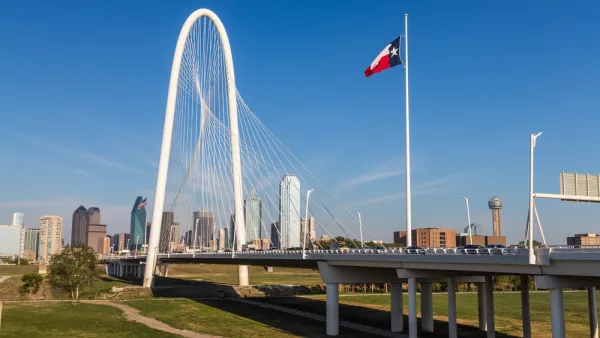
Plan to Link 50 Miles of Dallas Trails Seeks City Partnership to Complete Funding
Dallas' Circuit Trail Conservancy has raised $23 million dollars to fund the construction of connectors that would link 50 miles of trails, now they're looking for an additional $20 million in bond money to get the project fully funded.
Closing Gaps in the Florida Greenways and Trails System
The recent purchase of land to close gaps in the Florida Greenways and Trails System resulted from partnerships between state, regional and county governments to protect land for recreation and conservation in the Sunshine State.
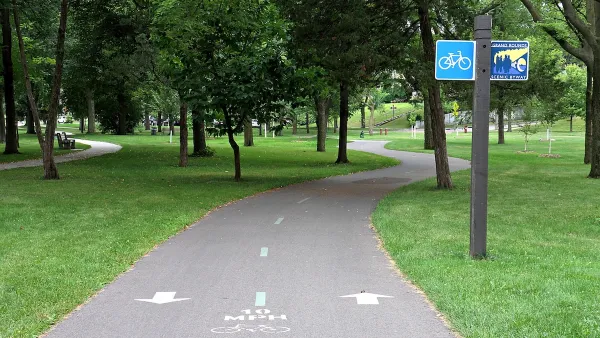
How to Make Greenways Better
Adding amenities such as public restrooms and shade trees can make greenways like Detroit’s Joe Louis Greenway more inviting and comfortable for their users.

Planetizen Federal Action Tracker
A weekly monitor of how Trump’s orders and actions are impacting planners and planning in America.

California plans to bury El Niño’s downpour
If the state plays its cards right, it may be able to store a billion acre-feet of El Niño’s water in aquifers.

Desperate measures: Advocates weigh draining Lake Powell to fill Colorado River
Draining the reservoir could reduce evaporation losses by a couple hundred thousand acre-feet.

Los Angeles just elected an urban planner as its mayor
Transportation analysts are optimistic that Raman will be more aggressive in addressing transit issues than Bass.

Mamdani’s pied-à-terre tax survives legal challenge
A panel of judges found that the plaintiffs failed to demonstrate injury as a result of New York City's implementation of the tax.

Eastern Nebraska is running out of electricity
Data centers and electrification are straining eastern Nebraska’s grid, throttling economic development.

FREE Course: Walkable City 1: Why Walkability?
After describing his path towards focusing on walkability as the essence of good planning, Jeff Speck marches through his five principal reasons for making more walkable places.
Reinventing Malls: Planning Alchemy—Turning Gray Fields Into Gold
The course focuses on the opportunities and imperatives that shape reinvention of mall sites.

City of Rosemead
Rutgers University, Edward J. Bloustein School of Planning and Public Policy
One Hundred Miles
University of Michigan School for Environment and Sustainability (SEAS)
Hunter College, City University of New York (CUNY)
The Architects Foundation
City of Cambridge
Montrose County
The Pocatello Development Authority