"What does a city look like drawn in trees?" Cambridge, Massachusetts recently released an exhaustive database of all the trees on public property around the city.


The Boston Globe shares insights into the data contained in the Camridge Tree Map. For instance, "[the] most common are maple, honeylocust, and oak, with a healthy scattering of ornamental fruit and berry trees." The article includes a very colorful map, among other infographics, of the "density of blossoms" around the city.
"The map doesn’t include every tree in the city: It skips the many in private yards and on university property. But what remains is an intriguing snapshot of how a bird, a bee, or an ambitious grain of pollen might experience the city."
The database, released to the public in April, follows a seven-year effort by the Cambridge Department of Public Works.
Read the full story: A tree map of Cambridge
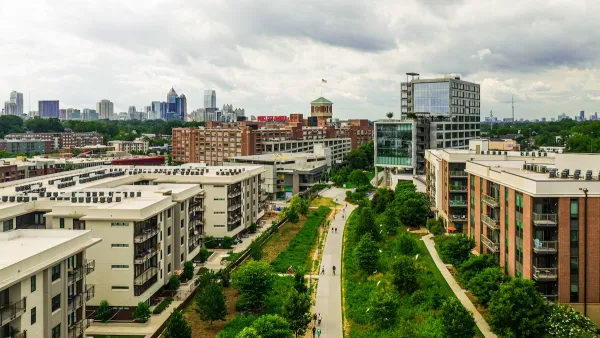
Mapping Georgia’s Urban Forests
Georgia Tech’s latest urban canopy assessment for Atlanta uses high-resolution mapping and a Potential Planting Index to guide data-driven tree preservation.
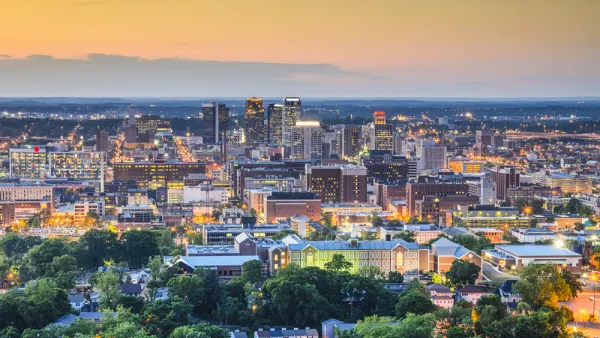
How Data is Helping Protect Campus Trees
The University of Alabama at Birmingham is using GIS technology, student engagement, and sustainability-driven planning to manage and protect its nationally recognized urban forest.
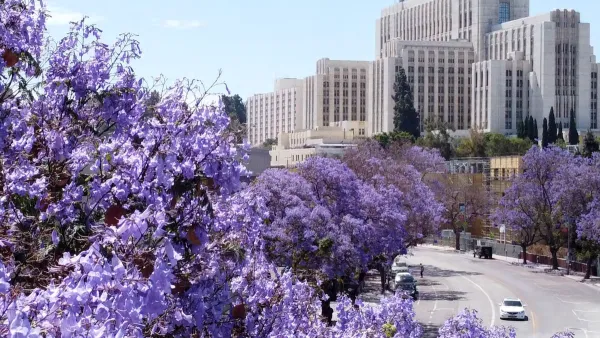
LA County Releases Draft Community Forest Management Plan
LA County's Chief Sustainability Office just released the discussion draft of Room to Grow, the first Community Forest Management Plan for the county.

Planetizen Federal Action Tracker
A weekly monitor of how Trump’s orders and actions are impacting planners and planning in America.

California plans to bury El Niño’s downpour
If the state plays its cards right, it may be able to store a billion acre-feet of El Niño’s water in aquifers.

Desperate measures: Advocates weigh draining Lake Powell to fill Colorado River
Draining the reservoir could reduce evaporation losses by a couple hundred thousand acre-feet.

Post election, Texas is no longer Musk’s 'AI oasis'
Elon Musk dolled out $446 million on the 2026 midterms, the most ever spent by a non-canidate.

Chicago voters approve permanent festival grounds, penalty for vacant property owners
Currently, major summer and fall festivals take over public parks for weeks at a time, drawing criticism from nearby residents

NYC votes to cut outdoor dining red tape, speed up permitting
New York City also voted to allow the Department of Transportation to begin work on urgent projects before notifying elected officials.

FREE Course: Walkable City 1: Why Walkability?
After describing his path towards focusing on walkability as the essence of good planning, Jeff Speck marches through his five principal reasons for making more walkable places.
Reinventing Malls: Planning Alchemy—Turning Gray Fields Into Gold
The course focuses on the opportunities and imperatives that shape reinvention of mall sites.

City of Rosemead
Rutgers University, Edward J. Bloustein School of Planning and Public Policy
One Hundred Miles
Hunter College, City University of New York (CUNY)
The Architects Foundation
University of Cincinnati Online
City of Cambridge
Montrose County
The Pocatello Development Authority