Part funny, part amusing, and part just plain cool, goat towers are vertical structures with winding ramps that goats love to climb. They are also are “an idea whose time has come” according to a recent article in Modern Farmer.


“A set of towers, spread across the globe, have given goats the opportunity to make good on their evolutionary heritage and farmers a chance to leave an unforgettable impression on visitors. And don't worry -- there hasn't been a single report of the goats falling,” writes Sam Brasch.
Fernando Guedes da Silva da Fonseca built the first such structure in the 19th century in Portugal, but goat towers have since been constructed in South Africa, Norway, Illinois, Wisconsin, and Tennessee. Fairview Wine and Cheese in South Africa’s tower is one of the most recognizable components of its brand, and, yes, there is even a chef in this world with a goat tower tattoo.
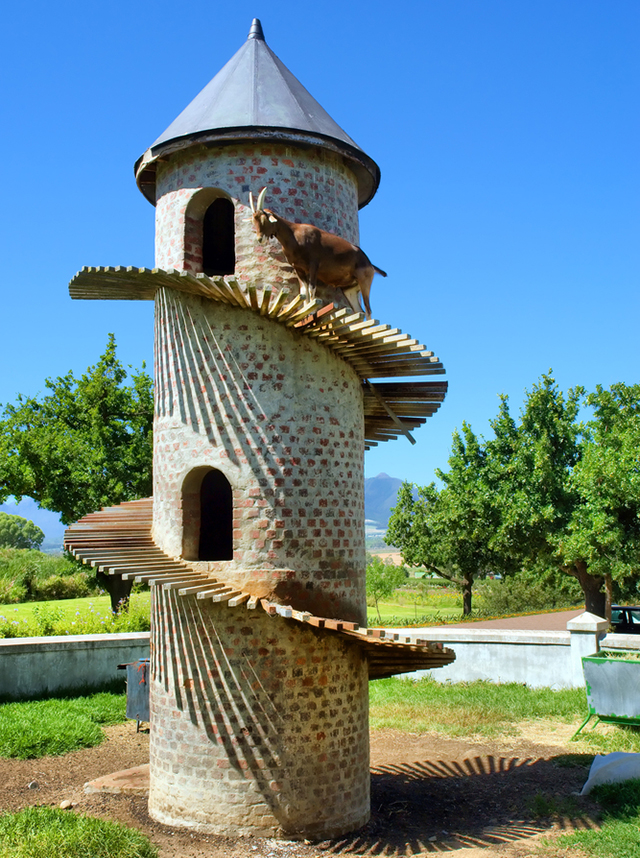
Read the full story: Goat Towers: An Idea Whose Time Has Come

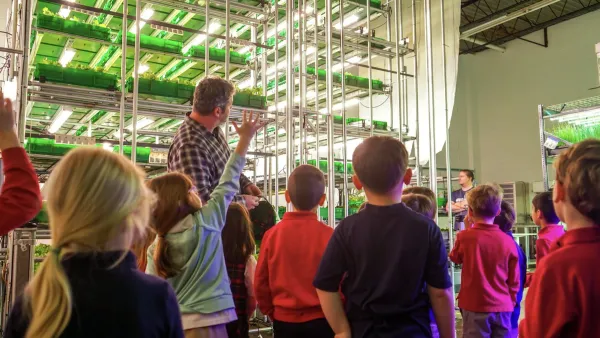
A Multimillion Dollar Virginia Company is Turning Empty Office Buildings Into Farms
Area 2 Farms envisions a world where 90% of the U.S. population lives within 10 miles of an indoor farm.
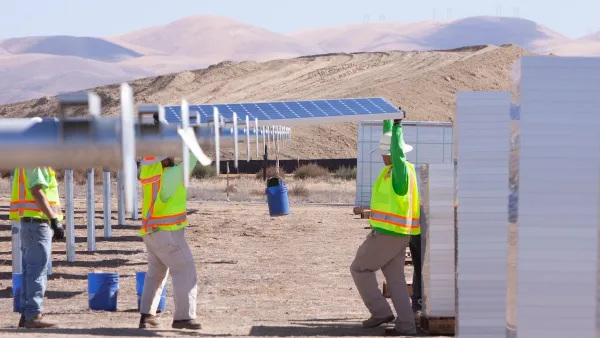
21 Climate Resilience Projects Cancelled by the EPA
The federal government has pulled funding for at least 21 projects related to farming, food systems, and environmental justice to comply with one of Trump’s early executive orders.
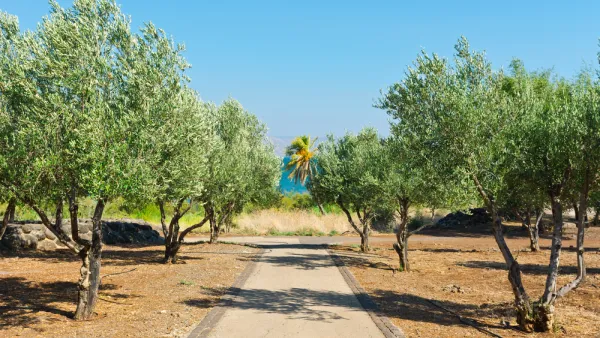
An Agrihood Takes Root in Palm Springs
Developer Freehold Communities is planning a suburban farming community in California's Sonora Desert.

Amtrak, CN end decades-long dispute with eight-year agreement
The new operating agreement establishes an updated framework for the companies to work together, including processes to resolve disputes.

Judges permit Denver to divert 77,000 acre feet from the Colorado River for reservoir expansion
Overuse and climate change have caused the Colorado River’s water levels to plummet.
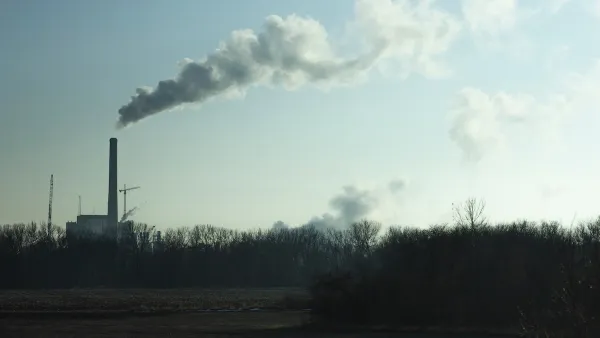
Nation's most wind-powered state turns to coal as data centers increase energy demand
For the first time in decades, Iowa has increased its generation of coal power.

Boston has spent millions making the Green Line more accessible — and there’s no end in sight
While the city has invested millions into expanding and adding platforms to the Green Line to make it more accessible, new train cars set to arrive next year will be too tall for disabled passengers to board without raising the current platforms.

Idaho may see an 18% drop in federal surface transit funding — the largest estimated cut in the US
Transit systems in rural communities are much more reliant on federal funding to provide their services.

How ‘post-disaster gentrification’ alters neighborhoods after natural calamities
After hurricanes, fires or other calamities, the original residents of a community are often replaced by younger, wealthier residents.

FREE Course: Walkable City 1: Why Walkability?
After describing his path towards focusing on walkability as the essence of good planning, Jeff Speck marches through his five principal reasons for making more walkable places.
Reinventing Malls: Planning Alchemy—Turning Gray Fields Into Gold
The course focuses on the opportunities and imperatives that shape reinvention of mall sites.

City of Wisconsin Rapids
Harvard University Graduate School of Design
KFH Group Inc.
The Architects Foundation
University of Cincinnati Online
The Pocatello Development Authority
The Urban Renewal Agency of the City of Pocatello