With the bonds from the Tampa Convention Center to be paid off in 2015, Tampa will soon have $100 million to spend in its Downtown Community Reinvestment Area. How should the city invest in its downtown?


Linda Paul-Sena asks the question: how should Tampa spend $100 million “to encourage economic vibrancy in our urban core.”
“Would you select one big project, say a baseball stadium or its parking structure, where this princely sum becomes a dowry to woo the Rays?” asks Paul-Sena.
Or, “Do you choose a series of projects like parks, public art, wider sidewalks, capital needs of city-owned cultural facilities, like the Straz and the Tampa Theatre — all smaller in scale, intended to boost activity throughout the area?”
The article also surveys city council members, local planners, and other local stakeholders for their opinions, and asks for public opinion on the question via the article’s comment board and social media.
Read the full story: The $100 Million Magic Wand
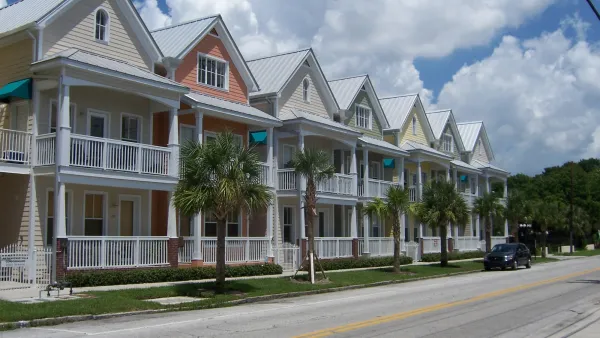
Tampa Awards 60% of Tampa Infill Housing Program Lots to Black Builders
The program encourages private-public partnerships that develop new, attainably priced housing on vacant and blighted lots.
Popular Tampa Bus Route Going Fare-Free
The initiative, which starts on January 5, is funded by parking fees.
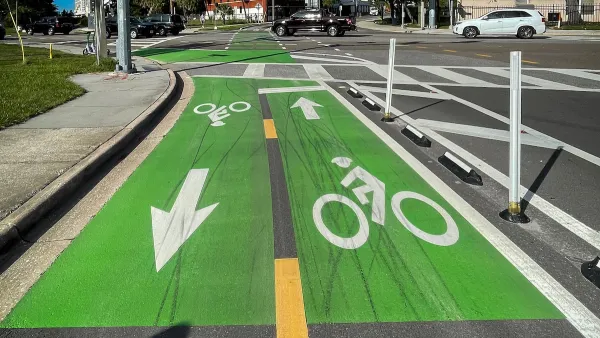
Tampa Road Safety Efforts Pay Off
The city’s Vision Zero initiative, bolstered by federal Safe Streets funds, has led to a significant drop in traffic deaths.

Desperate measures: Advocates weigh draining Lake Powell to fill Colorado River
Draining the reservoir could reduce evaporation losses by a couple hundred thousand acre-feet.

Eastern Nebraska is running out of electricity
Data centers and electrification are straining eastern Nebraska’s grid, throttling economic development.

Malls are becoming the midtowns of the future
Mall and office park redevelopments are a generational opportunity to create new nodes of urbanity.

Houston gains petal-shaped cooling infrastructure to make streets more ‘delightful’
The city has installed the pavilions along 15 blocks in Houston.

After years of opposition to light rail, this L.A. city wants a $200 million station
Cerritos officials want the Southeast Gateway Line, a planned 14.5-mile light rail route through Los Angeles County, to stop in their city.

SpaceXAI may be fined $6 million for data center lacking water permits
A Mississippi agency also responds after a federal judge criticized the state’s Clean Air Act enforcement.

FREE Course: Walkable City 1: Why Walkability?
After describing his path towards focusing on walkability as the essence of good planning, Jeff Speck marches through his five principal reasons for making more walkable places.
Reinventing Malls: Planning Alchemy—Turning Gray Fields Into Gold
The course focuses on the opportunities and imperatives that shape reinvention of mall sites.

City of Rosemead
Rutgers University, Edward J. Bloustein School of Planning and Public Policy
One Hundred Miles
University of Michigan School for Environment and Sustainability (SEAS)
Hunter College, City University of New York (CUNY)
The Architects Foundation
City of Cambridge
Montrose County
The Pocatello Development Authority