In cities like Houston, officials are utilizing established transmission right of ways (ROWs) to provide walking and biking trails without the land acquisition challenges that typically confront urban areas looking to expand their open spaces.


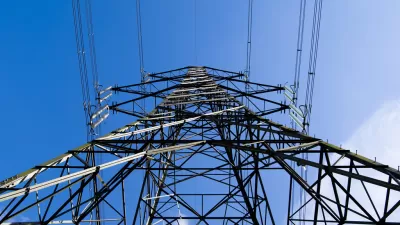
"Urban real estate is an extremely valuable commodity, and if the land was not claimed for public recreational use years ago, it is likely to never happen," observes Will Kirby. "Residents place a very high value on having open spaces and recreational areas in cities, but typically are not willing to have a city spend exorbitant amounts in order to provide them."
"One major solution to this dilemma can be found in carved out corridors which are mostly ignored: power transmission line right of ways (ROWs). Today there are dozens of public walking and biking trails that follow transmission ROWs, but with proper guidance, awareness, and demonstrated successes there could be hundreds more for the public to enjoy."
Read the full story: Trail Corridors and Land Acquisition
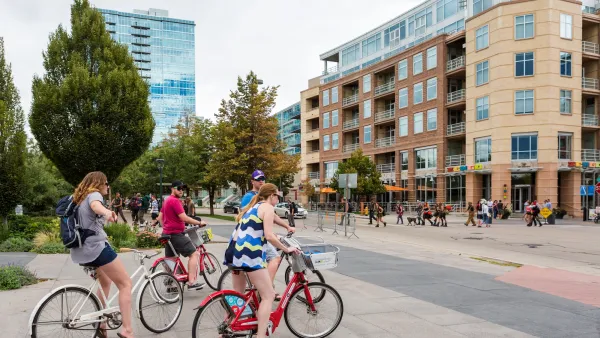
Denver mayor announces 'Mile High Line' vision for interconnected bike and transit routes
The mayor emphasized building more housing near transit lines and bike paths, but failed to address planned transit service cuts.
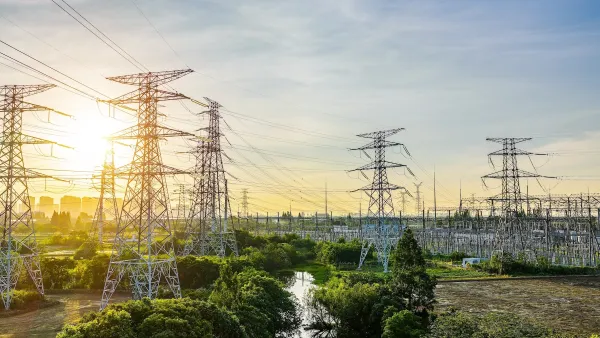
When can a power company take your land for data center infrastructure?
Meeting data center power demands will mean building more transmission lines and acquiring more land to put them on.
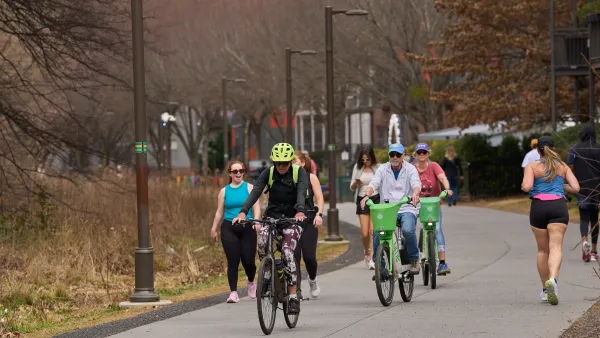
Atlanta could add dedicated bike lane to Beltline
A city councilmember says a dedicated lane would prevent conflicts between cyclists and pedestrians, but others worry it would impede efforts to build transit along the Beltline.

Planetizen Federal Action Tracker
A weekly monitor of how Trump’s orders and actions are impacting planners and planning in America.

California plans to bury El Niño’s downpour
If the state plays its cards right, it may be able to store a billion acre-feet of El Niño’s water in aquifers.

Desperate measures: Advocates weigh draining Lake Powell to fill Colorado River
Draining the reservoir could reduce evaporation losses by a couple hundred thousand acre-feet.

Los Angeles just elected an urban planner as its mayor
Transportation analysts are optimistic that Raman will be more aggressive in addressing transit issues than Bass.

Mamdani’s pied-à-terre tax survives legal challenge
A panel of judges found that the plaintiffs failed to demonstrate injury as a result of New York City's implementation of the tax.

Eastern Nebraska is running out of electricity
Data centers and electrification are straining eastern Nebraska’s grid, throttling economic development.

FREE Course: Walkable City 1: Why Walkability?
After describing his path towards focusing on walkability as the essence of good planning, Jeff Speck marches through his five principal reasons for making more walkable places.
Reinventing Malls: Planning Alchemy—Turning Gray Fields Into Gold
The course focuses on the opportunities and imperatives that shape reinvention of mall sites.

City of Rosemead
Rutgers University, Edward J. Bloustein School of Planning and Public Policy
One Hundred Miles
University of Michigan School for Environment and Sustainability (SEAS)
Hunter College, City University of New York (CUNY)
The Architects Foundation
City of Cambridge
Montrose County
The Pocatello Development Authority