Though their lack of emissions is admirable, the knock on electric vehicles is that their power is likely derived from dirty sources. Could a new solar-powered car unveiled by Ford kick-start the era of renewable energy-powered transportation?


Ariel Schwartz reports on Ford's new C-MAX Solar Energi Concept, which was unveiled last week. The concept vehicle is "a version of the C-MAX plug-in hybrid that's outfitted with 16 square feet of photovoltaic panels on its roof. The vehicle, which takes six to seven hours to charge fully, can run on solar energy for 21 miles before switching to gasoline."
Though the car's lengthy charging period and limited range limit its practicality, there's reason to be optimistic. "In theory, there are a few advantages compared to traditional plug-in electric vehicles," Schwartz explains. "Solar-powered cars are cheaper, since they don't require costly power from utilities, and they are guaranteed to be powered by 100% renewable energy."
In an article in the San Francisco Chronicle, John O'Dell, senior editor for the Edmunds.com auto information website, was circumspect in his analysis: "It sounds like an interesting experiment. I'm not sure it has much real-world application."
Thanks to Irvin Dawid
Read the full story: Is Ford's Solar Car The Holy Grail For Renewable Energy-Powered Transportation?
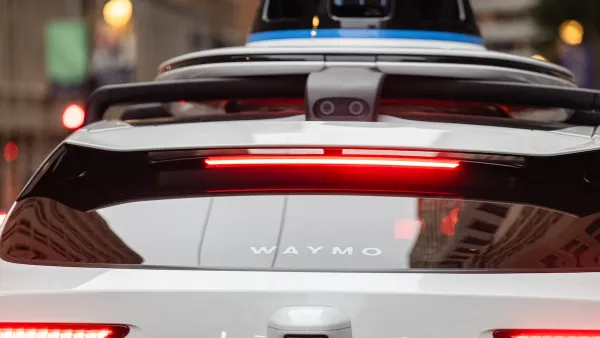
NHTSA Launches Investigations Into Two More Self-Driving Automakers
The federal agency is responding to reports of crashes and erratic behavior from Waymo and Zoox vehicles.
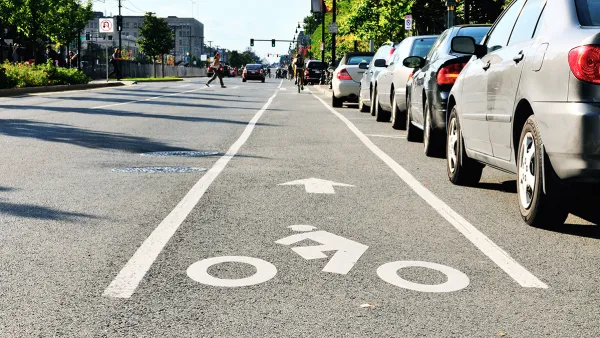
Ford Introduces Dooring Prevention Feature
The company’s 2024 Mustang models will include an Exit Warning to prevent drivers from hitting cyclists when opening their doors.
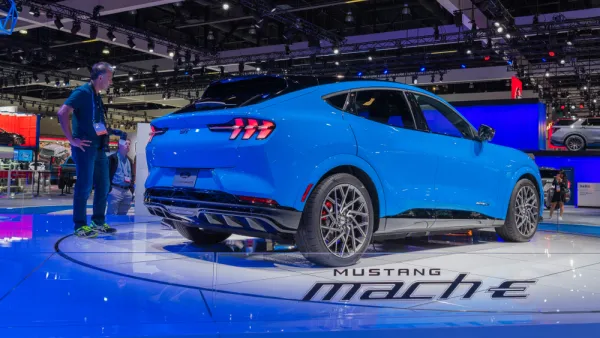
Ford Wants to Be First in the Affordable Electric Vehicle Market
The latest wave of popular electric vehicles, think Teslas and GMC Hummer EVs, are well outside of the price range of normal, thrifty Americans. Ford wants to change that.

Planetizen Federal Action Tracker
A weekly monitor of how Trump’s orders and actions are impacting planners and planning in America.

California plans to bury El Niño’s downpour
If the state plays its cards right, it may be able to store a billion acre-feet of El Niño’s water in aquifers.

Desperate measures: Advocates weigh draining Lake Powell to fill Colorado River
Draining the reservoir could reduce evaporation losses by a couple hundred thousand acre-feet.

Los Angeles just elected an urban planner as its mayor
Transportation analysts are optimistic that Raman will be more aggressive in addressing transit issues than Bass.

Mamdani’s pied-à-terre tax survives legal challenge
A panel of judges found that the plaintiffs failed to demonstrate injury as a result of New York City's implementation of the tax.

Eastern Nebraska is running out of electricity
Data centers and electrification are straining eastern Nebraska’s grid, throttling economic development.

FREE Course: Walkable City 1: Why Walkability?
After describing his path towards focusing on walkability as the essence of good planning, Jeff Speck marches through his five principal reasons for making more walkable places.
Reinventing Malls: Planning Alchemy—Turning Gray Fields Into Gold
The course focuses on the opportunities and imperatives that shape reinvention of mall sites.

City of Rosemead
Rutgers University, Edward J. Bloustein School of Planning and Public Policy
One Hundred Miles
University of Michigan School for Environment and Sustainability (SEAS)
Hunter College, City University of New York (CUNY)
The Architects Foundation
City of Cambridge
Montrose County
The Pocatello Development Authority