New apartment developments are popping up in cities like Boston, Seattle, and Miami without one key feature: on-site parking. These projects prove that providing parking isn't necessary to lure residents, even in cities not named New York.


Angie Schmitt looks at some of the recent projects in Seattle, Miami, and Boston that demonstrate the viability, and increasing attraction, of parking-free housing. The types of projects taking advantage of relaxed zoning regulations aren't monolithic either.
In Seattle, Blueprint Capital has been able to take advantage of lower construction costs to build more affordable housing. The company's "California Avenue development, for instance, is targeted at people making 60 percent of area median income, or about $15 per hour," says Schmitt.
"Parking-free housing is attracting buyers at the upper end of the spectrum too," she adds. "Luxury apartments and condos are now appearing in cities like Miami and Portland without any car parking."
Read the full story: Real Estate Trend: Parking-Free Apartment Buildings
Highway Removals to Become More Difficult
Following highly publicized urban highway removal success stories like Boston's Big Dig and San Francisco's Embarcadero, Anthony Flint asks whether similar successes will be easy to duplicate.
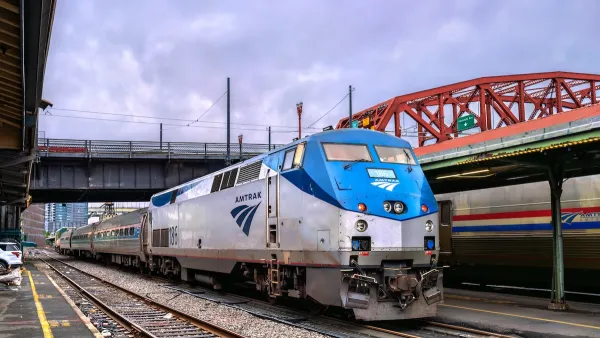
Transit leaders progress high-speed rail from Portland to Vancouver, B.C.
Washington state officials may reveal feasible routes for the high-speed rail in late 2027.
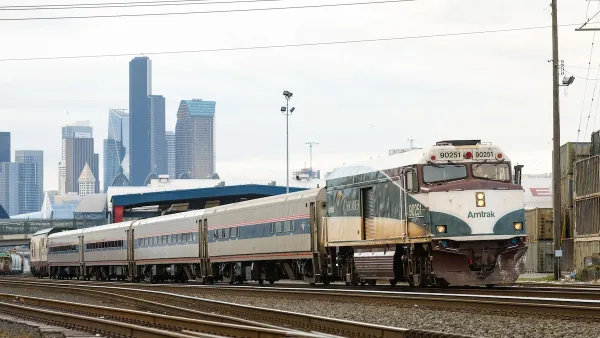
Amtrak Cascades Line Breaks Ridership Record
The route linking Portland, Seattle, and Vancouver, BC served nearly one million riders in 2024.

Desperate measures: Advocates weigh draining Lake Powell to fill Colorado River
Draining the reservoir could reduce evaporation losses by a couple hundred thousand acre-feet.

Eastern Nebraska is running out of electricity
Data centers and electrification are straining eastern Nebraska’s grid, throttling economic development.

Move over, LA: St. Louis gears up for Olympics, invests millions in downtown redevelopment
The Missouri city will host the 2028 Olympic soccer group stage and knockout matches.

Mass. votes against statewide minimum lot size for single-family homes
Over 2 million residents voted on Question 7; it was decided by just over 30,000 votes.

Maryland’s $15 billion bridge project gains key approval
The Maryland Transit Authority said the project will create over 60,000 jobs and add $23 billion to the local economy.

‘No clear next steps’ for Chicago's permanent festival grounds
Eleventh Ward Ald. Nicole Lee has suggested Soldier Field as a possible location for the permanent event space.

FREE Course: Walkable City 1: Why Walkability?
After describing his path towards focusing on walkability as the essence of good planning, Jeff Speck marches through his five principal reasons for making more walkable places.
Reinventing Malls: Planning Alchemy—Turning Gray Fields Into Gold
The course focuses on the opportunities and imperatives that shape reinvention of mall sites.

City of Rosemead
Rutgers University, Edward J. Bloustein School of Planning and Public Policy
One Hundred Miles
University of Michigan School for Environment and Sustainability (SEAS)
Hunter College, City University of New York (CUNY)
The Architects Foundation
City of Cambridge
Montrose County
The Pocatello Development Authority