Following a path blazed by Oregon Trail and other classic educational video games, SimCity is hoping to become a common classroom tool. Thousands of students are testing a tailored version of the game, and the results are promising.


"SimCity, the venerable urban planning simulator, is positioning itself as a Swiss Army knife for teachers," writes Brian Fung. "Not only does it aim to convey basic skills such as arithmetic, but an understanding of complex systems such as the economy, the environment and the relationships that tie them together. It's a new supplement for schools that tries to be more comprehensive in scope and more conscious of the challenges our children will someday face."
Thousands of students across the U.S. are testing SimCityEDU, a specially tailored edition of SimCity that limits the game's functionality to convey specific concepts and deliver data on students' performance.
"On top of the critical thinking and other academic skills we associate with schooling, SimCityEDU may hold unexplored benefits for emotional development," adds Fung.
"Students are just blown away by the engagement," said Jessica Lindl, who oversees a five-member partnership of academic entities and gaming companies. "It's as engaging as stuff they do outside the classroom. They get really emotionally connected to the citizens and their city — they feel like they're being treated like adults because they have this opportunity to manage and save. It's a responsibility they don't traditionally get in the classroom."
Read the full story: SimCity wants to be the killer app of the classroom

10 urbanist video games that aren’t Sim City
Sim City may have inspired an entire generation of urban planners — but these games have perfected the art of city-building simulation.
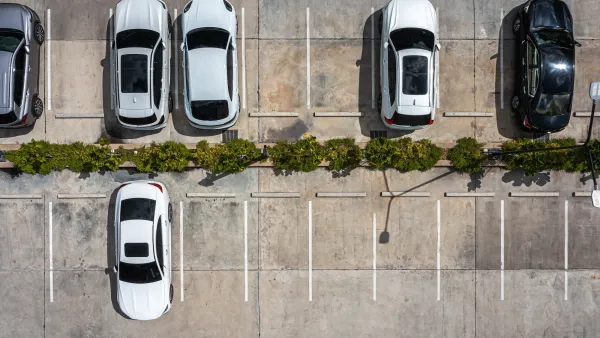
Who Wants to Play SimParkingLot?
The original urban planning game wanted to model real life cities. One grim reality of American urbanism held it back.
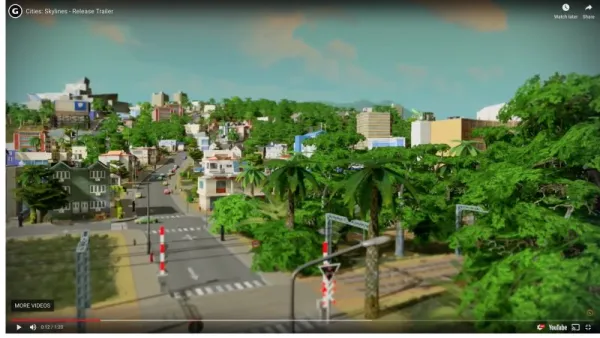
Cities: Skylines as an Urban Planning Tool
Computer simulations continue to play a novel and important role in urban planning, especially in finding new ways to engage the public and add some fun to the process of planning for the future of cities.

Planetizen Federal Action Tracker
A weekly monitor of how Trump’s orders and actions are impacting planners and planning in America.

Eastern Nebraska is running out of electricity
Data centers and electrification are straining eastern Nebraska’s grid, throttling economic development.

Study reveals best places in the U.S. for cycling, walking
New research from Streetlight Data examines bicycle and pedestrian miles per capita in the 100 largest U.S. cities by population.

DSA members accuse Mamdani of 'abandoning values' over housing redevelopment
New York City's mayor plans to replace about 2,000 units of public housing with private, mixed-income housing.

All sides of BRT debate unhappy with CDOT’s most recent move
The Colorado Department of Transportation is no longer considering center-running bus lanes for Colorado Boulevard.

Massachusetts bogs generate both power, and cranberries
Putting solar panels above farmland is one way Massachusetts is advancing toward its goal of net-zero carbon emissions by 2050.

FREE Course: Walkable City 1: Why Walkability?
After describing his path towards focusing on walkability as the essence of good planning, Jeff Speck marches through his five principal reasons for making more walkable places.
Reinventing Malls: Planning Alchemy—Turning Gray Fields Into Gold
The course focuses on the opportunities and imperatives that shape reinvention of mall sites.

City of Rosemead
Rutgers University, Edward J. Bloustein School of Planning and Public Policy
One Hundred Miles
University of Michigan School for Environment and Sustainability (SEAS)
Hunter College, City University of New York (CUNY)
The Architects Foundation
City of Cambridge
The Pocatello Development Authority
The Urban Renewal Agency of the City of Pocatello