Ben Protess and Jessica Silver-Greenberg provide a breakdown of how JPMorgan's $13 billion settlement over its sale of bad mortgage investments will be distributed to various public entities. How much will trickle down to struggling homeowners?


"The biggest winner is the Federal Housing Finance Agency, which took control of Fannie Mae and Freddie Mac when the companies collapsed in 2008," note Protess and Silver-Greenberg. "JPMorgan agreed to make a 'lump sum payment' of $4 billion “payable to Freddie Mac and Fannie Mae, divided between them,' according to the settlement agreement."
Another large chunk ($4 billion) will go towards helping homeowners. "Half of that sum, or $2 billion, will go toward reducing the balance of mortgages and halting the collection of mortgage payments," Protess and Silver-Greenberg explain. "The remaining $2 billion in homeowner relief, according to the Justice Department, will focus on reducing interest rates on existing loans, offering new loans to low-income home buyers and demolishing abandoned homes to curb urban blight."
The United States Treasury, the National Credit Union Administration, the Federal Deposit Insurance Corporation, and several states will also receive a share of the settlement.
Read the full story: Where Does JPMorgan’s $13 Billion Go?

New Book Examines Public Housing as a Locus of Political Power
A new book, "Diverging Space for Deviants," connects public housing with political power.
Surprising New Research on Gentrification in Houston
Affluent areas face more demolitions than gentrifying areas in Houston and Harris County, according to the findings of a new report from the Kinder Institute of Urban research.
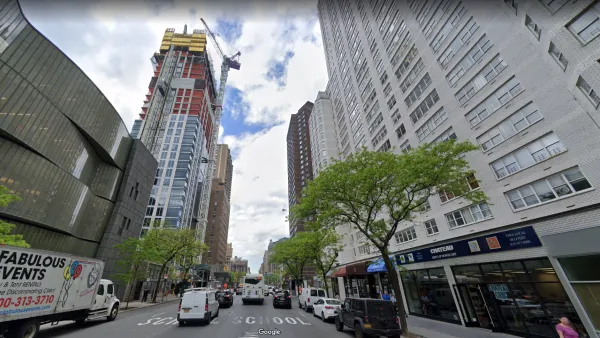
Court Will Decide Whether to Reduce NYC Skyscraper's Height
The new skyscraper being built at 200 Amsterdam Avenue in Manhattan might be forced by an appeals court to remove 20 floors of the mostly complete building.

Planetizen Federal Action Tracker
A weekly monitor of how Trump’s orders and actions are impacting planners and planning in America.

Amtrak, CN end decades-long dispute with eight-year agreement
The new operating agreement establishes an updated framework for the companies to work together, including processes to resolve disputes.

Judges permit Denver to divert 77,000 acre feet from the Colorado River for reservoir expansion
Overuse and climate change have caused the Colorado River’s water levels to plummet.

Philadelphia to invest $2 billion into upgrading city airports as PHL places last in customer satisfaction
Modernizations to Philadelphia's airports will include baggage system upgrades and a new automated parking garage guidance system.

The LA housing policies making developers turn away from the city
Despite LA’s housing shortage, developers say the city’s "mansion-tax" and pandemic-era policies make it an unappealing place to build housing.

New density bill would require 7 California cities to establish regional transit hubs
The bill would also require major cities in California to permit high-rise residential buildings.

FREE Course: Walkable City 1: Why Walkability?
After describing his path towards focusing on walkability as the essence of good planning, Jeff Speck marches through his five principal reasons for making more walkable places.
Reinventing Malls: Planning Alchemy—Turning Gray Fields Into Gold
The course focuses on the opportunities and imperatives that shape reinvention of mall sites.

City of Wisconsin Rapids
Harvard University Graduate School of Design
KFH Group Inc.
The Architects Foundation
University of Cincinnati Online
The Pocatello Development Authority
The Urban Renewal Agency of the City of Pocatello