Save your ink if you're writing a letter to the editor of the Los Angeles Times - deniers have now been warned that the paper won't print letters 'that say there's no sign humans have caused climate change'.


Paul Thornton, letters editor, writes that the policy is not new - it just caught the attention of, well, the climate change deniers, and they aren't happy. The policy, "(letters) that say there's no sign humans have caused climate change do not get printed" was cited in a "letters postscript" on Obamacare.
Thornton writes to clarify that the "no letters from climate change deniers" policy was his, as Noel Sheppard at NewsBusters ("the leader in documenting, exposing and neutralizing liberal media bias") had ascribed that policy to the wrong Los Angeles Times editorial writer in his blog that blasted the policy.
Thornton clarifies the Times policy on printing letters from climate change deniers and the reason for it.
As for letters on climate change, we do get plenty from those who deny global warming. And to say they "deny" it might be an understatement: Many say climate change is a hoax, a scheme by liberals to curtail personal freedom.
Thornton explains that he relies on the experts, citing "the Intergovernmental Panel on Climate Change -- a body made up of the world's top climate scientists -- said it was 95% certain that we fossil-fuel-burning humans are driving global warming. The debate right now isn't whether this evidence exists (clearly, it does) but what this evidence means for us."
Finally, Thornton distinguishes opinions from falsehoods in the letters he selects for publication in his paper.
Simply put, I do my best to keep errors of fact off the letters page; when one does run, a correction is published. Saying "there's no sign humans have caused climate change" is not stating an opinion, it's asserting a factual inaccuracy.
Read the full story: On letters from climate-change deniers
Decades of Curbed Archives are Gone
The urban-focused publication amplified important voices discussing urbanism and development. Many of those articles are now unavailable.

There’s a New Type of Climate Denial—and It’s Spreading
The good news is the climate movement is winning the argument that climate change is happening; the bad news is the deniers have a new strategy.
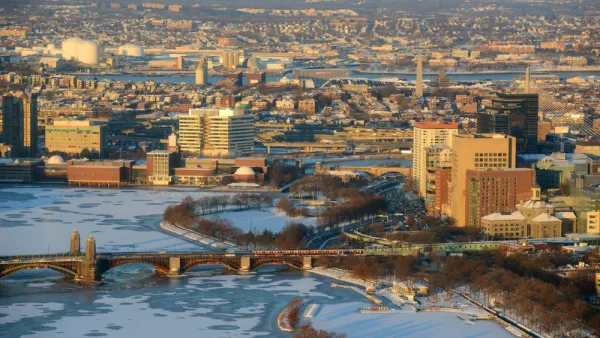
Tracking Boston’s Emissions Reduction Progress
The Boston Foundation published the “Inaugural Boston Climate Progress Report” earlier this month. Other U.S. cities should follow their lead.

Planetizen Federal Action Tracker
A weekly monitor of how Trump’s orders and actions are impacting planners and planning in America.

California plans to bury El Niño’s downpour
If the state plays its cards right, it may be able to store a billion acre-feet of El Niño’s water in aquifers.

Desperate measures: Advocates weigh draining Lake Powell to fill Colorado River
Draining the reservoir could reduce evaporation losses by a couple hundred thousand acre-feet.

Chicago voters approve permanent festival grounds, penalty for vacant property owners
Currently, major summer and fall festivals take over public parks for weeks at a time, drawing criticism from nearby residents

NYC votes to cut outdoor dining red tape, speed up permitting
New York City also voted to allow the Department of Transportation to begin work on urgent projects before notifying elected officials.

California appears to reject Prop. 45
The proposition would have expanded the projects that qualify for a streamlined environmental review, effectively paring down the California Environmental Quality Act.

FREE Course: Walkable City 1: Why Walkability?
After describing his path towards focusing on walkability as the essence of good planning, Jeff Speck marches through his five principal reasons for making more walkable places.
Reinventing Malls: Planning Alchemy—Turning Gray Fields Into Gold
The course focuses on the opportunities and imperatives that shape reinvention of mall sites.

City of Rosemead
Rutgers University, Edward J. Bloustein School of Planning and Public Policy
One Hundred Miles
Hunter College, City University of New York (CUNY)
The Architects Foundation
University of Cincinnati Online
City of Cambridge
Montrose County
The Pocatello Development Authority