Many D.C. commuters were saddened to learn in July that hundreds of flowers surreptitiously planted at an area Metro station would be removed by officials. But has the city's "Phantom Planter" had the last laugh?


"Early this summer, guerrilla gardener Henry Docter surreptitiously planted 1,000 flowering plants in the long, tubelike entryway to the Dupont Circle Metro station. He did it, he said, to beautify the prominent but shabbily kept public space. Metro officials waited a couple of weeks before yanking out the hundreds of morning glories and other plants in July, prompting more than 10,000 supporters to sign a “Let Our Flowers Grow” petition."
Seeking "artistic closure", Docter and a "young collaborator" suspended "a 6-by-6-by-4-foot boxlike artwork, which was covered with quotes about the July flower standoff" above the Q Street entrance of the Dupont Circle Metro station on Sunday. Docter's act of closure "wound up being a merger of performance art, civil disobedience and fodder for a bunch of strangers to have an impromptu Sunday chat about government power and the need for unexpected beauty," reports Michelle Boorstein.
Read the full story: Metro pulled out his flowers, but guerrilla gardener pops back up in Dupont Circle

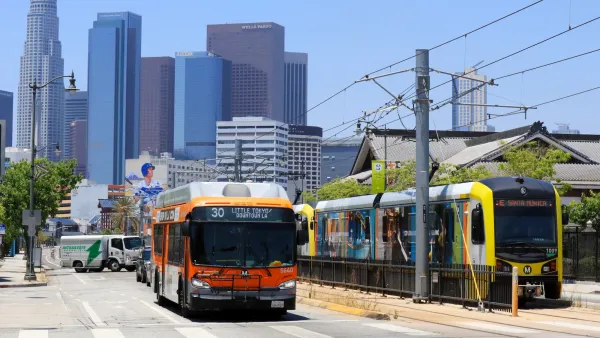
LA Metro Increases Highway Expansion Budget by 40%
Metro has plans to expand freeways including the 5, 105, and 405, among others.
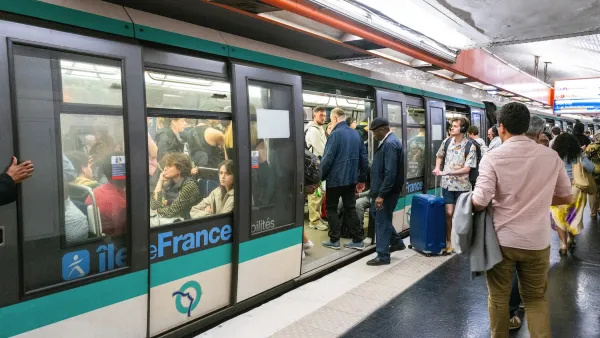
Study: Metro Systems Cut Driving Significantly More Than Other Forms of Transit
European cities with subway systems have a much lower share of car trips than cities with tram- or bus-based transit systems.
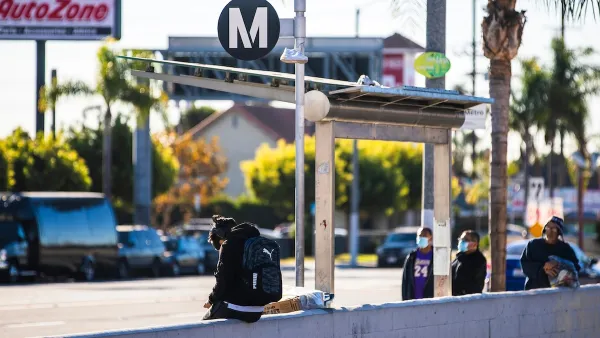
LA Bus Ridership Keeps Dropping as ICE Raids Continue
Bus boardings fell for a second month amid fears of immigration raids.

Planetizen Federal Action Tracker
A weekly monitor of how Trump’s orders and actions are impacting planners and planning in America.

California plans to bury El Niño’s downpour
If the state plays its cards right, it may be able to store a billion acre-feet of El Niño’s water in aquifers.

Chicago breaks ground on $3 billion megadevelopment
The new neighborhood, titled Foundry Park, will one day host 3,700 residences.

This road in NYC is infamously dangerous — and Mamdani can't fix it
New York City's Ocean Parkway is known for reckless driving, but the power to implement safety measures lies with the state rather than the city.

One of Denver’s busiest corridors to gain BRT
The project will span 18 miles and contain 74 bus rapid transit stations.

275,000 bus trips are at stake on Seattle's ballot
If passed, the Seattle Transit Measure would trigger a 0.3% sales tax and raise an average of $138 million per year to maintain and expand Seattle’s bus services.

FREE Course: Walkable City 1: Why Walkability?
After describing his path towards focusing on walkability as the essence of good planning, Jeff Speck marches through his five principal reasons for making more walkable places.
Reinventing Malls: Planning Alchemy—Turning Gray Fields Into Gold
The course focuses on the opportunities and imperatives that shape reinvention of mall sites.

City of Rosemead
Rutgers University, Edward J. Bloustein School of Planning and Public Policy
One Hundred Miles
Hunter College, City University of New York (CUNY)
The Architects Foundation
University of Cincinnati Online
City of Cambridge
Montrose County
The Pocatello Development Authority