The opening of a "striking" new boathouse designed by noted architect Jeanne Gang along the Chicago River is a major milestone in the transformation of the city's "Ol’ Pisspot” into a public amenity.


"The evolution of the Chicago River from 'the Stinky,' as it was once called, to the city’s second watery playground, has the makings of a rags-to-riches story. The river, like those in most American metropolises, long served as an industrial transport system," writes Lori Rotenberk.
Beginning with the creation of Chicago River Development Plan under Mayor Richard M. Daley, the transformation of the river has continued with Mayor Rahm Emanuel's efforts to "turn the waterway a into the city’s next recreational frontier."
A series of four new boathouses, including Gang's Clark Park facility, reflect Chicago's embrace of the river as a centerpiece of the city, rather than “a back alleyway filled with sewage and trash.”
Read the full story: Chicago turns “the Ol’ Pisspot” into a watery urban playground

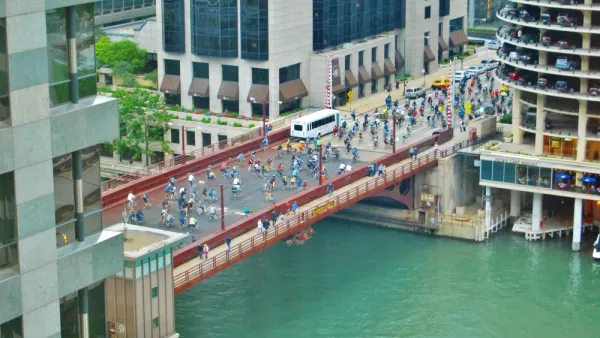
Chicago Sources River Ideas from Citizens
The Metropolitan Planning Council of Chicago wants to get in on the recent upswing in crowdsourced planning solutions. They are looking to the public for input on the Chicago river system's future.
Are Visions of a Thriving Chicago River Just Pipe Dreams?
Engineering marvel, polluted sewer, magnet for development - the Chicago River has worn many hats in its day. For its next role, can it become an "example of environmental innovation and ecological stewardship"?
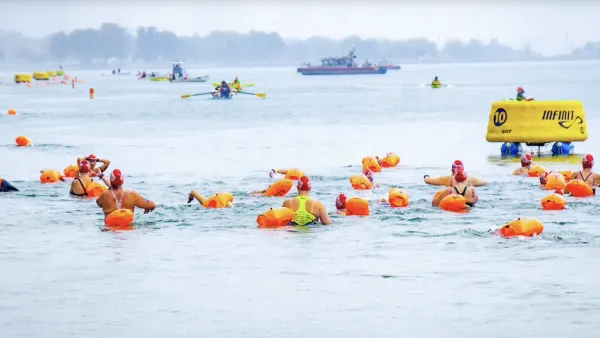
Chicago River Clean Enough for Swimming for the First Time in 98 Years
A historic two-mile river race through downtown highlighted the success of decades-long efforts to clean up the city’s river.

Planetizen Federal Action Tracker
A weekly monitor of how Trump’s orders and actions are impacting planners and planning in America.

Amtrak, CN end decades-long dispute with eight-year agreement
The new operating agreement establishes an updated framework for the companies to work together, including processes to resolve disputes.

Judges permit Denver to divert 77,000 acre feet from the Colorado River for reservoir expansion
Overuse and climate change have caused the Colorado River’s water levels to plummet.

NYC DOT wants faster, more permanent street upgrades
The city is examining ways to build more concrete infrastructure without getting entangled in 'decades-long' projects.

'Something we’ve never seen before:' rising utility rates could strain city finances nationwide
Data centers, climate change and other factors have caused utility rates in the United States to increase by 38% since 2020.

Trump to overrule local leaders, lease millions of acres of America’s Pacific Island territories’ seafloors to mining companies
International law says that the Indigenous people of America’s territories have a right to prior and informed consent regarding projects that impact their countries.

FREE Course: Walkable City 1: Why Walkability?
After describing his path towards focusing on walkability as the essence of good planning, Jeff Speck marches through his five principal reasons for making more walkable places.
Reinventing Malls: Planning Alchemy—Turning Gray Fields Into Gold
The course focuses on the opportunities and imperatives that shape reinvention of mall sites.

Harvard University Graduate School of Design
KFH Group Inc.
Greater Baltimore Committee
The Architects Foundation
University of Cincinnati Online
The Pocatello Development Authority
The Urban Renewal Agency of the City of Pocatello