In the United States, homeownership has long been touted as a sign of personal success and national prosperity. But a comparison of homeownership levels to economic health across 41 countries shows an inverse correlation.



Using data from Pew and the World Bank, Richard Florida and Charoltta Mellander have reached some surprising findings regarding homeownership and economic development.
Their research indicates that "[l]ess developed countries have consistently higher levels of homeownership, while more advanced nations combine higher levels of economic development with substantially lower levels of homeownership." For example, Switzerland, "which has the lowest rate of homeownership among the countries Pew studied, is one of the the world's richest and most advanced countries..." While less-developed Eastern European nations like Slovakia and Lithuania have some of the highest homeownership levels.
"American political rhetoric tends to equate rising homeownership rates with strong economic development," adds Florida. "Instead, the opposite is true. The rate of homeownership declines as nations get wealthier."
Read the full story: Why the U.S. Needs to Fall Out of Love With Homeownership

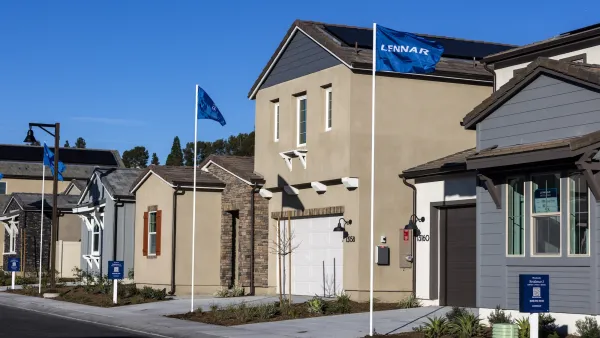
Just 17% of San Diego households can afford the city's $1M+ median home prices
The city is becoming increasingly unaffordable to prospective homebuyers.
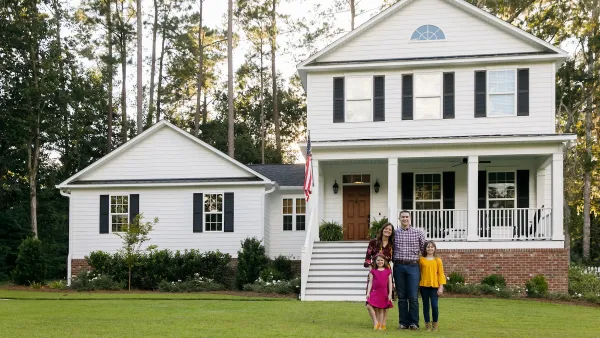
Report: Housing is becoming an 'inherited advantage'
As housing costs soar, buying a home is becoming unaffordable to a large swath of American families.
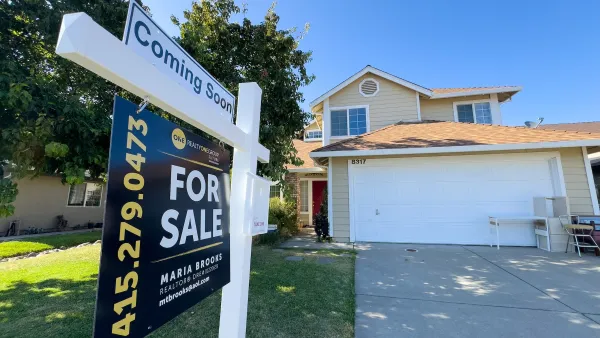
'Starter' homes cost over $1M in 242 US cities
Once concentrated in coastal regions, cities with starter homes valued at over $1 million are now spread across 26 states.

Planetizen Federal Action Tracker
A weekly monitor of how Trump’s orders and actions are impacting planners and planning in America.

‘Going backwards:’ Baltimore mayor, students rally against state's transit funding plan
Maryland's proposed six-year plan provides no funding for Baltimore’s BMORE bus program and reduces its road maintenance funding.

Detroit to transform waterfront with $2.2 billion investment
Developers will convert about 18 acres of unused parking lot space into civic spaces.

U.S.-Iran war may have ‘devastating’ impact on cost to warm homes
Vermont and Maine residents may see a 76% increase in the cost of warming their homes this winter.

Senate bill would ‘overhaul’ environmental permitting laws
Under the proposed act, government agencies would also not be able to suspend or rescind permits after granting them.

Exemption applications for NYC’s pied-à-terre tax see 55% success rate
The city sent nearly 40% of its initial pied-à-terre tax warnings erroneously.

FREE Course: Walkable City 1: Why Walkability?
After describing his path towards focusing on walkability as the essence of good planning, Jeff Speck marches through his five principal reasons for making more walkable places.
Reinventing Malls: Planning Alchemy—Turning Gray Fields Into Gold
The course focuses on the opportunities and imperatives that shape reinvention of mall sites.

One Hundred Miles
County of Mendocino
planning NEXT
The Architects Foundation
University of Cincinnati Online
Montrose County
Northern Illinois Transit Authority (NITA)
The Pocatello Development Authority