With increasing fares, delays and an "awful" service on Sundays, the British Transport Secretary Patrick McLoughlin isn't the only commuter unhappy with the service and admits that the expediency of HS2 was exaggerated.


With his constituency in Derbyshire, Patrick McLoughlin spends a great deal of time experiencing the delays, overcrowding and high costs of travelling by train in the UK. Travelling off peak on a Sunday, when many services experience severe delays due to engineering works regularly scheduled for the quietest day on the network, was described as "awful".
The proposed High Speed 2 (HS2) train is expected to relieve some of the overcrowding that exists as a result of passenger journeys doubling over the last two decades, reaching 1.5 billion in 2012-13. With 4,000 people a day having to stand up until they reach London Euston and 5,000 people standing until they arrive at Birmingham New Street, McLoughlin sees this as the main selling point for HS2. He admits that the shorter journey times were "wrong", and blames a PR blunder.
The minister also rejects the claims that the budget for the project had doubled to £70 billion, stating that "the budget is now set: £42.6bn to build the railway, £7.5bn for the rolling stock." The National Audit Office will publish a report on Monday 9th September, in which it is expected to criticise the project.
Read the full story: My train commute 'drives me bloody crackers', says Patrick McLoughlin
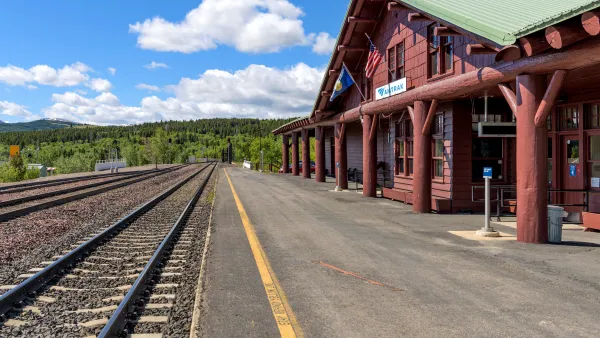
More Passenger Rail Coming to Montana
Planning is underway to restore a 45-year-defunct regional passenger rail line connecting southern Montana to Billings and Amtrak’s east-west Empire Builder line from Seattle to Chicago.
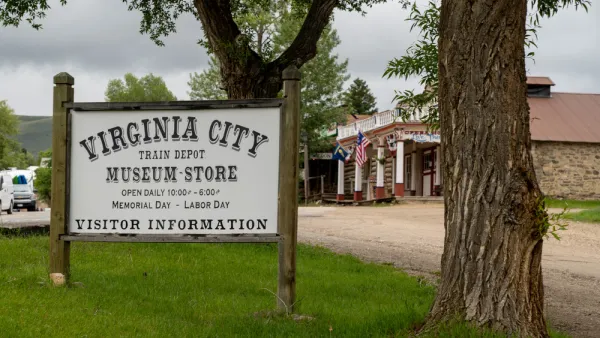
Montana Coalition Wants to Revive Passenger Rail
Supporters of the Big Sky Passenger Rail Authority argue that a new train could spur economic development and provide a valuable service for the state's non-driving residents.
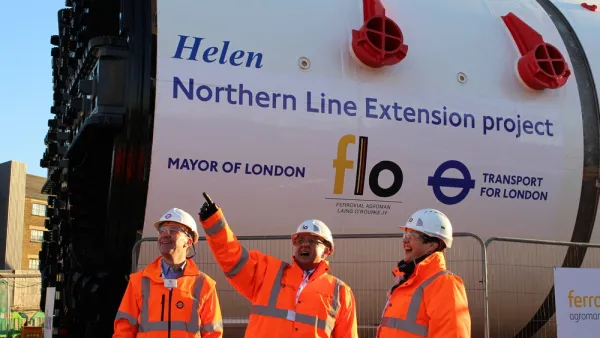
Ready, Set, Dig: the Northern Line Extension on the London Underground
This March, London will start six months of digging for a two-stop extension of the city's underground train system.

Planetizen Federal Action Tracker
A weekly monitor of how Trump’s orders and actions are impacting planners and planning in America.

Eastern Nebraska is running out of electricity
Data centers and electrification are straining eastern Nebraska’s grid, throttling economic development.

Study reveals best places in the U.S. for cycling, walking
New research from Streetlight Data examines bicycle and pedestrian miles per capita in the 100 largest U.S. cities by population.

DSA members accuse Mamdani of 'abandoning values' over housing redevelopment
New York City's mayor plans to replace about 2,000 units of public housing with private, mixed-income housing.

All sides of BRT debate unhappy with CDOT’s most recent move
The Colorado Department of Transportation is no longer considering center-running bus lanes for Colorado Boulevard.

Massachusetts bogs generate both power, and cranberries
Putting solar panels above farmland is one way Massachusetts is advancing toward its goal of net-zero carbon emissions by 2050.

FREE Course: Walkable City 1: Why Walkability?
After describing his path towards focusing on walkability as the essence of good planning, Jeff Speck marches through his five principal reasons for making more walkable places.
Reinventing Malls: Planning Alchemy—Turning Gray Fields Into Gold
The course focuses on the opportunities and imperatives that shape reinvention of mall sites.

City of Rosemead
Rutgers University, Edward J. Bloustein School of Planning and Public Policy
One Hundred Miles
University of Michigan School for Environment and Sustainability (SEAS)
Hunter College, City University of New York (CUNY)
The Architects Foundation
City of Cambridge
The Pocatello Development Authority
The Urban Renewal Agency of the City of Pocatello