Those well intentioned urban beekeepers trying to prevent colony collapse and contribute to local food movements may actually be doing more harm than good say researchers from the University of Sussex.


"Two British scientists are dumping cold water on campaigns to promote urban beekeeping," writes Dan Charles. "They say that trying to 'help the bees' by setting out more hives is naive and misguided if the bees can't find enough flowers nearby to feed on. You'll just end up with sick and starving bees."
"According to [Francis] Ratnieks and [Karin] Alton, there now are too many bees in London, chasing too few flowers. The scientists are urging well-meaning bee defenders to change their focus: 'To have bees you don't need a bee hive,' they write in The Biologist. 'Just plant bee-friendly flowers such as marjoram ... and lavender in your garden.'"
Read the full story: Why Urban Beekeeping Can Be Bad For Bees


Urban Farming Program Struggles to Sprout
Los Angeles created a tax incentive to promote urban farms on the thousands of vacant lots around the city. So far, the incentive has been given out only four times.

Vertical Farms, Fad or Feast?
Hydroponic indoor farmers hope to charge a premium for plants grown out of season in indoor farms. The notion has generated attention from big investors, but whether or not consumers will follow is an open question.
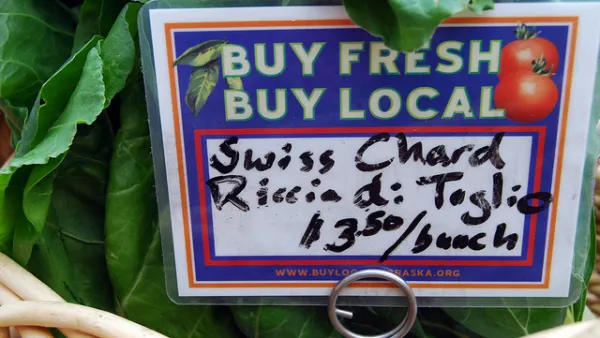
Tax Credits to Encourage Urban Agriculture
Montgomery County, Maryland is the latest municipality to approve an agricultural tax credit to to create incentives for agricultural uses in urban areas.

Planetizen Federal Action Tracker
A weekly monitor of how Trump’s orders and actions are impacting planners and planning in America.

Amtrak, CN end decades-long dispute with eight-year agreement
The new operating agreement establishes an updated framework for the companies to work together, including processes to resolve disputes.

Judges permit Denver to divert 77,000 acre feet from the Colorado River for reservoir expansion
Overuse and climate change have caused the Colorado River’s water levels to plummet.

Northwest rail fans eager for Sept. 30 debut of Amtrak’s Airo fleet
Get ready for that new train smell and more seats. But they won’t go faster or run more frequently on the Cascades route in Washington and Oregon.

NYC DOT wants faster, more permanent street upgrades
The city is examining ways to build more concrete infrastructure without getting entangled in 'decades-long' projects.

'Something we’ve never seen before:' rising utility rates could strain city finances nationwide
Data centers, climate change and other factors have caused utility rates in the United States to increase by 38% since 2020.

FREE Course: Walkable City 1: Why Walkability?
After describing his path towards focusing on walkability as the essence of good planning, Jeff Speck marches through his five principal reasons for making more walkable places.
Reinventing Malls: Planning Alchemy—Turning Gray Fields Into Gold
The course focuses on the opportunities and imperatives that shape reinvention of mall sites.

Harvard University Graduate School of Design
KFH Group Inc.
Greater Baltimore Committee
The Architects Foundation
University of Cincinnati Online
The Pocatello Development Authority
The Urban Renewal Agency of the City of Pocatello