Prime Minister David Cameron is hoping that Britons will support hydraulic fracturing for natural gas, pointing to its use in the US as a success to be replicated. Religious leaders and some conservatives in his party aren't sold.


Cameron hopes to convince a divided British population that fracking will substantially bolster the country's supply of homegrown energy and that risks are minimal.
"The prime minister's vision of bountiful energy supplies from subterranean shale rock plays into the delicate politics of persuading his Conservative followers in the well-padded southeast of the country to accept his argument that, as he put it, 'the huge benefits of shale gas outweigh any very minor changes to the landscape.'
And his advocacy of the new technology, which opponents say risks poisoning groundwater and damaging the environment in other ways, has provoked a collision of faith and economics. Clerics in the northwest — seen as an abundant source of shale gas — have called on congregants to answer to their God and 'engage in biblical and theological discussion about their responsibility as stewards of the earth.'"
Read the full story: 'Fracking' Debate Divides Europe
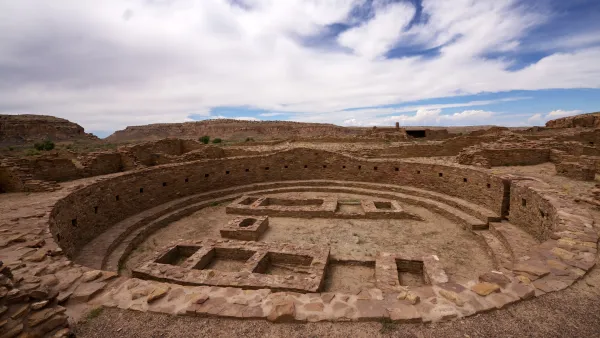
Trump to allow drilling, mining near world heritage site
A UNESCO spokesperson said the world heritage committee has consistently considered mining and drilling near sites to be “incompatible with world heritage status.”
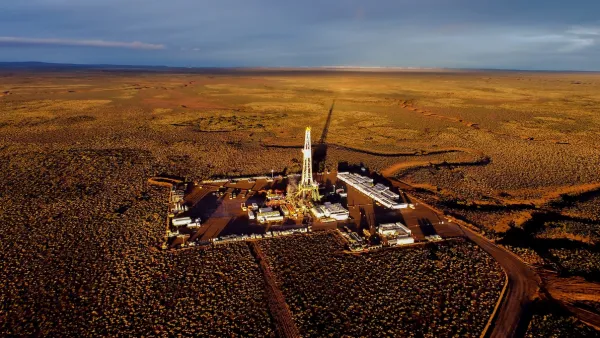
Study: Fracking Chemical Disclosures Prompt More Cautious Behavior
Because toxic chemicals used in fracking can contaminate local water supplies, residents in states that require companies to disclose their materials are more likely to increase their bottled water consumption.
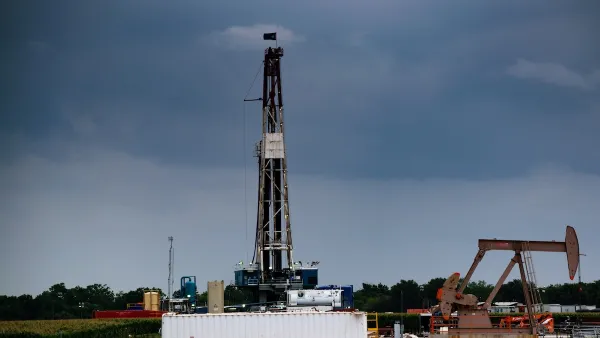
Texas Earthquakes Linked to Fracking
A new study reveals earthquakes that began at shallower depths than previously thought are associated with wastewater disposal sites from fracking operations.

Planetizen Federal Action Tracker
A weekly monitor of how Trump’s orders and actions are impacting planners and planning in America.

Washington state to charge fee to drivers with fuel-efficient cars
Revenue from the fee will go towards supporting the state’s highways.

Trump to blast ‘hydrocarbon highway’ through ‘world’s longest art gallery’
Environmental and historic preservation groups are suing to stop the project.

Minnesota Gold Line extension now has launch date
Plans to extend the Gold Line have existed since 2025.

Data centers need power – lower income, rural residents pay the price
In 2025, data centers paid only 38% of the energy infrastructure costs linked to their growth, with households, especially rural and low-income residents, bearing the remaining burden.

MBTA Green Line project moved to next phrase of CIG program
The modernization effort will cost $4.08 billion.

FREE Course: Walkable City 1: Why Walkability?
After describing his path towards focusing on walkability as the essence of good planning, Jeff Speck marches through his five principal reasons for making more walkable places.
Reinventing Malls: Planning Alchemy—Turning Gray Fields Into Gold
The course focuses on the opportunities and imperatives that shape reinvention of mall sites.

City of Charlotte
City of Rosemead
Rutgers University, Edward J. Bloustein School of Planning and Public Policy
University of Michigan School for Environment and Sustainability (SEAS)
Hunter College, City University of New York (CUNY)
The Architects Foundation
University District Partnership