Police response times average 58 minutes for worst crimes and at times only 10 of the city's 36 ambulances are in service: Detroit's woes extend far beyond its unpaid debts. Many residents are hoping emergency management will bring drastic change.


"As officials negotiate urgently with creditors and unions in a last-ditch effort to spare Detroit from plunging into the largest municipal bankruptcy in the nation’s history, residents say the city has worse problems than its estimated $18 billion debt," writes Monica Davey.
“'The city is past being a city now; it’s gone,' said Kendrick Benguche, whose family lives on a block with a single streetlight, just down from a vacant firehouse that sits beside a burned-out home."
While some residents fret about the impacts of a possible bankruptcy filing, others are ready for drastic change.
“'For a lot of people, I think city government has become a nonentity here,' said Kurt Metzger, the director of Data Driven Detroit, which tracks demographic, economic and housing trends in the region. 'People almost feel like the city goes on in spite of city government — that city government in this case certainly doesn’t define the city — and that affects how they’re feeling about what comes next.'”
Read the full story: Financial Crisis Just a Symptom of Detroit’s Woes

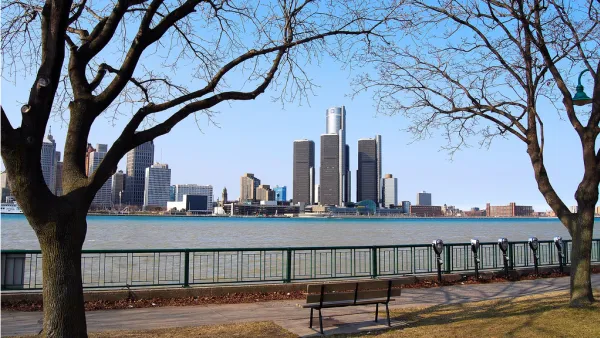
Detroit Still a Long Way from Recovery
It's fun to write miracle comeback stories, but the epic of Detroit's resurgence has been exaggerated, according to an article in The Conversation.
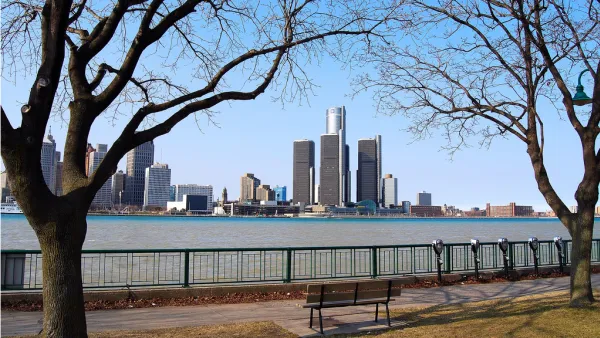
Lessons from Masterminds of Detroit's Rebirth
The enthusiasm of Detroit's new civic leadership, who engineered its bankruptcy and set up its recovery, is infectious. How the city will ultimately fare, and how other troubled cities learn from Detroit's mistakes, remains to be seen.
Judge Allows Detroit Bankruptcy to Proceed
U.S. Bankruptcy Judge Steven Rhodes ruled today that the city of Detroit is eligible for bankruptcy protection, allowing the city to proceed with the largest municipal bankruptcy in U.S. history. Public employee unions are expected to appeal.

Planetizen Federal Action Tracker
A weekly monitor of how Trump’s orders and actions are impacting planners and planning in America.

California plans to bury El Niño’s downpour
If the state plays its cards right, it may be able to store a billion acre-feet of El Niño’s water in aquifers.

Chicago breaks ground on $3 billion megadevelopment
The new neighborhood, titled Foundry Park, will one day host 3,700 residences.

California High-Speed Rail Authority CEO resigns after $600,000 scandal
Under Ian Choudri, the authority used taxpayer dollars to fund first class flights and trips to nightclubs.

Want to study the Missouri River? Soon, you may need unanimous approval from 10 states
Legislation would require 10 governors’ permission to study or build projects moving water outside the basin.

Desperate measures: Advocates weigh draining Lake Powell to fill Colorado River
Draining the reservoir could reduce evaporation losses by a couple hundred thousand acre-feet.

FREE Course: Walkable City 1: Why Walkability?
After describing his path towards focusing on walkability as the essence of good planning, Jeff Speck marches through his five principal reasons for making more walkable places.
Reinventing Malls: Planning Alchemy—Turning Gray Fields Into Gold
The course focuses on the opportunities and imperatives that shape reinvention of mall sites.

City of Rosemead
Rutgers University, Edward J. Bloustein School of Planning and Public Policy
One Hundred Miles
Hunter College, City University of New York (CUNY)
The Architects Foundation
University of Cincinnati Online
City of Cambridge
Montrose County
The Pocatello Development Authority