Echoing the pioneering preservationists that saved and restored historic neighborhoods "left behind by suburban development" in the 1960s, a group of visionary entrepreneurs is battling to defend the historic soul of St. Joseph, Mo.


The efforts of those that "saw the beauty, value and promise of gracious living in historic buildings" in the face of urban renewal of the 1960s, "is the most compelling storyline of the second half of the last century," says Roberta Brandes Gratz. "The rebirth of today’s thriving cities started with the rediscovery of yesterday’s discards. That, as they say, is history. But history has a funny way of repeating itself. Today, one finds examples of that organic renewal process re-emerging."
"Many cities have lost more than what remains of the authentic architecture on which to build a new momentum. Miraculously, one that survives with an amazing rich legacy to work with is St. Joseph, Mo."
The birthplace of the Pony Express and home of Aunt Jemima, "is still home to a diverse assortment of agriculture-related industry," notes Gratz. "The past and present combine to offer new opportunities, and a small but growing group of adventurous entrepreneurs appear to be present to lead the way, like the urban pioneers of 50 years ago."
Read the full story: Organic Renewal: St. Joe’s Story
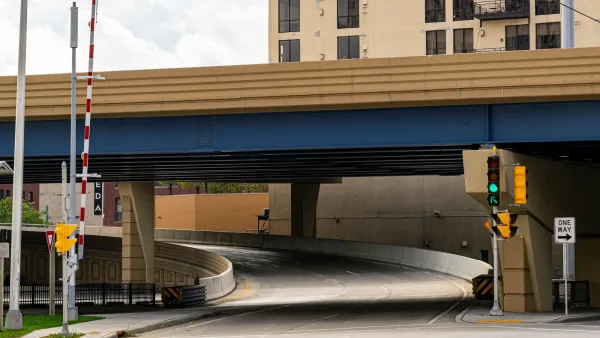
Milwaukee mayor abandons highway removal plan
Mayor Johnson spoke in opposition to a proposed plan to turn part of I-794 into an at-grade boulevard, expressing concerns about traffic.
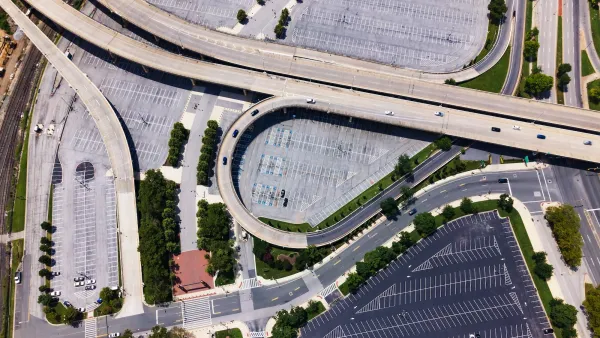
New Tool Uncovers Exact Costs of Downtown Highways
A new research tool can help cities calculate the economic potential that could be unlocked by replacing highways with other uses.

San Francisco to Dismantle its Polarizing Brutalist Fountain
The Vaillancourt Fountain stands as a symbol of the tension between the city’s past and future.

Planetizen Federal Action Tracker
A weekly monitor of how Trump’s orders and actions are impacting planners and planning in America.

Eastern Nebraska is running out of electricity
Data centers and electrification are straining eastern Nebraska’s grid, throttling economic development.

Study reveals best places in the U.S. for cycling, walking
New research from Streetlight Data examines bicycle and pedestrian miles per capita in the 100 largest U.S. cities by population.

DSA members accuse Mamdani of 'abandoning values' over housing redevelopment
New York City's mayor plans to replace about 2,000 units of public housing with private, mixed-income housing.

All sides of BRT debate unhappy with CDOT’s most recent move
The Colorado Department of Transportation is no longer considering center-running bus lanes for Colorado Boulevard.

Massachusetts bogs generate both power, and cranberries
Putting solar panels above farmland is one way Massachusetts is advancing toward its goal of net-zero carbon emissions by 2050.

FREE Course: Walkable City 1: Why Walkability?
After describing his path towards focusing on walkability as the essence of good planning, Jeff Speck marches through his five principal reasons for making more walkable places.
Reinventing Malls: Planning Alchemy—Turning Gray Fields Into Gold
The course focuses on the opportunities and imperatives that shape reinvention of mall sites.

City of Rosemead
Rutgers University, Edward J. Bloustein School of Planning and Public Policy
One Hundred Miles
University of Michigan School for Environment and Sustainability (SEAS)
Hunter College, City University of New York (CUNY)
The Architects Foundation
City of Cambridge
The Pocatello Development Authority
The Urban Renewal Agency of the City of Pocatello