Did you chuckle when the WSJ's Dorothy Rabinowitz said "the bike lobby is an all-powerful enterprise”? Well, "[t]he bicycle lobby is real," say Byron Tau and Caitlin Emma, who explore the increasing clout of those fighting for bike infrastructure.


"All-powerful the bike lobby is not," note Tau and Emma. "Cars — and the infrastructure needed to accommodate them — still receive the overwhelming percentage of federal, state and local transportation dollars. But a scrappy band of bicycle manufacturers, smart-growth advocates and cycling nonprofits is increasingly fighting — and winning — battles at all levels of government."
"They’ve helped birth the proliferation of bike share systems across the country, thousands of miles of newly paved or painted bike lanes, new laws to protect riders and a vocal constituency of die-hard activists and voters. Now those activists are increasingly branching into politics — forming PACs, backing friendly politicians and donating money on behalf of their cause."
Read the full story: The bike lobby rolls on
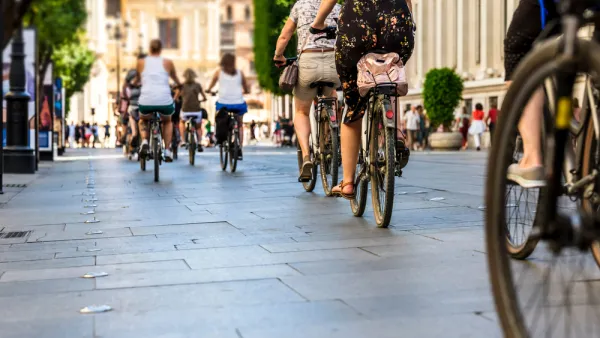
How You Benefit From Increased Biking, Without Ever Touching a Pedal
Jay Walljasper chronicles the growing influence of the bicycle lobby, and their persuasive argument that policies that are good for bicyclists actually benefit everyone.
Missing From the Climate-Energy Legislation: Bikes!
Missing from the Democrats' Inflation Reduction Act, the significant climate legislation which passed the Senate on a 51-50 party-line vote on Sunday with Vice President Harris casting the tie-breaking vote, is any mention of bikes.
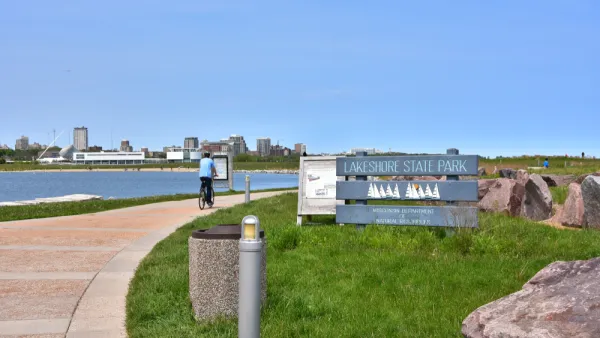
After Repealing Complete Streets, Wisconsin Falls to 29th Most Bike-Friendly State
Despite a rise in bicycling by residents, Wisconsin has dedicated disappointingly low amounts of funding and resources to bike infrastructure.

Planetizen Federal Action Tracker
A weekly monitor of how Trump’s orders and actions are impacting planners and planning in America.

California plans to bury El Niño’s downpour
If the state plays its cards right, it may be able to store a billion acre-feet of El Niño’s water in aquifers.

Desperate measures: Advocates weigh draining Lake Powell to fill Colorado River
Draining the reservoir could reduce evaporation losses by a couple hundred thousand acre-feet.

US buildings threatened, destroyed by fires set to triple by 2060
Researchers found a high fire risk for socioeconomically vulnerable neighborhoods in the American West.

LA residents may be allowed to paint their own crosswalks
Councilwoman Katy Yaroslavsky put out a motion instructing the Los Angeles Department of Public Transportation to study the feasibility of allowing volunteers to paint crosswalks.

Dallas moves to overhaul its zoning code
The city's zoning reform will allow more multi-family and mixed-use developments.

FREE Course: Walkable City 1: Why Walkability?
After describing his path towards focusing on walkability as the essence of good planning, Jeff Speck marches through his five principal reasons for making more walkable places.
Reinventing Malls: Planning Alchemy—Turning Gray Fields Into Gold
The course focuses on the opportunities and imperatives that shape reinvention of mall sites.

City of Rosemead
Rutgers University, Edward J. Bloustein School of Planning and Public Policy
One Hundred Miles
Hunter College, City University of New York (CUNY)
The Architects Foundation
University of Cincinnati Online
City of Cambridge
Montrose County
The Pocatello Development Authority