This week, outgoing Mayor Antonio Villaraigosa kicked off an ambitious five-year effort to revise L.A.'s outdated and unwieldy zoning code. The goal of the project is to create an accessible guide for transforming Los Angeles.


"As one of his final efforts to streamline the development process in the city before leaving office, Los Angeles Mayor Antonio Villaraigosa announced Wednesday the start of a five-year effort to rewrite the city's 67-year-old zoning code," reports Rick Orlov.
"We need to update the zoning code to reflect the changes in the city, the diversity and to recognize the need to have development along transit corridors," Villaraigosa said.
"Under the program, a website at recode.la has been set up for the public to keep track of the process and offer input on what they would like to see in their neighborhoods, Villaraigosa said."
In addition to the website, the project will feature an extensive on-the-ground public outreach component. "Planning Director Michael LoGrande said more than 100 workshops are being planned around the city to take public testimony on the plan and suggest changes."
"Councilman Ed Reyes, who chairs the City Council's Planning and Land Use Management Committee, said the new code will be easier for the public to understand and reduce the need to hire experts to help them through the process," notes Orlov.
"This might not be good news for the expediters," Reyes said. "We want the public to have a zoning code that is easy to understand. With this reform, we are going to address this imbalance and embrace the parts of the city that needs attention."
Disclosure: Planetizen's parent company, Urban Insight, is a member of the project team.
Read the full story: Los Angeles to update city's zoning code
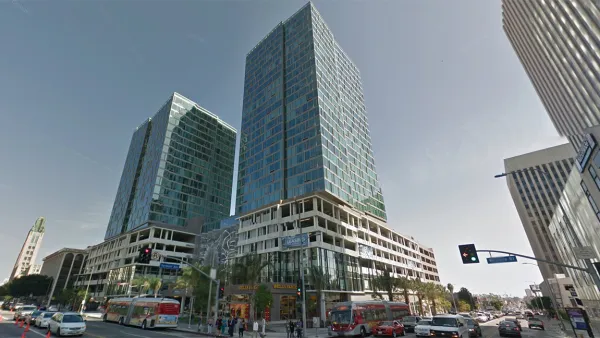
Los Angeles Planners Have Had It Up to Here With Parking Podiums
Above-grade parking garages, also called parking podiums, have become a standard typology across Los Angeles. From Koreatown to Downtown, new residential buildings are separated from the street by several floors of space devoted to parking.
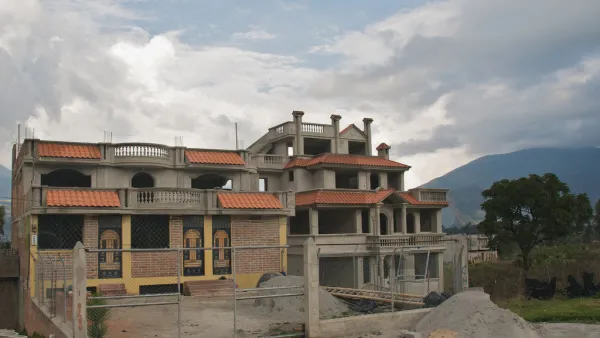
Los Angeles (Temporarily) Bans New McMansions
Concerns about out-of-character construction, much of it oversized, has led the Los Angeles City Council to prohibit construction of additional 'McMansions.' In some areas, all new development will be held up for two years.
Meet the Historic Oddities of the Los Angeles Zoning Code's Use List
With the city of Los Angeles amidst its first comprehensive overhaul of its Zoning Code since 1946, the Planning Department's outreach efforts include a new post explaining the regulated land uses of yesteryear.

Planetizen Federal Action Tracker
A weekly monitor of how Trump’s orders and actions are impacting planners and planning in America.

California plans to bury El Niño’s downpour
If the state plays its cards right, it may be able to store a billion acre-feet of El Niño’s water in aquifers.

Desperate measures: Advocates weigh draining Lake Powell to fill Colorado River
Draining the reservoir could reduce evaporation losses by a couple hundred thousand acre-feet.

Study reveals best places in the U.S. for cycling, walking
New research from Streetlight Data examines bicycle and pedestrian miles per capita in the 100 largest U.S. cities by population.

Los Angeles just elected an urban planner as its mayor
Transportation analysts are optimistic that Raman will be more aggressive in addressing transit issues than Bass.

Mamdani’s pied-à-terre tax survives legal challenge
A panel of judges found that the plaintiffs failed to demonstrate injury as a result of New York City's implementation of the tax.

FREE Course: Walkable City 1: Why Walkability?
After describing his path towards focusing on walkability as the essence of good planning, Jeff Speck marches through his five principal reasons for making more walkable places.
Reinventing Malls: Planning Alchemy—Turning Gray Fields Into Gold
The course focuses on the opportunities and imperatives that shape reinvention of mall sites.

City of Rosemead
Rutgers University, Edward J. Bloustein School of Planning and Public Policy
One Hundred Miles
University of Michigan School for Environment and Sustainability (SEAS)
Hunter College, City University of New York (CUNY)
The Architects Foundation
City of Cambridge
Montrose County
The Pocatello Development Authority