A pilot program introduced parklets to Portland last summer to seemingly widespread applause. Fearing the loss of parking, a group representing downtown business owners has successfully lobbied the city to cancel the program in the downtown core.


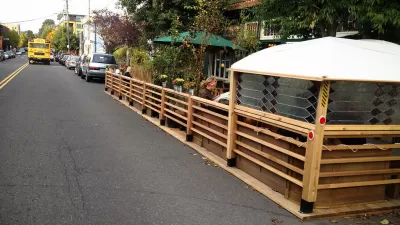
"After a successful pilot program last summer, the Portland Bureau of Transportation (PBOT) recently announced an update of their Street Seats program," reports Jonathan Maus. "While the newly proposed guidelines show the scope of the program has broadened, a group that represents downtown businesses successfully lobbied to prevent the conversion of parking spots in the downtown core."
"In an editorial published today, The Oregonian Editorial Board used this concern from the PBA to help make their case against the program. They argue that Street Seats are a sign of 'mission creep' from PBOT and that we should not give up precious parking spaces for non-parking uses"
Read the full story: Fearing parking loss, downtown business group stops 'Street Seats' program

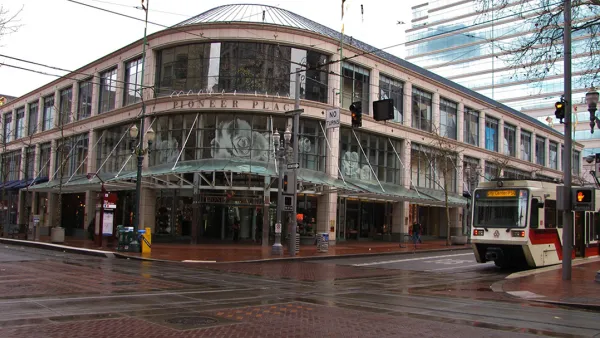
Business Community Weigh In on Portland's Downtown Multi-Modalism Plans
A potentially game-changing suite of transit and active transportation projects is under consideration in Portland. The business community has reservations, but is also strongly supportive of aspects of the plan.
Students Design and Build Downtown Portland's First Parklet
The newest addition to the city of Portland's Street Seats program is the result of a student team of designers and builders from Portland State University.
Portland Transportation Bureau Faces ‘Existential’ Cuts
PBOT’s director says the agency’s impending budget shortfall could imperil even basic transportation and infrastructure services.

Planetizen Federal Action Tracker
A weekly monitor of how Trump’s orders and actions are impacting planners and planning in America.

Amtrak, CN end decades-long dispute with eight-year agreement
The new operating agreement establishes an updated framework for the companies to work together, including processes to resolve disputes.

Judges permit Denver to divert 77,000 acre feet from the Colorado River for reservoir expansion
Overuse and climate change have caused the Colorado River’s water levels to plummet.

Philadelphia to invest $2 billion into upgrading city airports as PHL places last in customer satisfaction
Modernizations to Philadelphia's airports will include baggage system upgrades and a new automated parking garage guidance system.

The LA housing policies making developers turn away from the city
Despite LA’s housing shortage, developers say the city’s "mansion-tax" and pandemic-era policies make it an unappealing place to build housing.

New density bill would require 7 California cities to establish regional transit hubs
The bill would also require major cities in California to permit high-rise residential buildings.

FREE Course: Walkable City 1: Why Walkability?
After describing his path towards focusing on walkability as the essence of good planning, Jeff Speck marches through his five principal reasons for making more walkable places.
Reinventing Malls: Planning Alchemy—Turning Gray Fields Into Gold
The course focuses on the opportunities and imperatives that shape reinvention of mall sites.

City of Wisconsin Rapids
Harvard University Graduate School of Design
KFH Group Inc.
The Architects Foundation
University of Cincinnati Online
The Pocatello Development Authority
The Urban Renewal Agency of the City of Pocatello