A disappearing part of Cincinnati’s urban history is the subject of a new book, which portrays urban staircases as reflective of neighborhood histories and the urban experience.


Geoff Bliss describes the hundreds of urban staircases in and around Cincinnati. The staircases often connected residential neighborhoods to employment centers and led to a pedestrian-scaled urban geography. Today, the staircases are viewed as eyesores and are the subject of criticism, but others view them as “lenses” through which residents and other urban explorers can see how the city has changed over time.
Read the full story: Cincinnati Public Staircases: A Walking History Abandoned But Not Forgotten
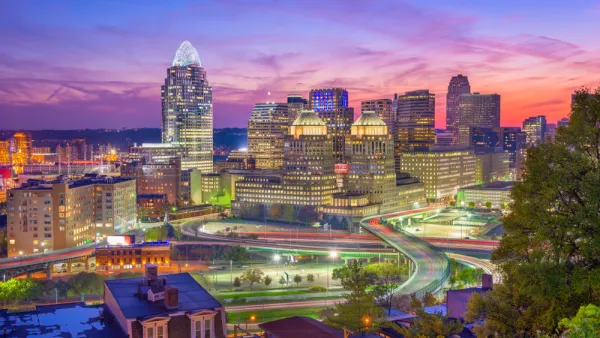
Cincinnati Gets Serious About Pedestrian Safety
A new in-house team dedicated to pedestrian safety at Cincinnati City Hall and a new complete streets ordinance are some of the changes underway in Cincinnati.
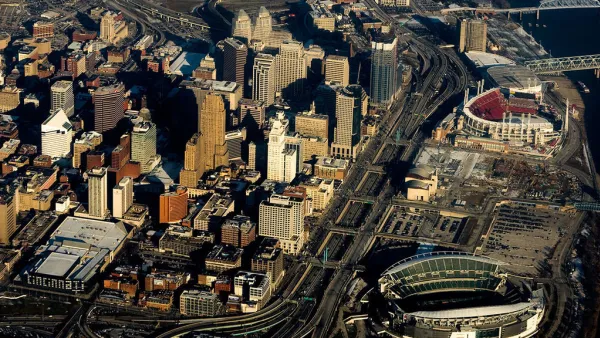
Cincinnati Approves Complete Streets Policy
The city will now require its department of transportation to consider bike and pedestrian facilities when planning new projects or improvements.
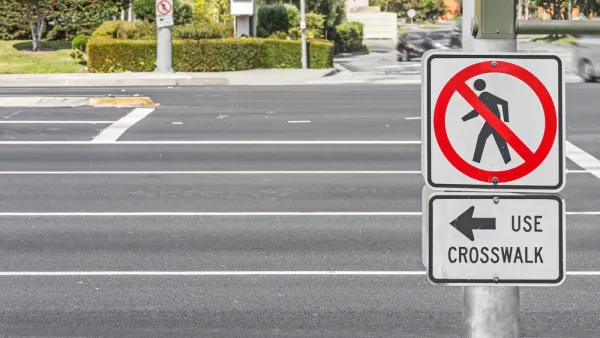
Where Pedestrians Feel Invisible to Drivers
A call for more advocacy by citizens and more action cities in the name of cautious driving and pedestrian safety.

Planetizen Federal Action Tracker
A weekly monitor of how Trump’s orders and actions are impacting planners and planning in America.

Eastern Nebraska is running out of electricity
Data centers and electrification are straining eastern Nebraska’s grid, throttling economic development.

Study reveals best places in the U.S. for cycling, walking
New research from Streetlight Data examines bicycle and pedestrian miles per capita in the 100 largest U.S. cities by population.

San Antonio is using environmental review to stall ICE detention center
San Antonio sued last month to pause work on the new detention center until the federal government studied its effect on the surrounding area.

Austin plans light rail extension — before breaking ground on light rail
The planned extension is three miles long and will take riders straight to Austin-Bergstrom International Airport.

Chicago cuts ribbon on $300,000, self-cleaning public toilet
The public toilet is the city’s first, and may pave the way for a rollout of similar facilities.

FREE Course: Walkable City 1: Why Walkability?
After describing his path towards focusing on walkability as the essence of good planning, Jeff Speck marches through his five principal reasons for making more walkable places.
Reinventing Malls: Planning Alchemy—Turning Gray Fields Into Gold
The course focuses on the opportunities and imperatives that shape reinvention of mall sites.

City of Charlotte
City of Rosemead
Rutgers University, Edward J. Bloustein School of Planning and Public Policy
University of Michigan School for Environment and Sustainability (SEAS)
Hunter College, City University of New York (CUNY)
The Architects Foundation
City of Cambridge
The Pocatello Development Authority
The Urban Renewal Agency of the City of Pocatello