Graphs and maps can be compelling means to illustrate the dire threat to our cities of rising seas caused by climate change. But for blunt impact, a series of photo illustrations by artist Nickolay Lamm are hard to beat.


"This chilling series of images give an alarming projection of how some of America’s most famous tourism destinations could look in the future if scientists predictions about the effects of global warming prove correct," reports .
"Pittsburgh-based researcher and artist Nickolay Lamm, 24, has created the shocking photo illustrations which show many of American’s most iconic destinations including the Washington Monument, Statue of Liberty and Miami’s South Beach submerged in up to 25 feet of water."
"It could take several centuries for sea levels to rise to that level but Lamm hopes his work will raise public awareness about the very real threat of global warming today, reports StorageFront."
Read the full story: Waterworld: How America's cities will look in five centuries if sea level rises predicted by scientists prove correct

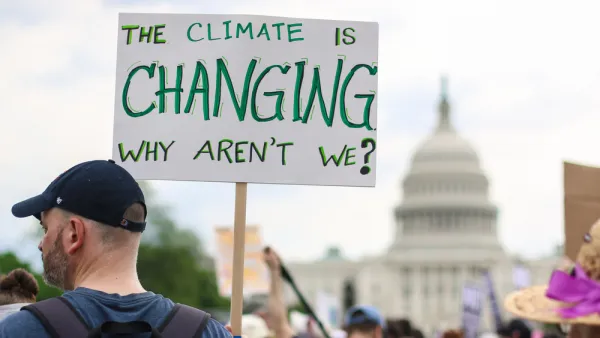
How Cities Can Curb Climate Change and Protect Vulnerable Residents
A new U.N. report urges cities to upgrade their infrastructure to bolster climate resilience and build more sustainable, climate-friendly places.

Bay Area Developments at Risk From Sea Level Rise
A controversial proposed housing development in Newark exemplifies the struggle between increasing housing supply and protecting vulnerable shoreline communities from flooding.
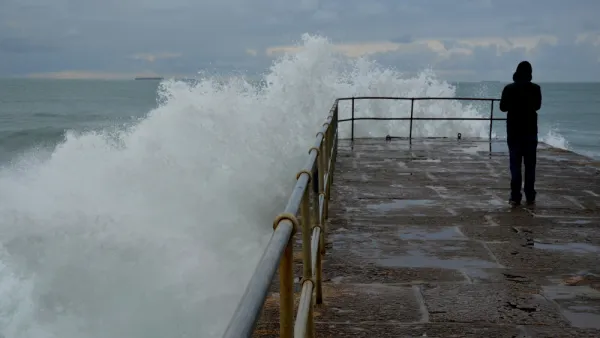
Visualizing the Effects of Sea Level Rise on U.S. Cities
A report from Climate Central calls for urgent action, illustrating the potential devastating impact of even a small rise in global temperature on the coastline of major cities.

Planetizen Federal Action Tracker
A weekly monitor of how Trump’s orders and actions are impacting planners and planning in America.

Amtrak, CN end decades-long dispute with eight-year agreement
The new operating agreement establishes an updated framework for the companies to work together, including processes to resolve disputes.

Northwest rail fans eager for Sept. 30 debut of Amtrak’s Airo fleet
Get ready for that new train smell and more seats. But they won’t go faster or run more frequently on the Cascades route in Washington and Oregon.

Brightline Florida files for bankruptcy
The transit company is over $5 billion in debt.

St. Louis Metro to test if single-car trains can reduce operating costs, maintain rider satisfaction
The pilot program will run from October to spring 2027, and begin with one single-car train operating on Metrolink’s Red and Blue lines.

Pennsylvania is building data centers in abandoned mines
Housing data centers in mines provides an alternative to destroying local forests and may spare residents from data centers’ noise and air pollution.

FREE Course: Walkable City 1: Why Walkability?
After describing his path towards focusing on walkability as the essence of good planning, Jeff Speck marches through his five principal reasons for making more walkable places.
Reinventing Malls: Planning Alchemy—Turning Gray Fields Into Gold
The course focuses on the opportunities and imperatives that shape reinvention of mall sites.

City of Thousand Oaks
City of Wisconsin Rapids
Harvard University Graduate School of Design
The Architects Foundation
University of Cincinnati Online
The Pocatello Development Authority
The Urban Renewal Agency of the City of Pocatello