The planned replacement of a parking garage with a $94 million 30-story, mixed-use tower in downtown Cincinnati is a positive sign of the area's comeback. Now about eliminating those parking minimums....



Chris Bentley looks at developer Flaherty & Collins tower project - part of the city’s first wave of high-rise development in decades - and the larger trends that are redefining the city's relationship to parking. "Against the backdrop of downtown Cincinnati’s continual renewal, the symbolism of a luxury apartment tower replacing an aging parking garage is hard to ignore," he says.
“You’re seeing virtually every owner of a class B or C business converting to residential,” said David Ginsburg, president and CEO of Downtown Cincinnati, Inc. “Downtown is the center of the region, but we still need more—more retail, more residential, more workers, more of everything.”
"With a streetcar in development and near-full occupancy rates in the downtown and Over-the-Rhine neighborhoods, Cincinnati is negotiating its parking garage footprint," adds Bentley. "Some say public transit goes part and parcel with the kind of downtown resurgence that this project banks on; as a result, business groups are pushing the city to purge the zoning code of parking minimums, as Nashville has done. So far, city officials would like to maintain 'a balanced approach,' [Odis Jones, Cincinnati’s director of economic development] said."
Read the full story: Moving On Up


Free Parking as a Restaurant Business Incentive During Coronavirus
As restaurants and other local retail businesses ponder how to stay open as people stay at home and social distance for the foreseeable future, parking regulations will likely be reevaluated—they already are in Cincinnati.
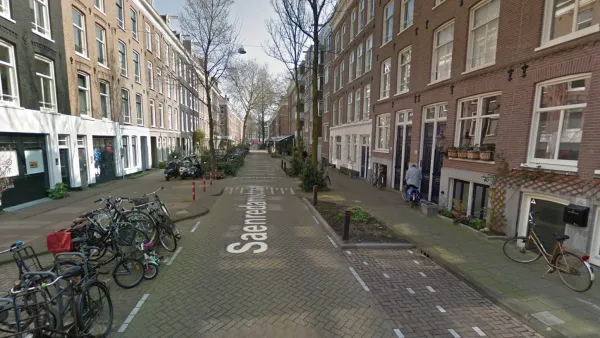
Watch: How to Remove Thousands of Parking Spaces
What the city of Amsterdam will gain by removing cars from on-street parking space.
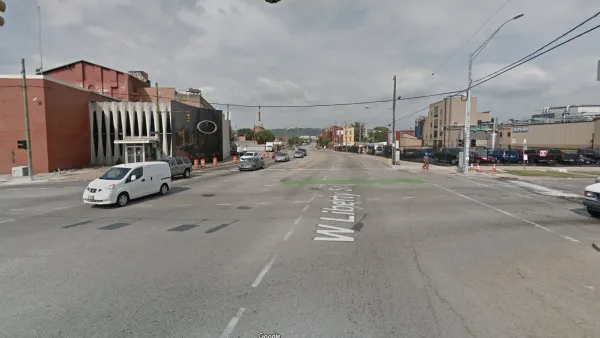
On-Street Parking a Sticking Point for Cincinnati's Road Diet Plan
Liberty Street was once a narrow, urban street. Now it's seven lanes of unsafe speeds and pedestrian risks. The city has a plan to greatly reduce the number of traffic lanes on the street, or another plan that won't.

Planetizen Federal Action Tracker
A weekly monitor of how Trump’s orders and actions are impacting planners and planning in America.

California plans to bury El Niño’s downpour
If the state plays its cards right, it may be able to store a billion acre-feet of El Niño’s water in aquifers.

Desperate measures: Advocates weigh draining Lake Powell to fill Colorado River
Draining the reservoir could reduce evaporation losses by a couple hundred thousand acre-feet.

Non-stop party: Chicago voters weigh permanent festival grounds
A stable place for bleachers, stages and drainage may streamline the setup and teardown of large events.

Metra may invest $9.1 billion in regional rail
The agency released a draft of a study examining potential ways to offer more frequent train service.

California city breaks ground on transit connector
The project includes three mobility hubs and a pedestrian bridge.

FREE Course: Walkable City 1: Why Walkability?
After describing his path towards focusing on walkability as the essence of good planning, Jeff Speck marches through his five principal reasons for making more walkable places.
Reinventing Malls: Planning Alchemy—Turning Gray Fields Into Gold
The course focuses on the opportunities and imperatives that shape reinvention of mall sites.


City of Rosemead
Rutgers University, Edward J. Bloustein School of Planning and Public Policy
One Hundred Miles
Hunter College, City University of New York (CUNY)
The Architects Foundation
University of Cincinnati Online
City of Cambridge
Montrose County
The Pocatello Development Authority