Just as the debate over the planned rezoning of the Midtown East neighborhood ossified into two strongly opposed camps, the city has provided more details on their recommendations and outlined an ambitious schedule for public review.


The day after pro-preservation and pro-development camps issued position papers hoping to sway city officials, planners outlined their latest thinking on the development incentives and preservation considerations that will accompany the proposed midtown east upzoning in a presentation to a community board task force. At the meeting, the planning department "revealed the price the city hopes to sell air rights within the rezoned area to promote new commercial development," reports Matt Chaban, and it "identified 32 buildings described as 'potential' landmarks worth saving."
By the reactions that followed, it appears as though preservationists may have more to cheer about. There was mixed response to the city's proposal to "sell air rights at $250 a square foot as part of an infrastructure-funding tool known as the District Improvement Bonus, or DIB." While some were concerned that the uniform price could "leave tens of millions of dollars on the table," developers held the opposite view. "It's a number that may be slightly high," said Steven Spinola, president of the Real Estate Board of New York. "I have had a couple of our member say to me that they were expecting it to come in lower."
"As for the landmarks," writes Chaban, "those in the preservation community were pleasantly surprised. Simeon Bankoff, executive director of the Historic Districts Council, was happy to see that almost exactly the same number of landmarks are under consideration as when his group released a list of 33 buildings it thought worthy of saving, even if they are not the identical building."
"Another presentation to answer further questions about the plan and present remaining details is scheduled for March," notes Chaban. "But the rezoning is basically set at this point, in the administration's view."
Read the full story: City reveals key midtown upzone details

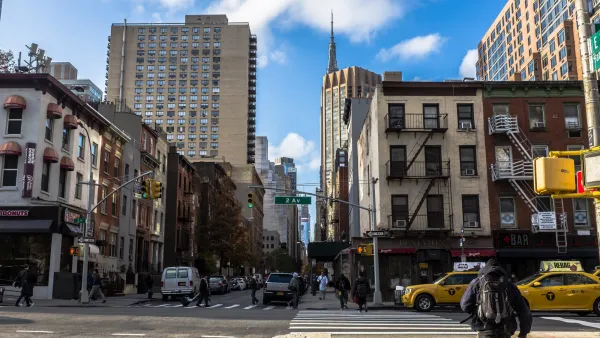
Property Owners Jostle for Deals After Midtown East Rezoning
A flurry of air rights purchases have already begun as large property owners take advantage of Midtown East's upzoning. Some big names include JPMorgan Chase and the Archdiocese of New York.
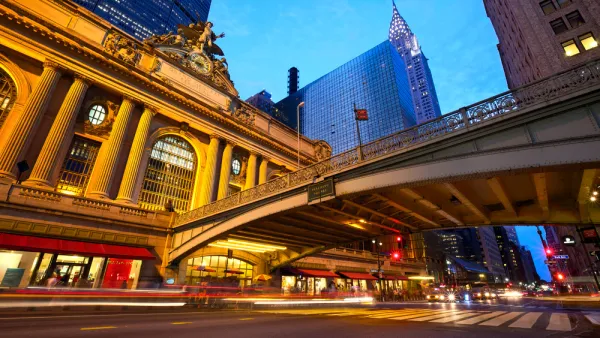
Controversy Follows Proposed Midtown East Plan
A very public spat over proposed Midtown East plan took place in the pages of Crain's this week.
Bloomberg Gives East Midtown Rezoning One Last Push, But Will City Council Budge?
After rezoning 37 percent of New York City, Mayor Bloomberg is pursuing one last major rezoning plan before he leaves office. But will a lame duck Council speaker and her colleagues grant the mayor a final victory?

Planetizen Federal Action Tracker
A weekly monitor of how Trump’s orders and actions are impacting planners and planning in America.

Amtrak, CN end decades-long dispute with eight-year agreement
The new operating agreement establishes an updated framework for the companies to work together, including processes to resolve disputes.

Judges permit Denver to divert 77,000 acre feet from the Colorado River for reservoir expansion
Overuse and climate change have caused the Colorado River’s water levels to plummet.

NYC DOT wants faster, more permanent street upgrades
The city is examining ways to build more concrete infrastructure without getting entangled in 'decades-long' projects.

'Something we’ve never seen before:' rising utility rates could strain city finances nationwide
Data centers, climate change and other factors have caused utility rates in the United States to increase by 38% since 2020.

Trump to overrule local leaders, lease millions of acres of America’s Pacific Island territories’ seafloors to mining companies
International law says that the Indigenous people of America’s territories have a right to prior and informed consent regarding projects that impact their countries.

FREE Course: Walkable City 1: Why Walkability?
After describing his path towards focusing on walkability as the essence of good planning, Jeff Speck marches through his five principal reasons for making more walkable places.
Reinventing Malls: Planning Alchemy—Turning Gray Fields Into Gold
The course focuses on the opportunities and imperatives that shape reinvention of mall sites.

Harvard University Graduate School of Design
KFH Group Inc.
Greater Baltimore Committee
The Architects Foundation
University of Cincinnati Online
The Pocatello Development Authority
The Urban Renewal Agency of the City of Pocatello