Across the United States, bike-share systems have struggled to provide access to those with fewer transportation options. Darren Buck looks at what some cities are doing to expand their reach.


Despite its notable successes, many forget that bike-sharing is still a relatively new phenomenon in the Unites States. As cities experiment with different models for funding their programs and expanding their bicycle infrastructure, bike-share systems in cities like Denver and Chicago have also struggled with the question of how to reach all segments of their population.
To better understand how different cities are working to meet this challenge, graduate student Darren Buck "asked managers of current and planned North American bike sharing systems what they have done to increase access to bike sharing for low-income communities, and minority groups disproportionately underrepresented in bicycling."
In a summary of his full paper (PDF), Buck highlights measures that different systems are pursuing to lower barriers to access. Strategies focus on such elements as station siting, community-specific marketing and outreach, financial assistance, membership media, safe places to ride, and overcoming bicycling barriers.
Read the full story: Bike sharing systems push to reach underrepresented groups

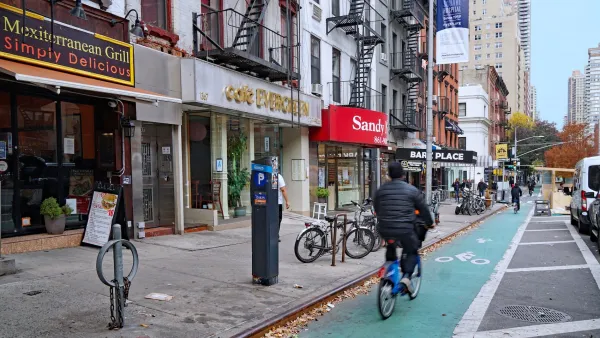
Study: Protected bike lanes increase Citi Bike rides by nearly 400 rides a month
An analysis of millions of NYC bike share rides reveals that only protected bike lanes have a 'statistically significant' increase in ridership.
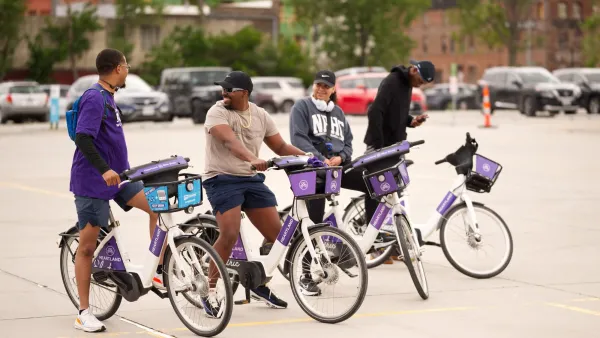
Omaha's 400 shared e-bikes are now free to all residents
Before eliminating fares for locals, the Heartland system only recovered 10%-15% of its operating costs through fare revenue.
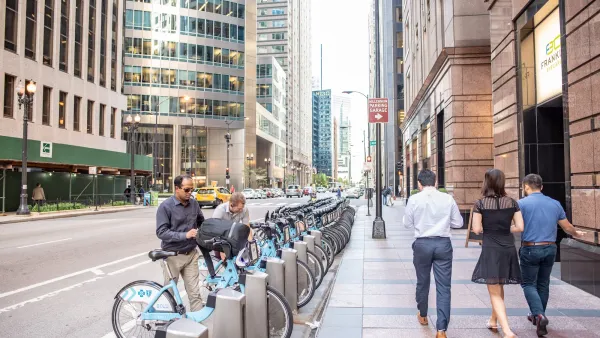
Chicago to Add or Upgrade 200 Bike Share Stations
The Divvy bike share system saw its highest ridership ever in 2025 with 6.8 million trips.

Planetizen Federal Action Tracker
A weekly monitor of how Trump’s orders and actions are impacting planners and planning in America.

‘Going backwards:’ Baltimore mayor, students rally against state's transit funding plan
Maryland's proposed six-year plan provides no funding for Baltimore’s BMORE bus program and reduces its road maintenance funding.

Detroit to transform waterfront with $2.2 billion investment
Developers will convert about 18 acres of unused parking lot space into civic spaces.

Data center developers are using lawsuits, cash offers to ‘overwhelm’ rural America
Newsrooms in five states worked together to uncover the tactics big tech developers use to buy land from reluctant communities.

U.S.-Iran war may have ‘devastating’ impact on cost to warm homes
Vermont and Maine residents may see a 76% increase in the cost of warming their homes this winter.

Senate bill would ‘overhaul’ environmental permitting laws
Under the proposed act, government agencies would also not be able to suspend or rescind permits after granting them.

FREE Course: Walkable City 1: Why Walkability?
After describing his path towards focusing on walkability as the essence of good planning, Jeff Speck marches through his five principal reasons for making more walkable places.
Reinventing Malls: Planning Alchemy—Turning Gray Fields Into Gold
The course focuses on the opportunities and imperatives that shape reinvention of mall sites.

One Hundred Miles
County of Mendocino
planning NEXT
The Architects Foundation
University of Cincinnati Online
Montrose County
Northern Illinois Transit Authority (NITA)
The Pocatello Development Authority