Professional planners can be a great resource for staffing local planning and zoning commissions (especially in smaller communities). That is, of course, as long as they can manage to wear both hats without conflict.


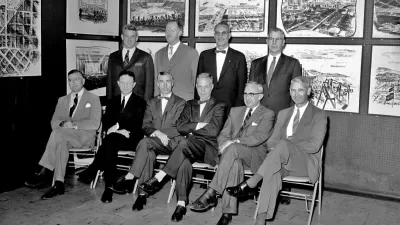
"It’s not often planning commissions get volunteers to offer the level of expertise on land use matters like the kind professional planners bring," says Mark Apel, who offers 7 tips for professional planners to observe when serving on a local planning and zoning commission. Why serve? Not only are you providing a great contribution to your community, but the experience lets planners "see things from the other side of the table, so to speak. This is true in terms of better understanding your community’s staff limitations as well as having a more personal stake in the decisions you make for your community."
In his op-ed, Apel details the following pointers for professional planners who wear both hats:
- Don’t make assumptions about the planning staff
- Do give specific examples
- Do refer to the community plan
- Don’t assume that you have all the answers
- Don’t jump on the soapbox
- Don’t communicate when not on the public record
- Do look for training opportunities
Read the full story: Wearing two hats? Seven tips for planners when serving on the planning and zoning commission
AICP Certification Maintenance Program to Include Equity Requirement
Two new mandatory topic areas will be required of AICP members to maintain professional certification.
Highway Expansion Plans Benefitted Governor's Real Estate Business, According to Report
Governor Larry Hogan is accused of personally benefiting from the state of Maryland's ongoing highway expansion program.
Boston's Zoning Board Called Out for Conflicts of Interest
The Boston Globe reports on reasons to suspect more conflicts of interest than there appears on the Boston Zoning Board of Appeal.

Planetizen Federal Action Tracker
A weekly monitor of how Trump’s orders and actions are impacting planners and planning in America.

Washington state to charge fee to drivers with fuel-efficient cars
Revenue from the fee will go towards supporting the state’s highways.

Trump to blast ‘hydrocarbon highway’ through ‘world’s longest art gallery’
Environmental and historic preservation groups are suing to stop the project.

MBTA Green Line project moved to next phrase of CIG program
The modernization effort will cost $4.08 billion.

22-mile pedestrian and bike path to encircle Atlanta by 2030
The project will also support affordable housing.

Army detonates nearly 5 tons of lead in Iowa
The detonation comes after days of delays and public outcry.

FREE Course: Walkable City 1: Why Walkability?
After describing his path towards focusing on walkability as the essence of good planning, Jeff Speck marches through his five principal reasons for making more walkable places.
Reinventing Malls: Planning Alchemy—Turning Gray Fields Into Gold
The course focuses on the opportunities and imperatives that shape reinvention of mall sites.

City of Charlotte
City of Rosemead
Rutgers University, Edward J. Bloustein School of Planning and Public Policy
University of Michigan School for Environment and Sustainability (SEAS)
Hunter College, City University of New York (CUNY)
The Architects Foundation
University District Partnership