For communities or leaders reticent to buy into bold change, "selling change by the slice" through pilot projects can be a great way to get stakeholders on board with a larger vision. Otis White discusses two key components of pilot project success.


On a daily basis, planners in cities across America are trying to convince their citizens and leaders to embrace bold ways to transform their communities - from building new transportation systems to allowing higher density development.
As White describes, "pilot" or "demonstration" projects can be a great tool for testing ideas and getting people to buy into big change. "Selling change by the slice," writes White, "can
demonstrate the change and its benefits so everyone can see it. If it's
as successful as you expect, you'll dramatically lower the fear level,
and by the time you ask citizens and their leaders to accept the rest (a
built-out transit system, a mixed-use development in their
neighborhood, a new kind of recycling), it's less like a leap of faith
and more like a hop."
White goes on to detail the two key components of successful pilot projects: "First, you have to find a place willing to accept the
slice. Second, you have to make sure its success is so apparent that
opponents are, grudgingly, won over."
Read the full story: Selling Change by the Slice


Bill Introduced to Allow California Cities to Pursue Congestion Pricing
Four cities could charge tolls for drivers to enter congested parts of their cities if an assembly bill introduced by Richard Bloom last month becomes law.
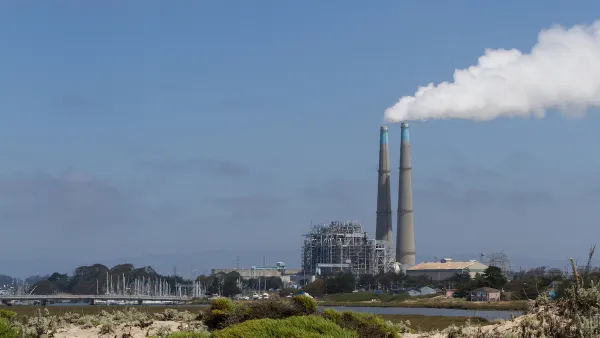
Making Natural Gas Power Plants Cleaner
Carbon capture and storage has long been associated with coal-burning power plants. Calpine Corp. hopes to apply the controversial technology to existing natural gas power plants, beginning with a pilot project to start this month in the Bay Area.

Los Angeles to Test Road Closure Through Scenic Griffith Park
After a driver killed a cyclist on Griffith Park Drive in April, the city of Los Angeles is studying safety upgrades on streets in its famous park. The L.A. Times says the changes are part of a growing movement.

Planetizen Federal Action Tracker
A weekly monitor of how Trump’s orders and actions are impacting planners and planning in America.

Amtrak, CN end decades-long dispute with eight-year agreement
The new operating agreement establishes an updated framework for the companies to work together, including processes to resolve disputes.

Northwest rail fans eager for Sept. 30 debut of Amtrak’s Airo fleet
Get ready for that new train smell and more seats. But they won’t go faster or run more frequently on the Cascades route in Washington and Oregon.

Brightline Florida files for bankruptcy
The transit company is over $5 billion in debt.

St. Louis Metro to test if single-car trains can reduce operating costs, maintain rider satisfaction
The pilot program will run from October to spring 2027, and begin with one single-car train operating on Metrolink’s Red and Blue lines.

Pennsylvania is building data centers in abandoned mines
Housing data centers in mines provides an alternative to destroying local forests and may spare residents from data centers’ noise and air pollution.

FREE Course: Walkable City 1: Why Walkability?
After describing his path towards focusing on walkability as the essence of good planning, Jeff Speck marches through his five principal reasons for making more walkable places.
Reinventing Malls: Planning Alchemy—Turning Gray Fields Into Gold
The course focuses on the opportunities and imperatives that shape reinvention of mall sites.

City of Thousand Oaks
City of Wisconsin Rapids
Harvard University Graduate School of Design
The Architects Foundation
University of Cincinnati Online
The Pocatello Development Authority
The Urban Renewal Agency of the City of Pocatello