Armed with complaints over favoritism towards developers, and insufficient deference to the needs of ordinary citizens, an independent challenger is taking on the incumbent mayor of affluent Alexandria, Virginia.


Patricia Sullivan looks at the contentious campaign in predominantly Democratic Alexandria, which has focused on differences in opinion on some of the city's recent development plans. Andrew Macdonald is challenging Mayor William D. Euille with the belief that the city has "let developers basically
dictate a lot of the public policy."
The battle over plans for the city's Potomac River waterfront is a case in point. "Under
Euille's leadership, city officials held community meetings over two
years, negotiated with landowners (including a subsidiary of The
Washington Post Co.), and unveiled a major redevelopment project [for the waterfront] in
spring 2011," writes Sullivan. "Macdonald led a grass-roots uprising that contended
the city's plan had allowed too much density and commerce and not enough
parks or other public amenities."
More recently, "With each major redevelopment proposal that has come up for city
approval this year, some residents have argued that officials are more
inclined to side with developers than residents."
Euille, on the other hand, contends that "Macdonald represents a small number of people who are 'raising Cain' over what most Alexandrians support."
Read the full story: Mayoral candidates disagree on Alexandria’s direction on development, operations
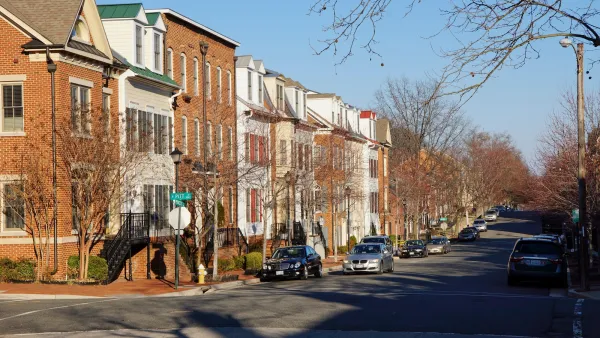
Alexandria eviction diversion program will let tenants pay back rent in installments
Eligible tenants will be allowed to make a 10% down payment on the back rent they owe and pay off the rest in installments while remaining in their home.
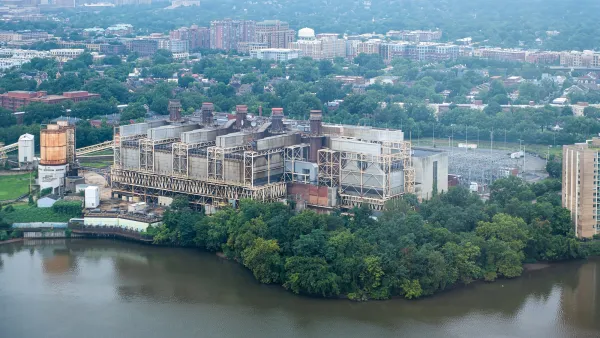
Former power plant in Alexandria to become walkable waterfront neighborhood with 800 homes
The Potomac River Generating Station was once the biggest source of air pollution in northern Virginia.
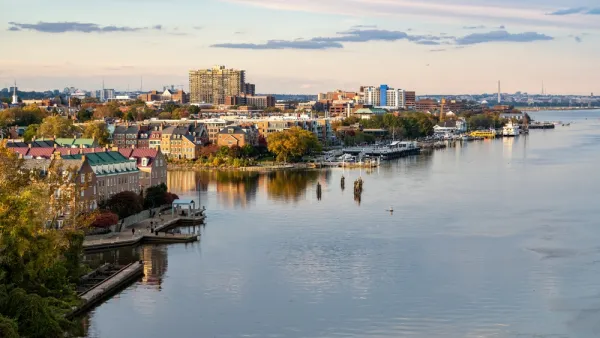
Alexandria Is Close to Fixing Its Sewage Woes
After 16 months and $615 of tunneling, Alexandria, Virginia is nearly finished digging a 2.2-mile-long tunnel beneath the city and the Potomac River that will fix its sewage overflow problem.

Planetizen Federal Action Tracker
A weekly monitor of how Trump’s orders and actions are impacting planners and planning in America.

California plans to bury El Niño’s downpour
If the state plays its cards right, it may be able to store a billion acre-feet of El Niño’s water in aquifers.

Desperate measures: Advocates weigh draining Lake Powell to fill Colorado River
Draining the reservoir could reduce evaporation losses by a couple hundred thousand acre-feet.

Housing is the top priority of Seattle’s sole new councilmember
Jenks campaigned on building 1,000 new units of affordable housing.

New tax cuts may slash $1.5 billion in funding for Miami transit, public parks
Amendment 3 will save Miami-Dade homeowners $2,700 in 2028.

Arizona, Wisconsin, Pennsylvania hope to finally advance climate goals post-midterms
The three states have spent years under Republican or divided control.

FREE Course: Walkable City 1: Why Walkability?
After describing his path towards focusing on walkability as the essence of good planning, Jeff Speck marches through his five principal reasons for making more walkable places.
Reinventing Malls: Planning Alchemy—Turning Gray Fields Into Gold
The course focuses on the opportunities and imperatives that shape reinvention of mall sites.

City of Rosemead
Rutgers University, Edward J. Bloustein School of Planning and Public Policy
One Hundred Miles
University of Michigan School for Environment and Sustainability (SEAS)
Hunter College, City University of New York (CUNY)
The Architects Foundation
City of Cambridge
Montrose County
The Pocatello Development Authority