Tax breaks, cheap energy, and investments in infrastructure are among the subsidies often requested of local communities by companies searching for locations for their operations. Edward Alden asks what companies owe in return.


Recent high-profile news reports of companies such as Boeing and Microsoft reneging on promises and generally behaving badly towards the communities they sought special treatment from have highlighted the "growing power imbalance between corporations and governments." In the first of a series of posts on the topic, Alden asks if anything can be done to change this imbalance.
"The Harvard Business School's Competitiveness Project earlier this year made an appeal for enlightened corporate behavior,
encouraging companies to invest in the 'commons' – by expanding
training, working with local suppliers, and lobbying governments for'"business-wide improvements' rather than special interest advantages.
While these goals are laudable, and there are plenty of examples of such
responsible corporate action, they are unlikely to move the needle very
far."
"Instead," suggests Alden, "governments are going to have to rediscover their sources of
leverage."
Read the full story: Corporations and Communities: What Do They Owe Each Other?

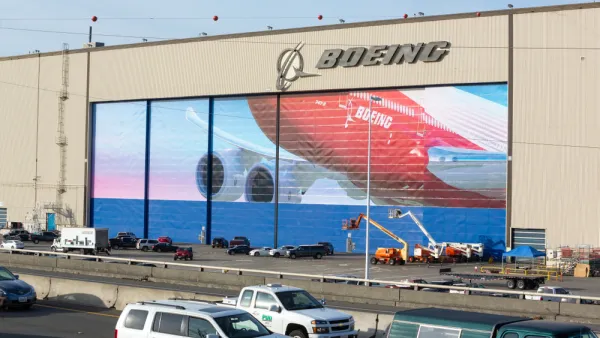
Jet Fuselage to Become Part of Seattle High-Rise
A Boeing 747 will serve as the atrium between two South Lake Union office buildings.

Atlanta's Quarry Yards Bought for $127 Million by Microsoft; Development Plans Still Secret
Observers can only speculate about the development plans of the new owners of one of the city of Atlanta's largest development opportunities.
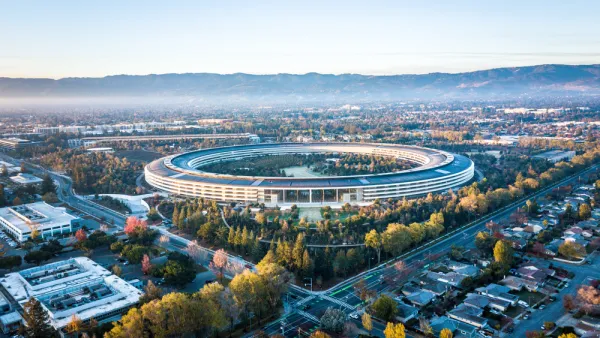
Why Big Tech Billions Won't Dent California's Housing Crisis
New multibillion-dollar affordable housing commitments from leading tech firms may build out thousands of units, but that's nothing next to California's gargantuan housing shortage.

Planetizen Federal Action Tracker
A weekly monitor of how Trump’s orders and actions are impacting planners and planning in America.

Amtrak, CN end decades-long dispute with eight-year agreement
The new operating agreement establishes an updated framework for the companies to work together, including processes to resolve disputes.

Northwest rail fans eager for Sept. 30 debut of Amtrak’s Airo fleet
Get ready for that new train smell and more seats. But they won’t go faster or run more frequently on the Cascades route in Washington and Oregon.

Brightline Florida files for bankruptcy
The transit company is over $5 billion in debt.

St. Louis Metro to test if single-car trains can reduce operating costs, maintain rider satisfaction
The pilot program will run from October to spring 2027, and begin with one single-car train operating on Metrolink’s Red and Blue lines.

Pennsylvania is building data centers in abandoned mines
Housing data centers in mines provides an alternative to destroying local forests and may spare residents from data centers’ noise and air pollution.

FREE Course: Walkable City 1: Why Walkability?
After describing his path towards focusing on walkability as the essence of good planning, Jeff Speck marches through his five principal reasons for making more walkable places.
Reinventing Malls: Planning Alchemy—Turning Gray Fields Into Gold
The course focuses on the opportunities and imperatives that shape reinvention of mall sites.

City of Thousand Oaks
City of Wisconsin Rapids
Harvard University Graduate School of Design
The Architects Foundation
University of Cincinnati Online
The Pocatello Development Authority
The Urban Renewal Agency of the City of Pocatello