In a photo essay, Thomas J. Sigler interprets what the skylines of some of the world's most prominent cities say about their character.


Is your city a "Power Broker" or an "Oligopolis?" Thomas Sigler asks the skylines of some of the world's most famous cities to sit on his analyst's couch and comes up with some interesting diagnosis.
For instance, he attributes the surprisingly low-rise nature of Cairo, Mumbai, and Mexico City to a historically unreliable urban power grid, "which means that
elevators, water pumps, and other necessities of high-rise living were
untrustworthy."
Another type are cities like Taipei and Kuala Lumpur that seem to suffer from tower envy; and construct a single oversized icon to put themselves on the map.
So what is an Oligopolis? "Found primarily in North America, the Oligopolis is marked by the clear
dominance of a handful of prominent towers headquartering firms in the
region's key industries," writes Sigler. "A key feature of these cities' downtowns is
parking lots, a clear indication that CBD land isn't exactly in high
demand. Examples include Pittsburgh and Houston, where CBDs turn into
ghost towns after the districts' workforces have headed back to the
‘burbs for the evening."
Read the full story: What Your Skyline Says About Your City

Austin's Tallest Tower Rising Quickly
Sixth and Guadalupe, which will top out at 875 feet, will soon be crowned the tallest building in Austin, and the fifth-tallest building in Texas.
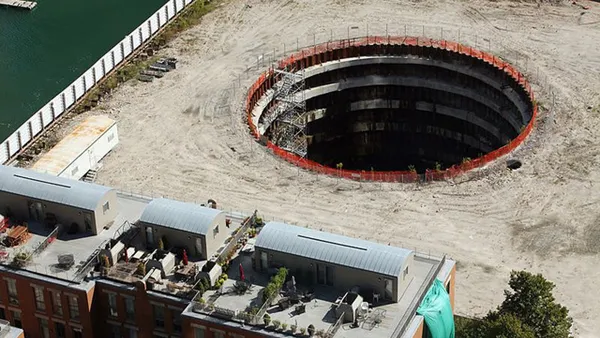
Two Skyline Changing Apartment Towers Proposed to Rise on the Site of Chicago's Failed Spire
An infamous site has new development life after developers returned to the public with a revised project proposal.

Proposed Mega-Development Would Expand Chicago's Skyline
The One Central development would transform 34 acres over Metro tracks near Soldier Field.

Planetizen Federal Action Tracker
A weekly monitor of how Trump’s orders and actions are impacting planners and planning in America.

California plans to bury El Niño’s downpour
If the state plays its cards right, it may be able to store a billion acre-feet of El Niño’s water in aquifers.

Desperate measures: Advocates weigh draining Lake Powell to fill Colorado River
Draining the reservoir could reduce evaporation losses by a couple hundred thousand acre-feet.

Los Angeles just elected an urban planner as its mayor
Transportation analysts are optimistic that Raman will be more aggressive in addressing transit issues than Bass.

Mamdani’s pied-à-terre tax survives legal challenge
A panel of judges found that the plaintiffs failed to demonstrate injury as a result of New York City's implementation of the tax.

Eastern Nebraska is running out of electricity
Data centers and electrification are straining eastern Nebraska’s grid, throttling economic development.

FREE Course: Walkable City 1: Why Walkability?
After describing his path towards focusing on walkability as the essence of good planning, Jeff Speck marches through his five principal reasons for making more walkable places.
Reinventing Malls: Planning Alchemy—Turning Gray Fields Into Gold
The course focuses on the opportunities and imperatives that shape reinvention of mall sites.

City of Rosemead
Rutgers University, Edward J. Bloustein School of Planning and Public Policy
One Hundred Miles
University of Michigan School for Environment and Sustainability (SEAS)
Hunter College, City University of New York (CUNY)
The Architects Foundation
City of Cambridge
Montrose County
The Pocatello Development Authority