Former Times architecture critic Nicolai Ouroussoff pens a profile of the Dutch architect Rem Koolhaas, whose "most provocative—and in many ways least understood—contribution to the cultural landscape is as an urban thinker."


Attempting to answer his self-posed question as to why Koolhaas is the "world's most controversial architect," Ouroussoff returns to the starchitect subject matter that made him such a divisive figure as critic at The New York Times. In this piece, Ouroussoff traces Koolhaas's production as an "urban thinker" and tinkerer, beginning with his Euralille project (1994). His bona fides as an urban thinker seem to be based on his extensive travels, writings, and provocative competition entries. However, not since Euralille has he designed and built a "major urban project" (although a rumored competition win in Doha, Qatar may change that).
Koolhaas certainly is "one of the most influential architects of his generation" for many reasons, but his impact on urban planning and theory aren't well demonstrated in this piece. As to why he's the "world's most controversial architect" - how controversial could a guy be if his ideal city is "all things to all people?"
Read the full story: Why is Rem Koolhaas the World's Most Controversial Architect?

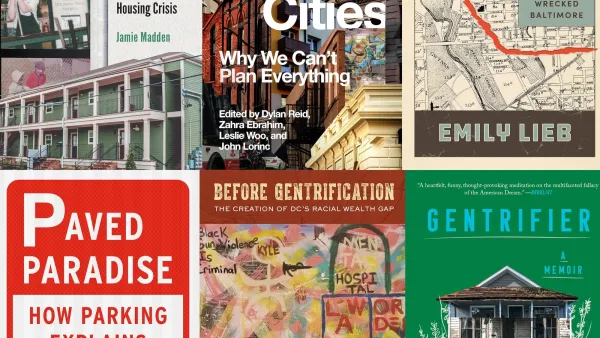
10 great urban planning summer reads
Wherever you're going (or staying) this summer, here are some suggestions for books to bring along.
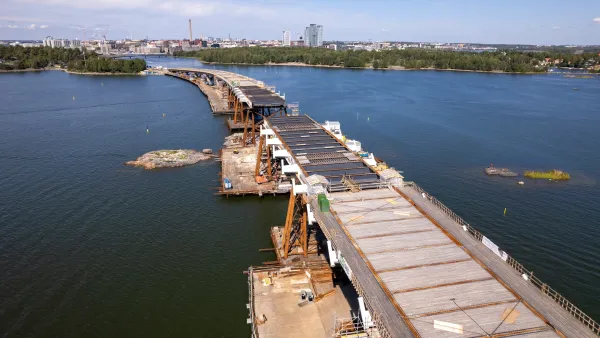
April must-reads: Top 10 articles from last month
The world's longest car-free bridge opens in Finland, Amtrak's new Mardi Gras line shatters ridership predictions, and Bay Area commuters could lose a third of Caltrain stations.

Northwest Arkansas grapples with growth as it prepares to host New Urbanism gathering
A compelling story of a fast-growing, polycentric region grappling with identity and affordability, Susan Henderson reframes CNU 34 as a hands-on workshop, inviting planners to explore Northwest Arkansas as it decides what it will become.

Planetizen Federal Action Tracker
A weekly monitor of how Trump’s orders and actions are impacting planners and planning in America.

‘Going backwards:’ Baltimore mayor, students rally against state's transit funding plan
Maryland's proposed six-year plan provides no funding for Baltimore’s BMORE bus program and reduces its road maintenance funding.

Detroit to transform waterfront with $2.2 billion investment
Developers will convert about 18 acres of unused parking lot space into civic spaces.

Data center developers are using lawsuits, cash offers to ‘overwhelm’ rural America
Newsrooms in five states worked together to uncover the tactics big tech developers use to buy land from reluctant communities.

U.S.-Iran war may have ‘devastating’ impact on cost to warm homes
Vermont and Maine residents may see a 76% increase in the cost of warming their homes this winter.

Senate bill would ‘overhaul’ environmental permitting laws
Under the proposed act, government agencies would also not be able to suspend or rescind permits after granting them.

FREE Course: Walkable City 1: Why Walkability?
After describing his path towards focusing on walkability as the essence of good planning, Jeff Speck marches through his five principal reasons for making more walkable places.
Reinventing Malls: Planning Alchemy—Turning Gray Fields Into Gold
The course focuses on the opportunities and imperatives that shape reinvention of mall sites.

One Hundred Miles
County of Mendocino
planning NEXT
The Architects Foundation
University of Cincinnati Online
Montrose County
Northern Illinois Transit Authority (NITA)
The Pocatello Development Authority