Charles Fishman pens an opinion piece for The New York Times arguing that America's worst drought since the 1950s offers "an opportunity to tackle long-ignored water problems and to reimagine how we manage, use and even think about water."


For decades, drought in America has been met with temporary solutions to overcome extreme, but seemingly temporary, environmental conditions. However as climate change turns the occasional severe drought into a more common occurrence, and our nation's water infrastructure continues to crumble, the need for lasting changes in how we use and value water become more pressing.
Hence with water clearly on the nation's mind, Fishman argues now is the time to instigate such change. He proposes solutions that can be adopted right now such as lawn-watering restrictions, smarter plumbing fixtures, codes that require buildings to use water more efficiently, increased use of recycled water, and more informative water bills.
Read the full story: Don’t Waste the Drought
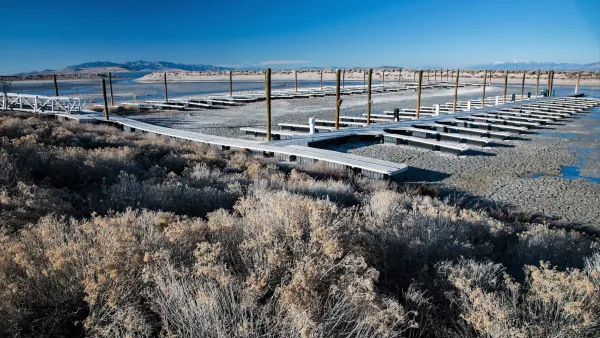
Data centers are booming near the West's fastest-shrinking lakes
Years of drought, water diversion and climate change have caused Western lakes to shrink dramatically.
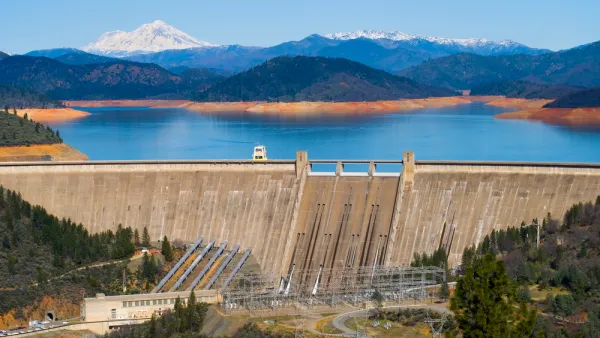
Californians Struggle To Cut Water Use
The state is slowly starting to curb water consumption, but progress has been ‘disappointingly slow’ as water supplies across the West diminish to historic lows.
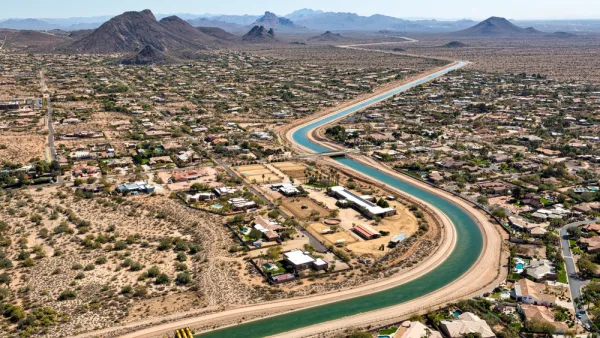
Arizona Governor Pledges $1 Billion to Water Infrastructure
The billion-dollar investment in the state's water supplies sounds good on paper, but lawmakers must also distribute funding effectively to mitigate the state's urgent water shortage.

Desperate measures: Advocates weigh draining Lake Powell to fill Colorado River
Draining the reservoir could reduce evaporation losses by a couple hundred thousand acre-feet.

Eastern Nebraska is running out of electricity
Data centers and electrification are straining eastern Nebraska’s grid, throttling economic development.

Move over, LA: St. Louis gears up for Olympics, invests millions in downtown redevelopment
The Missouri city will host the 2028 Olympic soccer group stage and knockout matches.

Officials claim feds 'rushed' Amtrak environmental review
Amtrak plans to move their Chicago maintenance facility from an industrial area to a residential one.

NYC breaks ground on anti-flooding infrastructure project
New York City's new system will reduce stormwater flows to local sewers by 90%.

One Kentucky town’s secret to affordable housing
The Smoketown Community Land Trust has already built seven affordable homes for community members.

FREE Course: Walkable City 1: Why Walkability?
After describing his path towards focusing on walkability as the essence of good planning, Jeff Speck marches through his five principal reasons for making more walkable places.
Reinventing Malls: Planning Alchemy—Turning Gray Fields Into Gold
The course focuses on the opportunities and imperatives that shape reinvention of mall sites.

City of Rosemead
Rutgers University, Edward J. Bloustein School of Planning and Public Policy
One Hundred Miles
University of Michigan School for Environment and Sustainability (SEAS)
Hunter College, City University of New York (CUNY)
The Architects Foundation
City of Cambridge
Montrose County
The Pocatello Development Authority