Mirroring a nationwide trend, office parks in suburban Chicago are emptying out as companies increasingly favor urban locations. As a result, developers and local officials are having to think creatively about possibilities for office park reuse.


When Motorola Mobility announced recently that it would be trading in its home in Libertyville for prime space in Chicago's Merchandise Mart, it joined BP Amoco, United Airlines, and Sara Lee in helping to reverse the corporate exodus from Chicago, and cities across America, that marked the rise of the suburbs in the decades following World War II.
For reporter David Roeder, Motorola's move is, "another example of how the isolated, splendidly landscaped
corporate base in the suburbs has fallen out of favor." With office space in the suburbs facing a "hard sell" since the start of the financial crisis, "these compounds by and large must look to the private market for a new reason to exist."
"Daniel Miranda, president of HSA Commercial Real
Estate, said possibilities include turning some campuses into retail
centers, perhaps outlet malls, or converting them for medical or
educational uses. Some suburbs, Miranda said, may wish to convert the
campuses into a carefully planned 'mini-town.'"
"Many analysts have said a desire to recruit
younger, tech-savvy workers drives the job shift to downtown," notes Roeder. "Tony
Smaniotto, senior managing director at Studley Inc., said cost control
is another factor."
Some analysts however, like Art Burrows, senior vice president at NAI Hiffman, are skeptical of how long this trend will continue. He believes, "the suburbs will
come back when there's a clear price advantage and housing improves."
Read the full story: Nobody home at suburban office parks

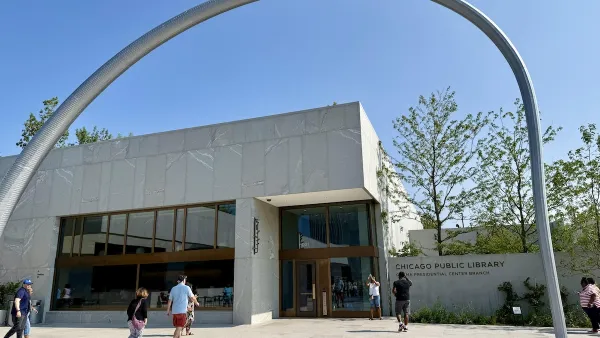
South Chicago development proposal would 'upzone' neighborhoods to increase density
The South Chicago Land Use Framework plan also aims to promote pedestrian and transit-oriented developments.
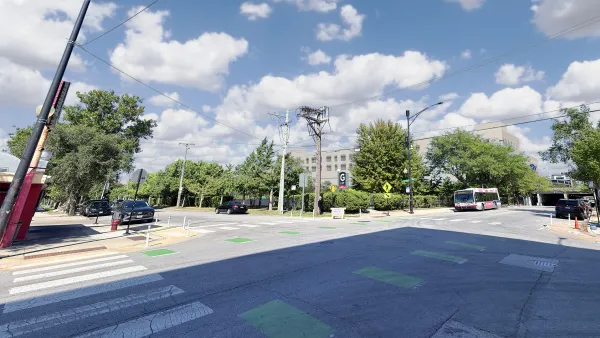
A ‘shady’ deal: Chicagoans rally against planned Amtrak maintenance facility
The $900 million facility would allow Amtrak to maintain entire trains in one building, which the company says will reduce delays.
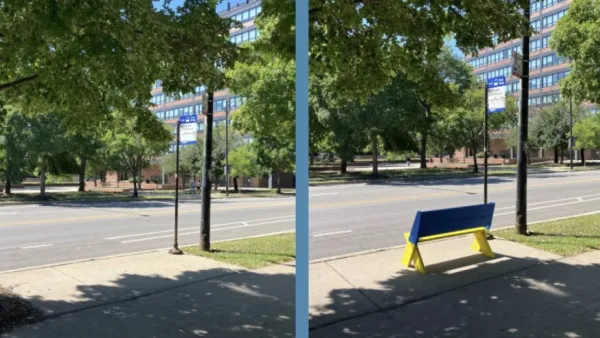
Guerilla urbanists are building DIY bus stop benches in Chicago
The new benches are not officially sanctioned or permitted, but the residents who placed them hope they will be the start of a network of DIY benches across the city.

Planetizen Federal Action Tracker
A weekly monitor of how Trump’s orders and actions are impacting planners and planning in America.

Amtrak, CN end decades-long dispute with eight-year agreement
The new operating agreement establishes an updated framework for the companies to work together, including processes to resolve disputes.

Judges permit Denver to divert 77,000 acre feet from the Colorado River for reservoir expansion
Overuse and climate change have caused the Colorado River’s water levels to plummet.

Atlanta City Council unanimously backs $3.5 billion Beltline light rail project
The resolution was drafted after Atlanta Mayor Andre Dickens pulled support for the Atlanta Streetcar extension last year.

SEPTA to bring nearby frequent transit to over 1 million new riders as part of decade-long plan
The agency's Accelerate plan will also bring frequent transit to twice the amount of jobs that are currently located near it.

NYC plants over 18,000 trees, the most new foliage in a decade
Many of the trees were planted in communities vulnerable to extreme heat.

FREE Course: Walkable City 1: Why Walkability?
After describing his path towards focusing on walkability as the essence of good planning, Jeff Speck marches through his five principal reasons for making more walkable places.
Reinventing Malls: Planning Alchemy—Turning Gray Fields Into Gold
The course focuses on the opportunities and imperatives that shape reinvention of mall sites.

City of Wisconsin Rapids
Harvard University Graduate School of Design
KFH Group Inc.
The Architects Foundation
University of Cincinnati Online
The Pocatello Development Authority
The Urban Renewal Agency of the City of Pocatello