An annual highlight of the avant-garde architecture scene, each summer since 2000, the Serpentine Gallery in London commissions "a temporary pavilion from an architect who has not built in England before." Michael Webb looks at this year's version.


Coinciding with London's hosting of the Olympic Games, Serpentine curators selected Herzog & De Meuron and Ai Weiwei, designers of the centerpiece stadium for the 2008 Olympics in Beijing, to design this years iteration.
Envisioned as a "half sunken shelter, half archeological dig," the saucer-shaped pavilion incorporates traces from the prior eleven pavilions that occupied the site at the same time that it takes "a different approach from the signature statements favored by earlier architects."
"The current project is less dramatic than many of its predecessors," writes Webb, "but
it offers a deeply satisfying, haptic experience, recalling childhood
games beneath the dining table. Its apparent simplicity conceals the
complexity of the preparatory plans, in which the footprints of earlier
pavilions and their foundations were overlaid."
Read the full story: Dig It!
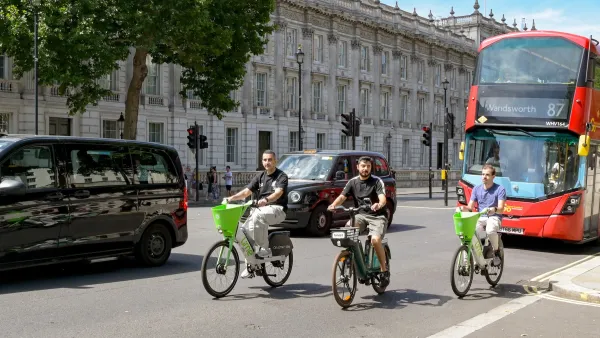
Bike use in London grew by 43% since 2019, but car use remains roughly the same
The city's efforts to reduce car use have stalled despite ambitious programs like congestion pricing and low-traffic neighborhoods.

Beavers save London Tube station from flooding
A small group of beavers is increasing biodiversity and creating cost-free flood mitigation infrastructure.
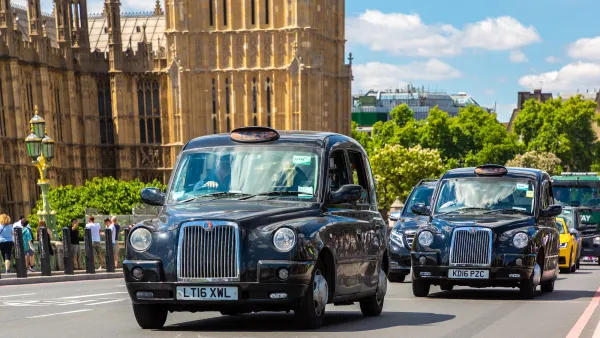
Can Robotaxis Handle London's Famously Tangled Streets?
Black Cab drivers say autonomous cars won’t be able to handle London’s unique conditions.

Planetizen Federal Action Tracker
A weekly monitor of how Trump’s orders and actions are impacting planners and planning in America.

Washington state to charge fee to drivers with fuel-efficient cars
Revenue from the fee will go towards supporting the state’s highways.

Trump to blast ‘hydrocarbon highway’ through ‘world’s longest art gallery’
Environmental and historic preservation groups are suing to stop the project.

Minnesota Gold Line extension now has launch date
Plans to extend the Gold Line have existed since 2025.

Data centers need power – lower income, rural residents pay the price
In 2025, data centers paid only 38% of the energy infrastructure costs linked to their growth, with households, especially rural and low-income residents, bearing the remaining burden.

MBTA Green Line project moved to next phrase of CIG program
The modernization effort will cost $4.08 billion.

FREE Course: Walkable City 1: Why Walkability?
After describing his path towards focusing on walkability as the essence of good planning, Jeff Speck marches through his five principal reasons for making more walkable places.
Reinventing Malls: Planning Alchemy—Turning Gray Fields Into Gold
The course focuses on the opportunities and imperatives that shape reinvention of mall sites.

City of Charlotte
City of Rosemead
Rutgers University, Edward J. Bloustein School of Planning and Public Policy
University of Michigan School for Environment and Sustainability (SEAS)
Hunter College, City University of New York (CUNY)
The Architects Foundation
University District Partnership