Anthony Flint reports on the actions of the American Legislative Exchange Council (ALEC), a conservative lobbying group that is working behind the scenes to weaken the power of local zoning restrictions.


Flint details a couple of examples whereby ALEC is attempting to insert language into bills that would undermine the power of local governments and planning departments to make restrictions on land use.
Writes Flint: "From a tactical point of view, the breadth and diversity of the assault on planning is impressive. All it would take is one state to pass the same language in the economic development bill in Massachusetts, or the rural counties model legislation, and ALEC and like-minded advocates would have themselves a high-profile test case, not to mention a full employment act for lawyers."
Flint also points to the Center for Public Integrity's website for more information on ALEC's activities.
Read the full story: The Secret Conservative War on Zoning

Advice on Responding To Tea Party Members Critical of Smart Growth
The year 2011 may be remembered by some as the year planners began fielding objections about smart growth from Tea Party supporters. Nathan Norris offers his four-step process for responding.
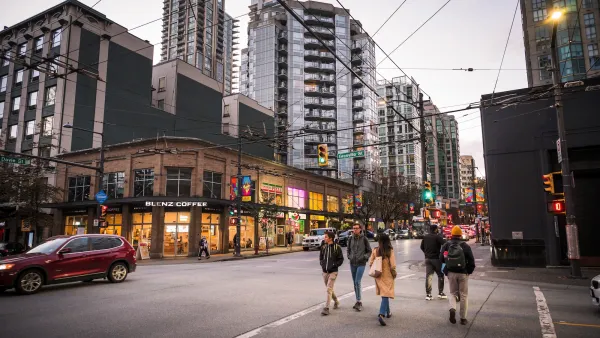
To upzone or not to upzone? Two views on the housing crisis
Allowing more density can increase the housing supply, but does the attendant rise in land prices cancel out the benefits?
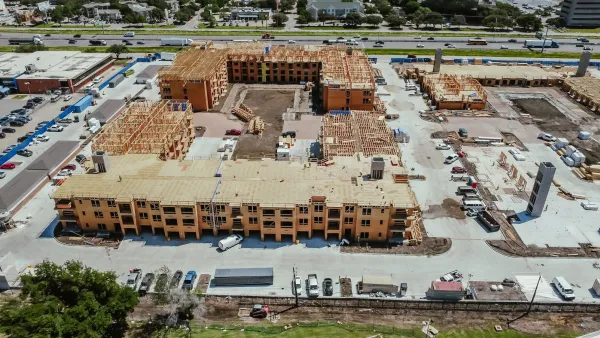
Controversial Texas housing law has 'directly facilitated' over 1,250 new homes
SB 840 allows developers to build multifamily housing by-right on lots zoned for commercial use without applying to a zoning change.

Planetizen Federal Action Tracker
A weekly monitor of how Trump’s orders and actions are impacting planners and planning in America.

Amtrak, CN end decades-long dispute with eight-year agreement
The new operating agreement establishes an updated framework for the companies to work together, including processes to resolve disputes.

Judges permit Denver to divert 77,000 acre feet from the Colorado River for reservoir expansion
Overuse and climate change have caused the Colorado River’s water levels to plummet.

Boston has spent millions making the Green Line more accessible — and there’s no end in sight
While the city has invested millions into expanding and adding platforms to the Green Line to make it more accessible, new train cars set to arrive next year will be too tall for disabled passengers to board without raising the current platforms.

Idaho may see an 18% drop in federal surface transit funding — the largest estimated cut in the US
Transit systems in rural communities are much more reliant on federal funding to provide their services.

How ‘post-disaster gentrification’ alters neighborhoods after natural calamities
After hurricanes, fires or other calamities, the original residents of a community are often replaced by younger, wealthier residents.

FREE Course: Walkable City 1: Why Walkability?
After describing his path towards focusing on walkability as the essence of good planning, Jeff Speck marches through his five principal reasons for making more walkable places.
Reinventing Malls: Planning Alchemy—Turning Gray Fields Into Gold
The course focuses on the opportunities and imperatives that shape reinvention of mall sites.

City of Wisconsin Rapids
Harvard University Graduate School of Design
KFH Group Inc.
The Architects Foundation
University of Cincinnati Online
The Pocatello Development Authority
The Urban Renewal Agency of the City of Pocatello