Bridget Moriarity profiles a public-private partnership that is working to bring increased density and walkability deep in the heart of Texas.


Financed in part by the Downtown Tax Increment Financing District (TIF), Sundance Square is "a roughly 35-block collection of shops, restaurants
and entertainment venues layered with office space and residences" that has dramatically changed downtown Fort Worth from "a sea of surface parking lots and abandoned buildings in the 1970s, to today's vibrant, walkable streetscape."
Just this month, oil industry billionaire Edward Bass broke ground on several new projects that promise to continue the evolution of the area, which has been guided by 1988's 150-block master plan, and helped along by stragetic public subsidies.
"Creative financing isn't the only thing that sets Sundance Square
apart. Unlike most development in car-centric Fort Worth, Bass isn't
kowtowing to that motorized god of the Texas landscape - the new
pedestrian plaza will replace two surface parking lots."
"Despite the grumbles from car-loving neighbors, Hoss
is proud of the vote in support of a more pedestrian-friendly
environment. 'I think the trend is moving in this direction,' he said. 'Fort Worth is probably ahead of the curve.'"
Read the full story: Sundance’s Stomping Grounds Get TIF’d
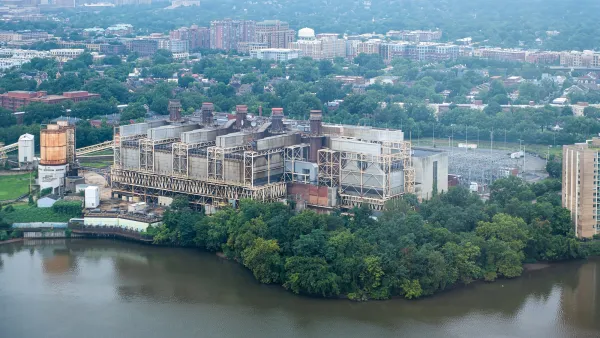
Former power plant in Alexandria to become walkable waterfront neighborhood with 800 homes
The Potomac River Generating Station was once the biggest source of air pollution in northern Virginia.
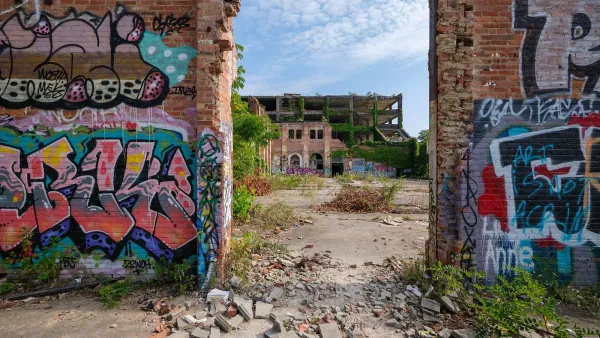
Cleveland announces new Midline industrial investment district
The plan calls for at least 1.5 million square feet of new industrial and commercial space alongside housing.
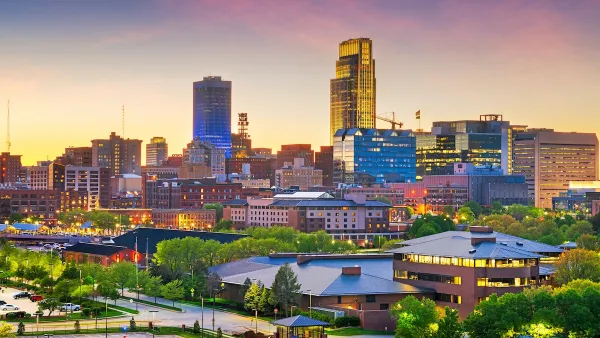
Omaha Mayor’s Proposal Would Build 1,900 New Housing Units Along Streetcar Line
Mayor Ewing introduced a new plan that would allow the city to begin distributing affordable housing financing as early as next year.

Planetizen Federal Action Tracker
A weekly monitor of how Trump’s orders and actions are impacting planners and planning in America.

California plans to bury El Niño’s downpour
If the state plays its cards right, it may be able to store a billion acre-feet of El Niño’s water in aquifers.

Desperate measures: Advocates weigh draining Lake Powell to fill Colorado River
Draining the reservoir could reduce evaporation losses by a couple hundred thousand acre-feet.

Housing is the top priority of Seattle’s sole new councilmember
Jenks campaigned on building 1,000 new units of affordable housing.

New tax cuts may slash $1.5 billion in funding for Miami transit, public parks
Amendment 3 will save Miami-Dade homeowners $2,700 in 2028.

Arizona, Wisconsin, Pennsylvania hope to finally advance climate goals post-midterms
The three states have spent years under Republican or divided control.

FREE Course: Walkable City 1: Why Walkability?
After describing his path towards focusing on walkability as the essence of good planning, Jeff Speck marches through his five principal reasons for making more walkable places.
Reinventing Malls: Planning Alchemy—Turning Gray Fields Into Gold
The course focuses on the opportunities and imperatives that shape reinvention of mall sites.

City of Rosemead
Rutgers University, Edward J. Bloustein School of Planning and Public Policy
One Hundred Miles
University of Michigan School for Environment and Sustainability (SEAS)
Hunter College, City University of New York (CUNY)
The Architects Foundation
City of Cambridge
Montrose County
The Pocatello Development Authority