William Booth reports on the improbable growth of bike culture in a city long known for its choking air and anarchic traffic.


Booth gives credit for helping to ignite bicycle fever in Mexico City to its lefty Mayor Marcelo Ebrard who, five years ago, began a program of Sunday morning rides -- known as Muevete en Bici -- in which "city hall shuts major throughways to auto traffic and gives the right of way to tens of thousands of cyclists (and a bunch of rollerbladers and joggers and dogs, too) who wend their way down grand commercial avenues and hard-bitten byways in a leisurely 14-mile loop."
According to Booth, "It is good exercise, and good politics, with a bit of social engineering. Ebrard's idea is that if you want bike lanes, you need constituents, stakeholders, and so the Sunday rides offer a taste, a free sample, to change people's thinking about getting around on two wheels."
The Sunday rides are not a one-off effort in changing the city's culture, however. "The mayor followed the Sunday rides with the city's Ecobici program in 2010, which offers 26,000 active subscribers unlimited access to 1,200 bicycles at 90 stations for $25 a year," and will expand this year to 4,000 bicycles.
Read the full story: Mexicans try two wheels to beat car culture
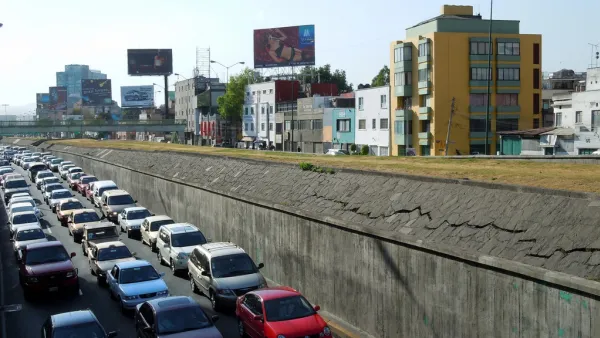
How Mexico City Went From Commuter Hell to Paradise in Two Years
Mexico City's emergence as a "commuter's paradise" due to a focus on people and places, rather than cars and driving, has earned the city this year's Sustainable Transport Award from the Institute for Transportation and Development Policy (ITDP).
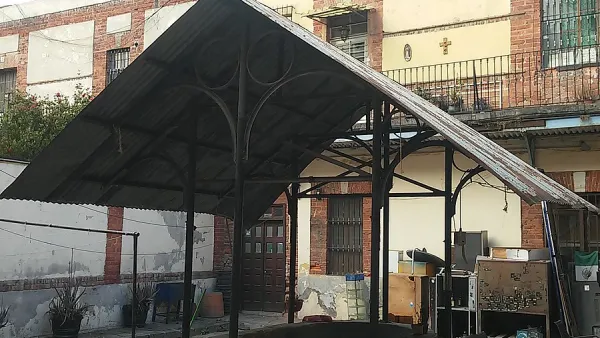
Vecindades: Mexico City's Answer to 'Missing Middle Housing'
An iconic multifamily housing form repurposes the former homes of Mexico's elite into communal housing for urban workers.
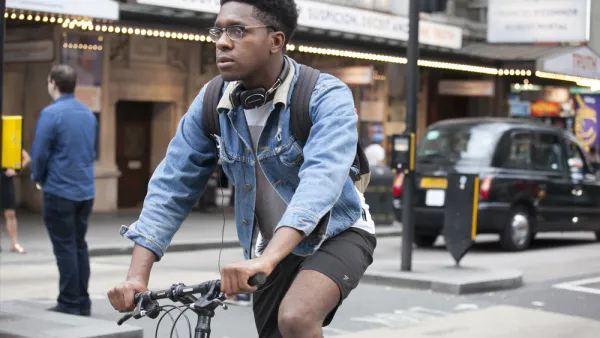
The Diversity of Biking in Art and Culture
Bikes are an important part of many people’s lives, and fostering a world where cycling has a place involves recognizing this diversity of experience.

Planetizen Federal Action Tracker
A weekly monitor of how Trump’s orders and actions are impacting planners and planning in America.

California plans to bury El Niño’s downpour
If the state plays its cards right, it may be able to store a billion acre-feet of El Niño’s water in aquifers.

Desperate measures: Advocates weigh draining Lake Powell to fill Colorado River
Draining the reservoir could reduce evaporation losses by a couple hundred thousand acre-feet.

Los Angeles just elected an urban planner as its mayor
Transportation analysts are optimistic that Raman will be more aggressive in addressing transit issues than Bass.

Mamdani’s pied-à-terre tax survives legal challenge
A panel of judges found that the plaintiffs failed to demonstrate injury as a result of New York City's implementation of the tax.

Eastern Nebraska is running out of electricity
Data centers and electrification are straining eastern Nebraska’s grid, throttling economic development.

FREE Course: Walkable City 1: Why Walkability?
After describing his path towards focusing on walkability as the essence of good planning, Jeff Speck marches through his five principal reasons for making more walkable places.
Reinventing Malls: Planning Alchemy—Turning Gray Fields Into Gold
The course focuses on the opportunities and imperatives that shape reinvention of mall sites.

City of Rosemead
Rutgers University, Edward J. Bloustein School of Planning and Public Policy
One Hundred Miles
University of Michigan School for Environment and Sustainability (SEAS)
Hunter College, City University of New York (CUNY)
The Architects Foundation
City of Cambridge
Montrose County
The Pocatello Development Authority