Benita Hussain describes an innovative architecture project serving Rwandan women in their quest to rebuild the country.


A collaboration between Women for Women International, a D.C. based NGO, and New York architecture firm Sharon Davis Design, will result in an award winning facility, scheduled to open next year, for Rwandan women. The design and execution of the Women's Opportunity Center has taken on a holistic approach. The facility itself will incorporate sustainable elements such as leaf shaped roofs for rainwater collection, which will serve utilitarian, as well as, educational purposes. Other features are designed to nurture relationships and open dialogue. For example, classroom spaces are rounded and will lack the traditional row seating that lends itself to a hierarchic environment.
The Women's Opportunity Center is not waiting until the doors open to create economic opportunities for Rwandan women, however. Project manager, Bruce Engel, wanted to involve women in the creation of the center and found the ideal opportunity when the team discovered the poor quality of bricks traditionally used in the region. Engel describes the rationale behind his idea:
"Then we thought, 'How about we combine our desire to make a better brick, the desire to have the women more involved in their own center, and WfW's mission for job creation and income generation?'"
The resulting cooperative of 30 women produces 20,000 sand-molded bricks per week and will soon have enough to build the Women's Opportunity Center. Once the bricks for the Center are finished the cooperative hopes to continue to sell bricks to Rwandan developers.
Thanks to Jessica Brent
Read the full story: Building a Future for Rwandan Women, Brick by Brick

How urban design makes the world unsafe for women — and how we can change that
An industrial designer explains how cities, cars and other everyday items could better serve women.
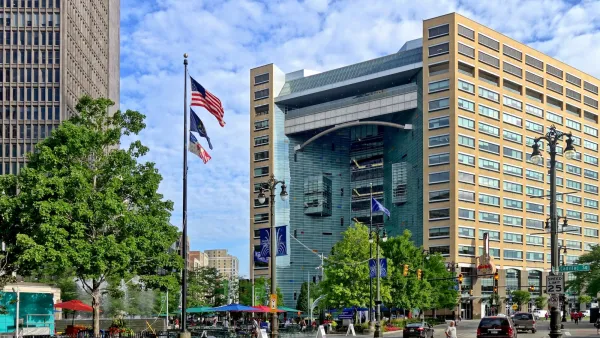
The nation's 10 'stickiest' downtowns
How often do residents visit your downtown?
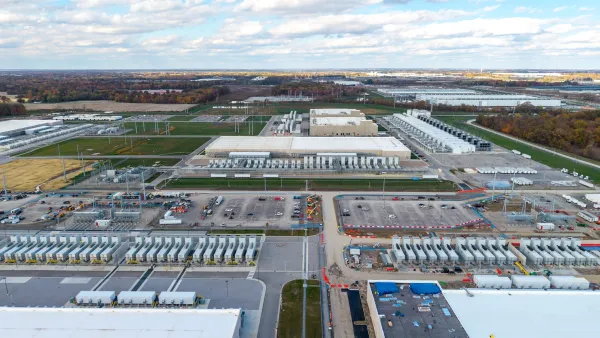
After the servers go dark
The rise and fall of communities with decommissioned nuclear facilities hold critical lessons for those considering hosting data centers.

Desperate measures: Advocates weigh draining Lake Powell to fill Colorado River
Draining the reservoir could reduce evaporation losses by a couple hundred thousand acre-feet.

Eastern Nebraska is running out of electricity
Data centers and electrification are straining eastern Nebraska’s grid, throttling economic development.

Malls are becoming the midtowns of the future
Mall and office park redevelopments are a generational opportunity to create new nodes of urbanity.

NYC breaks ground on anti-flooding infrastructure project
New York City's new system will reduce stormwater flows to local sewers by 90%.

One Kentucky town’s secret to affordable housing
The Smoketown Community Land Trust has already built seven affordable homes for community members.

Houston gains petal-shaped cooling infrastructure to make streets more ‘delightful’
The city has installed the pavilions along 15 blocks in Houston.

FREE Course: Walkable City 1: Why Walkability?
After describing his path towards focusing on walkability as the essence of good planning, Jeff Speck marches through his five principal reasons for making more walkable places.
Reinventing Malls: Planning Alchemy—Turning Gray Fields Into Gold
The course focuses on the opportunities and imperatives that shape reinvention of mall sites.

City of Rosemead
Rutgers University, Edward J. Bloustein School of Planning and Public Policy
One Hundred Miles
University of Michigan School for Environment and Sustainability (SEAS)
Hunter College, City University of New York (CUNY)
The Architects Foundation
City of Cambridge
Montrose County
The Pocatello Development Authority