Richey Piiparinen examines the two, often antagonistic, worlds that he straddles as a mid-30′s native Rust Belt romantic, and finds fellowship with those in other legacy cities.


Piiparinen describes the two worlds of oldtimers and newcomers that he inhabits in Cleveland. Oldtimers (not necessarily old) were born and raised in the city, many have moved out to the suburbs and beyond, and can be found, "naysaying about how Cleveland has fallen (though they only knew it on its knees)." Newcomers are often transplants to the city, from diverse backgrounds, who "appreciate the city's past, especially it's built past" and find value in Cleveland's "tangibility and ruggedness in an age of sprawl, sanitization, and display."
As a Cleveland native and planning blogger, Piiparinen inhabits both of these worlds, but rarely sees them meet, and he observes similar phenomenon articulated in Pittsburgh and Cincinnati.
Although he initially intended only to document the divergence of these two worlds, he ends his column having reached a conclusion as which group suffers more from their distance: "the world of the indigenous Clevelander has been less a world than it has been a fish tank-and we have been suffocating in our exclusion of fresh air and ideas for too long."
Read the full story: The Tension Between Newcomers and Oldtimers in an Old City
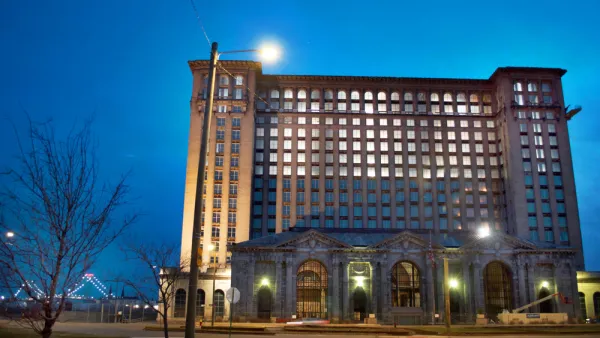
Economic Recovery in Legacy Cities
Americans living in legacy cities face a unique set of challenges and opportunities in recovering from the COVID-19 pandemic. Several local, state, and federal support strategies could aid these cities in recouping losses.
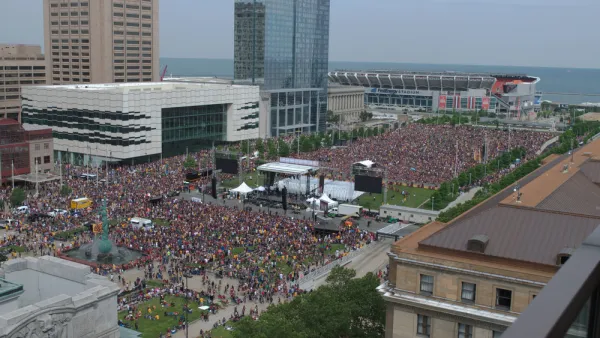
Op-Ed: It's Time to Rethink Cleveland's Strategy of Managed Decline
Cleveland is a thought leader in bulldozing houses, according to a recent op-ed on Cleveland.com, but it's time to imagine a new paradigm.
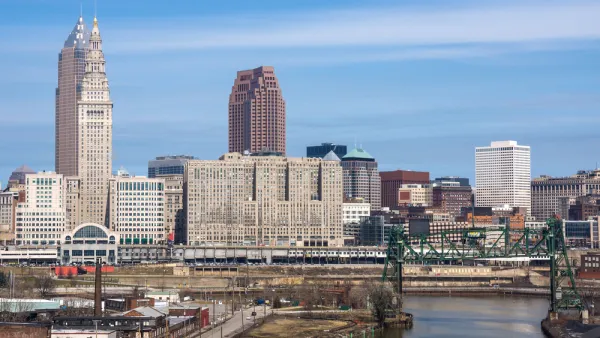
Watch the Documentary 'Cleveland: Confronting Decline in an American City'
In May, the documentary film "Cleveland: Confronting Decline in an American City" was made available in full on YouTube.

Washington state to charge fee to drivers with fuel-efficient cars
Revenue from the fee will go towards supporting the state’s highways.

Illinois considers spending $1 billion in taxpayer money on data center
A quantum computing campus and data center are currently under construction in Chicago.

Trump to blast ‘hydrocarbon highway’ through ‘world’s longest art gallery’
Environmental and historic preservation groups are suing to stop the project.

NYC, state sue feds over mixed-immigration-status housing assistance rule
The state’s lawsuit argues that the rule change violates the Administrative Procedure Act.

Michigan to turn neighborhood into virtual power plant
Residents will soon be able to divert their excess energy to the grid in exchange for compensation.

Data center, mining project swarm to long-awaited Alaska railroad line
The state-owned railroad approved final plans for the spur line this week; the project is expected to cost $311 million, mostly funded by the federal government

FREE Course: Walkable City 1: Why Walkability?
After describing his path towards focusing on walkability as the essence of good planning, Jeff Speck marches through his five principal reasons for making more walkable places.
Reinventing Malls: Planning Alchemy—Turning Gray Fields Into Gold
The course focuses on the opportunities and imperatives that shape reinvention of mall sites.

City of Charlotte
City of Rosemead
Rutgers University, Edward J. Bloustein School of Planning and Public Policy
University of Michigan School for Environment and Sustainability (SEAS)
Hunter College, City University of New York (CUNY)
The Architects Foundation
University District Partnership