Katherine Fung pens a feature in The Architect's Newspaper on the recent wave of projects seeking to improve the way our waste management infrastructure looks and works.


Focusing on such projects as the Newtown Creek wastewater treatment plant and Sunset Park recycling facility in Brooklyn, and ecoparks and pneumatic tubes in Barcelona, Fung looks at the efforts of cities to, "modernize their current waste-management strategies with an eye to heightening design quality, sustainability, and accountability."
One fascinating system that Fung describes is the "Jetsons-like" network of underground pneumatic tubes Barcelona, and other cities to a more limited extent, use to collect garbage and convey it to collection plants.
"Residents and business owners deposit garbage into portholes on the street, and an underground network of pneumatic tubes whisks everything away to a collection plant. Organic waste gets diverted for conversion into biogas, which heats buildings while recyclables are picked up by truck."
In seven years, when the system in complete, it is expected to serve one-third of Barcelona.
Read the full story: Feature> The Art of Moving Trash

Pop Quiz: What's the Difference Between Aerobic Decomposition and Anaerobic Digestion?
Yes, one is with and the other without oxygen, and both divert waste from the landfill—but in terms of the end products, what is the advantage of anaerobic digestion? Simply put, does society face a shortage of compost or renewable energy?
The Best of the Vest: The World's Greatest Pocket Parks
Paris, Barcelona, New York City...Cleveland? Like the oft-hidden urban oasis that are the subject of this article, you may come across some surprises in Crai S. Bower's list of the best cities for pocket parks.
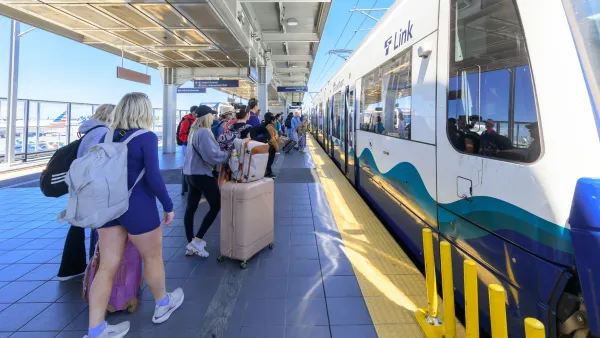
How Chicago, New York and Seattle are funding transit projects amid tough times
Notes from the American Public Transportation Association's TransForm conference in Chicago.

Planetizen Federal Action Tracker
A weekly monitor of how Trump’s orders and actions are impacting planners and planning in America.

California plans to bury El Niño’s downpour
If the state plays its cards right, it may be able to store a billion acre-feet of El Niño’s water in aquifers.

Chicago breaks ground on $3 billion megadevelopment
The new neighborhood, titled Foundry Park, will one day host 3,700 residences.

California High-Speed Rail Authority CEO resigns after $600,000 scandal
Under Ian Choudri, the authority used taxpayer dollars to fund first class flights and trips to nightclubs.

Want to study the Missouri River? Soon, you may need unanimous approval from 10 states
Legislation would require 10 governors’ permission to study or build projects moving water outside the basin.

Desperate measures: Advocates weigh draining Lake Powell to fill Colorado River
Draining the reservoir could reduce evaporation losses by a couple hundred thousand acre-feet.

FREE Course: Walkable City 1: Why Walkability?
After describing his path towards focusing on walkability as the essence of good planning, Jeff Speck marches through his five principal reasons for making more walkable places.
Reinventing Malls: Planning Alchemy—Turning Gray Fields Into Gold
The course focuses on the opportunities and imperatives that shape reinvention of mall sites.

City of Rosemead
Rutgers University, Edward J. Bloustein School of Planning and Public Policy
One Hundred Miles
Hunter College, City University of New York (CUNY)
The Architects Foundation
University of Cincinnati Online
City of Cambridge
Montrose County
The Pocatello Development Authority