President Obama's 25 year vision for a nationwide revolution in High Speed Rail is stuck in the station.


The benefits of such a network, which the President envisioned being accessible to 80% of Americans within 25 years are far-reaching: "A national high-speed rail network would not only support tens of thousands of construction and manufacturing jobs, but it would get Americans out of their cars, revitalize struggling downtowns, and spare the environment millions of tons of carbon emissions and travelers untold hours wasted in traffic or in airport terminals waiting out delays."
But according to Michael A. Fletcher, writing in the Washington Post, Obama's plans have been derailed by determined opponents, high costs, and a dubious public. "Virtually none of the projects has gotten off the ground, and the one that has is in trouble...So far, Obama has wagered more than $10 billion in federal money on high-speed rail, only to see his plans diminished, one after another. "
Read the full story: Plans for high-speed rail are slowing down

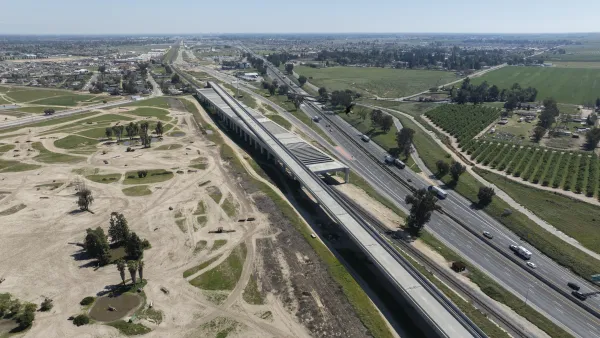
California High-Speed Rail Authority could be broke by the end of 2027
A report from the Office of Inspector General says the authority must borrow against state infusions to stay afloat.
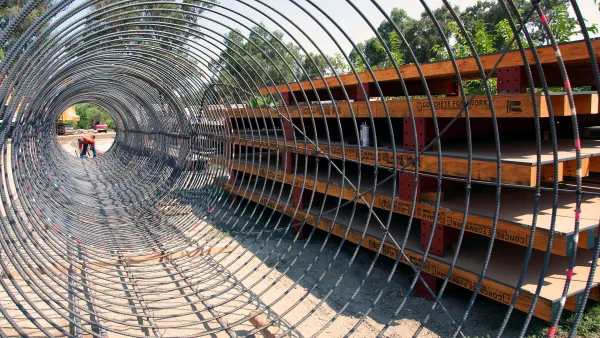
California High Speed Rail to lay first tracks
High Speed Rail Authority officials describe the milestone as "the moment this project truly begins to become a railroad."
TOD Opportunities Around America's First True High-Speed Rail Line
Brightline West hopes to break ground, in anticipation of a 2027 opening. Cities in the Inland Empire and High Desert areas of Southern California are looking to take advantage.

Planetizen Federal Action Tracker
A weekly monitor of how Trump’s orders and actions are impacting planners and planning in America.

Amtrak, CN end decades-long dispute with eight-year agreement
The new operating agreement establishes an updated framework for the companies to work together, including processes to resolve disputes.

Judges permit Denver to divert 77,000 acre feet from the Colorado River for reservoir expansion
Overuse and climate change have caused the Colorado River’s water levels to plummet.

Philadelphia to invest $2 billion into upgrading city airports as PHL places last in customer satisfaction
Modernizations to Philadelphia's airports will include baggage system upgrades and a new automated parking garage guidance system.

The LA housing policies making developers turn away from the city
Despite LA’s housing shortage, developers say the city’s "mansion-tax" and pandemic-era policies make it an unappealing place to build housing.

New density bill would require 7 California cities to establish regional transit hubs
The bill would also require major cities in California to permit high-rise residential buildings.

FREE Course: Walkable City 1: Why Walkability?
After describing his path towards focusing on walkability as the essence of good planning, Jeff Speck marches through his five principal reasons for making more walkable places.
Reinventing Malls: Planning Alchemy—Turning Gray Fields Into Gold
The course focuses on the opportunities and imperatives that shape reinvention of mall sites.

City of Wisconsin Rapids
Harvard University Graduate School of Design
KFH Group Inc.
The Architects Foundation
University of Cincinnati Online
The Pocatello Development Authority
The Urban Renewal Agency of the City of Pocatello