A new report from the UK's Met Office Hadley Centre for Climate Change offers specific impact projections for 24 countries. CNN offers a slide show of recent calamities.


According to Jan Corfee-Morlot, senior climate change analyst for the Organisation for Economic Co-operation and Development, "Recent risk studies from the OECD as well as the newly published data from the Met Office report predict that extreme 'once-in-a-lifetime' weather events such as flash floods and coastal hurricanes are going to become significantly more commonplace.
In America alone, New York, Miami, New Orleans -- these cities face terrible exposure to floods", writes George Webster writes for CNN.
"In America alone -- New York, Miami, New Orleans -- these cities face terrible exposure to floods, and unlike cities such as Rotterdam (in the Netherlands) -- they do not have the defenses to prevent them."
The UK's Met Office Hadley Centre studied 24 different countries, from developed to developing. It notes that all the countries in the study have warmed since the 1960s and that the occurrence of extremely warm temperatures has increased whilst extremely cold temperatures have become less frequent. If emissions are left unchecked, the report says temperatures would rise generally between three and five degrees Celsius this century. This could be accompanied by significant changes in rainfall patterns, leading in many cases to increased pressure on crop production, water stress and flood risks.
Among the key findings from the report: Eleven countries studied show an increase in the number of people at risk from coastal flooding due to sea level rise. By the end of the century, in the worst case scenario, up to about 49 million additional people could be at risk, with the majority being in Bangladesh, China, India, Egypt and Indonesia.
Read the full story: Floods, heat, migration: How extreme weather will transform cities

Extreme weather is weakening social connections
Extreme heat, flooding and other weather events are increasing isolation and fraying social ties.
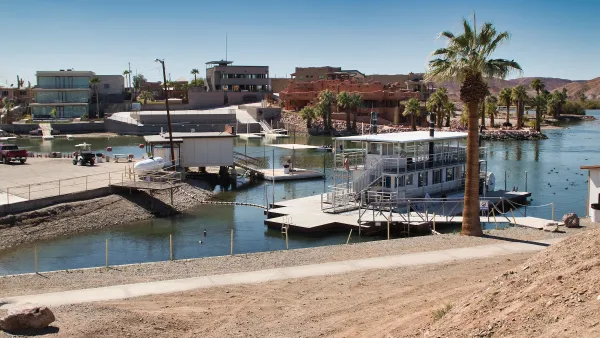
Arizona had its hottest spring in 131 years
Average March temperatures across the state were 12.5 degrees above normal.
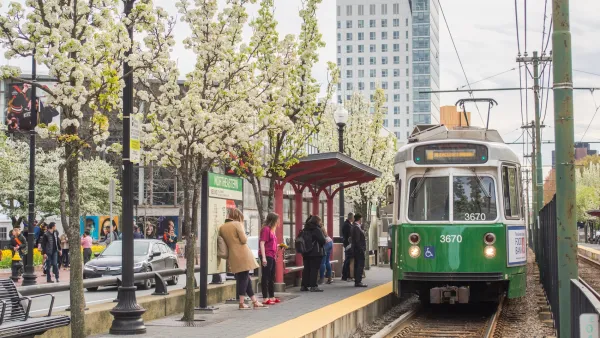
MBTA 'Resilience Roadmap' plans for climate change's impacts on transit infrastructure
The Massachusetts transit agency says its tunnels and power systems are at greatest risk from increasingly unpredictable extreme weather.

Desperate measures: Advocates weigh draining Lake Powell to fill Colorado River
Draining the reservoir could reduce evaporation losses by a couple hundred thousand acre-feet.

Eastern Nebraska is running out of electricity
Data centers and electrification are straining eastern Nebraska’s grid, throttling economic development.

Move over, LA: St. Louis gears up for Olympics, invests millions in downtown redevelopment
The Missouri city will host the 2028 Olympic soccer group stage and knockout matches.

Mass. votes against statewide minimum lot size for single-family homes
Over 2 million residents voted on Question 7; it was decided by just over 30,000 votes.

Maryland’s $15 billion bridge project gains key approval
The Maryland Transit Authority said the project will create over 60,000 jobs and add $23 billion to the local economy.

‘No clear next steps’ for Chicago's permanent festival grounds
Eleventh Ward Ald. Nicole Lee has suggested Soldier Field as a possible location for the permanent event space.

FREE Course: Walkable City 1: Why Walkability?
After describing his path towards focusing on walkability as the essence of good planning, Jeff Speck marches through his five principal reasons for making more walkable places.
Reinventing Malls: Planning Alchemy—Turning Gray Fields Into Gold
The course focuses on the opportunities and imperatives that shape reinvention of mall sites.

City of Rosemead
Rutgers University, Edward J. Bloustein School of Planning and Public Policy
One Hundred Miles
University of Michigan School for Environment and Sustainability (SEAS)
Hunter College, City University of New York (CUNY)
The Architects Foundation
City of Cambridge
Montrose County
The Pocatello Development Authority