Public participation is an important part of the urban planning process, says Michael Hooper, as "it improves project outcomes and the likelihood of project success." But lately, some prominent people are saying that it hinders the planning process.


There has always been an ongoing debate whether public participation is necessary in the planning field. Recent criticism against participation has come from prominent urbanists like Tom Campanella and Andrés Duany. They argue that it only slows down the planning process.
What is needed is a return to a time when decisions were made more quickly, Duany argues. He claims that "...basically, we can't get anything done." Campanella has said that "...just as China could use more of the American gavel of justice and democratic process, we could certainly use a bit more of that very effective Chinese sledgehammer."
Both have come to these conclusions by "focusing on the construction phase of projects – whether they are built and how quickly," said Hooper.
On the other hand, Hooper quotes folks who tout the benefits of participation, who say that it has "positive spillovers through fostering democratic norms and development of social capital, both of which are important societal objectives."
Read the full story: Public Participation: More than an “Orgy of Public Process”

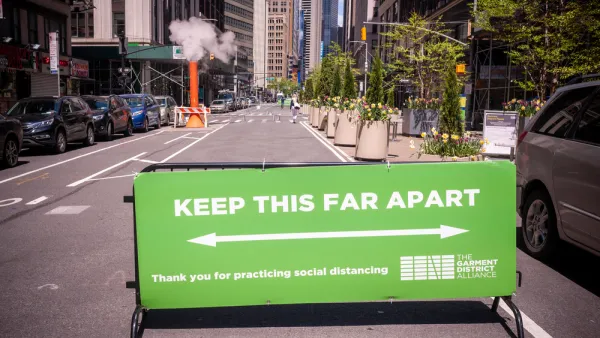
Pandemic Planning Must Reconcile With the Inequities of the Past
The ongoing debate about the role of marginalized communities in the emergency planning programs of the pandemic has now been detailed on the pages of the New York Times.
Chinatown Residents Create Their Own Plan to Prevent Displacement
In a city looking to land use regulations for answers to an affordable housing crisis, one collection of community groups attempted to create a plan of their own.
Can the Tea Party, Property Rights Activists, and Planners Find Common Ground?
Dr. Karen Trapenberg Frick suggests that in public participation processes, planners may find common ground with Tea Party and property rights activists.

Amtrak, CN end decades-long dispute with eight-year agreement
The new operating agreement establishes an updated framework for the companies to work together, including processes to resolve disputes.

Judges permit Denver to divert 77,000 acre feet from the Colorado River for reservoir expansion
Overuse and climate change have caused the Colorado River’s water levels to plummet.
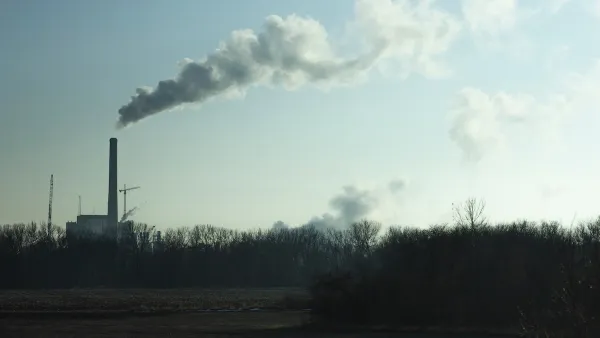
Nation's most wind-powered state turns to coal as data centers increase energy demand
For the first time in decades, Iowa has increased its generation of coal power.

Boston has spent millions making the Green Line more accessible — and there’s no end in sight
While the city has invested millions into expanding and adding platforms to the Green Line to make it more accessible, new train cars set to arrive next year will be too tall for disabled passengers to board without raising the current platforms.

Idaho may see an 18% drop in federal surface transit funding — the largest estimated cut in the US
Transit systems in rural communities are much more reliant on federal funding to provide their services.

How ‘post-disaster gentrification’ alters neighborhoods after natural calamities
After hurricanes, fires or other calamities, the original residents of a community are often replaced by younger, wealthier residents.

FREE Course: Walkable City 1: Why Walkability?
After describing his path towards focusing on walkability as the essence of good planning, Jeff Speck marches through his five principal reasons for making more walkable places.
Reinventing Malls: Planning Alchemy—Turning Gray Fields Into Gold
The course focuses on the opportunities and imperatives that shape reinvention of mall sites.

City of Wisconsin Rapids
Harvard University Graduate School of Design
KFH Group Inc.
The Architects Foundation
University of Cincinnati Online
The Pocatello Development Authority
The Urban Renewal Agency of the City of Pocatello