Republican Presidential candidate Herman Cain has been touting a plan where individuals, businesses and a national sales tax would all be 9%. Reporter Amanda Terkel says this sounds suspiciously similar to the default settings in SimCity.


Could Herman Cain's mysterious economic advisors behind the 9-9-9 plan actually be the simulated advisors of SimCity?

Terkel writes:
"Long before Cain was running for president and getting attention for his 999 plan, the residents of SimCity 4 -- which was released in 2003 -- were living under a system where the default tax rate was 9 percent for commercial taxes, 9 percent for industrial taxes and 9 percent for residential taxes."
Read the full story: Herman Cain 999 Plan: Did It Come From SimCity?

10 urbanist video games that aren’t Sim City
Sim City may have inspired an entire generation of urban planners — but these games have perfected the art of city-building simulation.

Who Wants to Play SimParkingLot?
The original urban planning game wanted to model real life cities. One grim reality of American urbanism held it back.
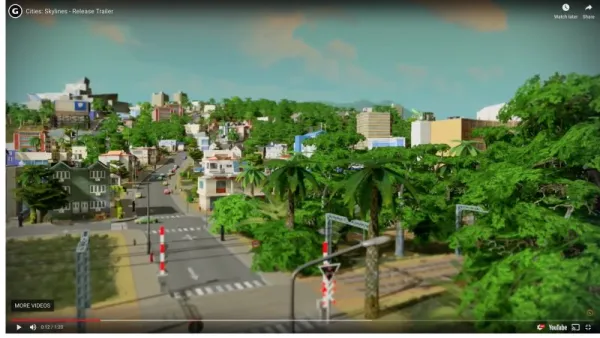
Cities: Skylines as an Urban Planning Tool
Computer simulations continue to play a novel and important role in urban planning, especially in finding new ways to engage the public and add some fun to the process of planning for the future of cities.

Planetizen Federal Action Tracker
A weekly monitor of how Trump’s orders and actions are impacting planners and planning in America.

California plans to bury El Niño’s downpour
If the state plays its cards right, it may be able to store a billion acre-feet of El Niño’s water in aquifers.

Desperate measures: Advocates weigh draining Lake Powell to fill Colorado River
Draining the reservoir could reduce evaporation losses by a couple hundred thousand acre-feet.

Los Angeles just elected an urban planner as its mayor
Transportation analysts are optimistic that Raman will be more aggressive in addressing transit issues than Bass.

Mamdani’s pied-à-terre tax survives legal challenge
A panel of judges found that the plaintiffs failed to demonstrate injury as a result of New York City's implementation of the tax.

Eastern Nebraska is running out of electricity
Data centers and electrification are straining eastern Nebraska’s grid, throttling economic development.

FREE Course: Walkable City 1: Why Walkability?
After describing his path towards focusing on walkability as the essence of good planning, Jeff Speck marches through his five principal reasons for making more walkable places.
Reinventing Malls: Planning Alchemy—Turning Gray Fields Into Gold
The course focuses on the opportunities and imperatives that shape reinvention of mall sites.

City of Rosemead
Rutgers University, Edward J. Bloustein School of Planning and Public Policy
One Hundred Miles
University of Michigan School for Environment and Sustainability (SEAS)
Hunter College, City University of New York (CUNY)
The Architects Foundation
City of Cambridge
Montrose County
The Pocatello Development Authority