Richard Florida ranks countries based on the proportion of workers in the 'creative class.' He ranks the U.S. 27th in the world, trailing a top ten including Singapore, the Netherlands, Australia, Germany and Switzerland.


Florida points out that a dramatic regional variance exists within the United States, noting that areas such as Silicon Valley and the D.C. metro area would rank among the top ten if counted alone. As part of the U.S.A., they serve only to highlight an enduring inequality.
"While I am not as pessimistic as the declinists-there is still time for the nation to reverse course-many of "the rest" have clearly caught up and jumped ahead on this score. Given the deep divides that vex this country, it may be an issue that is particularly difficult to address."
Read the full story: The World's Leading Creative Class Countries


Coronavirus Success Stories
While the U.S. leads the world in COVID-19 infections and deaths, a small group of nations defied the odds and has shown remarkable success in containing the coronavirus. NPR investigates what they share in common, with a focus on New Zealand.
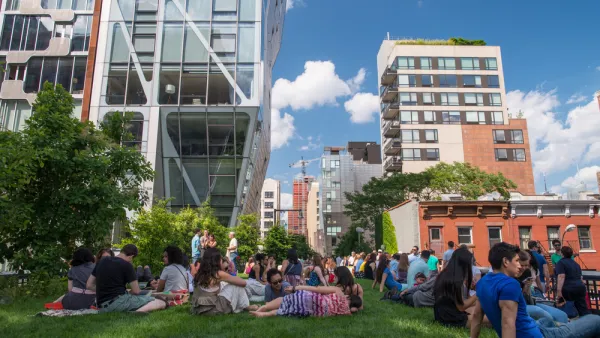
'The New Urban Crisis' and the High Line
A PBS NewsHour two-fer: an interview of urbanologist Richard Florida conducted in a walking tour of New York's famed High Line in the gentrifying West Chelsea neighborhood, a fitting backdrop for his new book, "The New Urban Crisis."
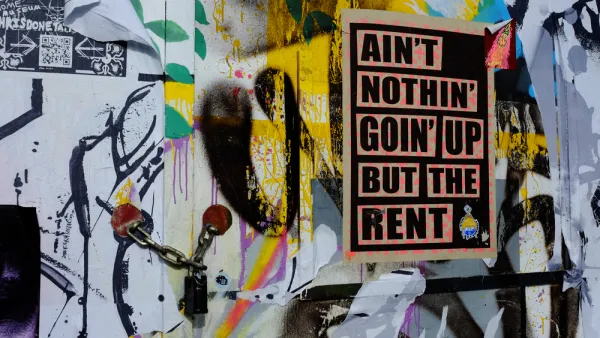
Florida, Florida, Florida
In his new book, Richard Florida worries about segregation and redefines "the creative class."

Planetizen Federal Action Tracker
A weekly monitor of how Trump’s orders and actions are impacting planners and planning in America.

Amtrak, CN end decades-long dispute with eight-year agreement
The new operating agreement establishes an updated framework for the companies to work together, including processes to resolve disputes.

Judges permit Denver to divert 77,000 acre feet from the Colorado River for reservoir expansion
Overuse and climate change have caused the Colorado River’s water levels to plummet.

NYC DOT wants faster, more permanent street upgrades
The city is examining ways to build more concrete infrastructure without getting entangled in 'decades-long' projects.

'Something we’ve never seen before:' rising utility rates could strain city finances nationwide
Data centers, climate change and other factors have caused utility rates in the United States to increase by 38% since 2020.

Trump to overrule local leaders, lease millions of acres of America’s Pacific Island territories’ seafloors to mining companies
International law says that the Indigenous people of America’s territories have a right to prior and informed consent regarding projects that impact their countries.

FREE Course: Walkable City 1: Why Walkability?
After describing his path towards focusing on walkability as the essence of good planning, Jeff Speck marches through his five principal reasons for making more walkable places.
Reinventing Malls: Planning Alchemy—Turning Gray Fields Into Gold
The course focuses on the opportunities and imperatives that shape reinvention of mall sites.

Harvard University Graduate School of Design
KFH Group Inc.
Greater Baltimore Committee
The Architects Foundation
University of Cincinnati Online
The Pocatello Development Authority
The Urban Renewal Agency of the City of Pocatello