In downtown Vancouver, where bike lanes have replaced parking spots on some strips, shop owners have complained that they are bad for business. A new study disproves the theory - kinda.


The Business Impact Study was apparently too "flimsy" to stand up to scrutiny, and left both sides confused, writes Don Cayo:
"I think the blame for the report's inadequacies falls squarely on the shoulders of the very businesses that purport - not very credibly under the circumstances - to be suffering losses as a result of the bike lanes."
Cayo says that business owners refused to provide data to the researchers:
"Of the 225 businesses on the streets involved, only four ever provided any detailed information.
So the report's authors had to struggle to find something authoritative-sounding to write down."
Read the full story: Case against bike lanes has not been made

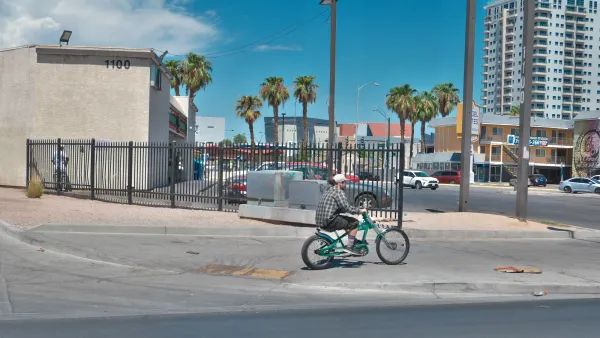
Las Vegas is building its first protected bike lane
The new lane connects Henderson and the Las Vegas Raiders headquarters via Starr Avenue.

Nashville installs concrete barriers to protect bike lanes
The new 'Toronto barriers' provide a physical buffer between cars and bike lanes.
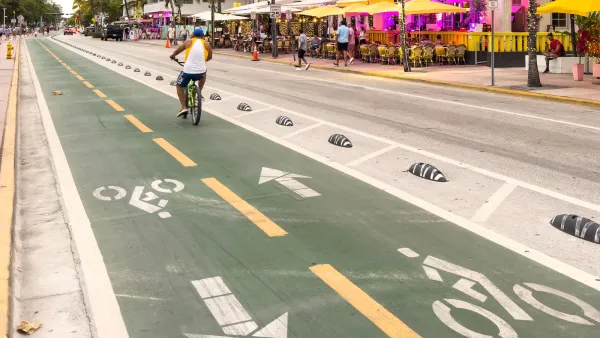
FHWA removes bike lanes and speed cameras from list of traffic safety measures
The agency did not announce its intention to eliminate five proven safety measures from its list of suggested interventions.

Planetizen Federal Action Tracker
A weekly monitor of how Trump’s orders and actions are impacting planners and planning in America.

Amtrak, CN end decades-long dispute with eight-year agreement
The new operating agreement establishes an updated framework for the companies to work together, including processes to resolve disputes.
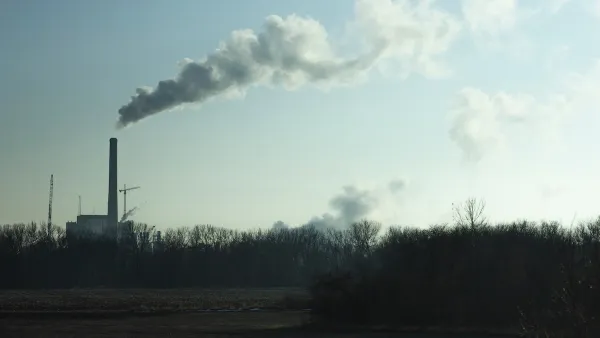
Nation's most wind-powered state turns to coal as data centers increase energy demand
For the first time in decades, Iowa has increased its generation of coal power.

Alabama scores up to $2.5 billion federal loan for largest infrastructure project in state’s history
The Mobile River Bridge and Bayway Project aims to ease congestion at Alabama’s worst bottleneck.

Trump is considering data centers on 6 states' public land — some state officials say they had no idea
If the administration approves the proposed projects, data center and data center-related developments will cover 17,600 acres of public land.

Despite court ruling, Trump is keeping nearly all wind projects in the US on hold
At least 110 wind energy projects have not heard from the government since a federal judge ruled that the Trump administration's freeze on wind turbine clearances was likely illegal.

FREE Course: Walkable City 1: Why Walkability?
After describing his path towards focusing on walkability as the essence of good planning, Jeff Speck marches through his five principal reasons for making more walkable places.
Reinventing Malls: Planning Alchemy—Turning Gray Fields Into Gold
The course focuses on the opportunities and imperatives that shape reinvention of mall sites.

KFH Group Inc.
Greater Baltimore Committee
Eagle County Government
The Architects Foundation
University of Cincinnati Online
The Pocatello Development Authority
The Urban Renewal Agency of the City of Pocatello