Want to speed up your transit? Follow San Francisco's lead and let your passengers enter any door they please, says Yonah Freemark. A pilot program on the J-Church line is testing out the idea.


The new policy is the result of recommendations from the Transit Effectiveness Project (TEP) tasked by MUNI to speed things up. As Freemark notes, the average MUNI boss or train travels at an astonishingly slow 8 miles per hour, so any action towards speeding things up is desperately needed:
"Those slow speeds are an impediment to easy mobility throughout the city and discourage people from taking advantage of transit.* The causes of the slow speeds are multifarious: The fact that most rail and bus corridors are shared with automobiles, the high density of stops, and, of course, the requirement to board up front. The result have been disappointing reliability statistics: Most services arrive at their destinations on time less than 80% of the time."
Freemark discusses the tools that allow all-door boarding to happen, like a universal fare card and card readers.
Read the full story: In San Francisco, All-Door Boarding Catches On

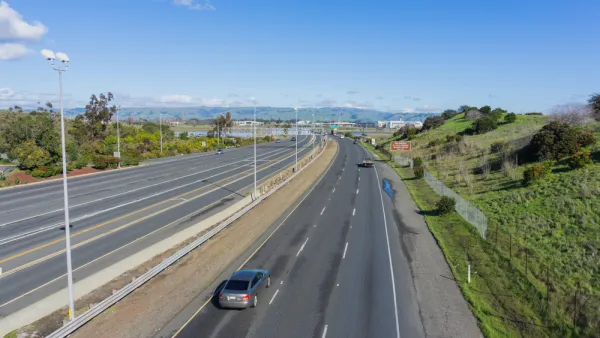
Infrastructure vs. Housing
Do shortages of infrastructure justify restrictive zoning?
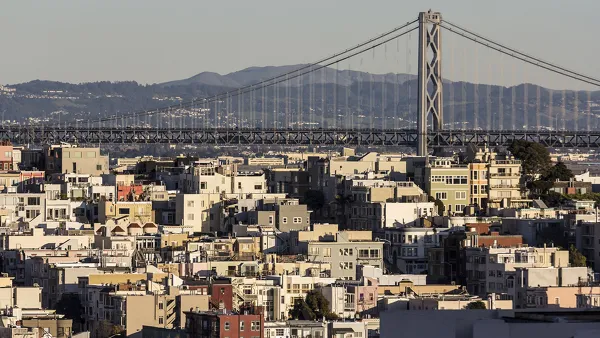
Bay Area Planners Acknowledge the Need for Regional Housing Solutions
While most Bay Area communities are pursuing housing solutions "individually," local planners acknowledge the need for strategies that address the regional as a unified whole.
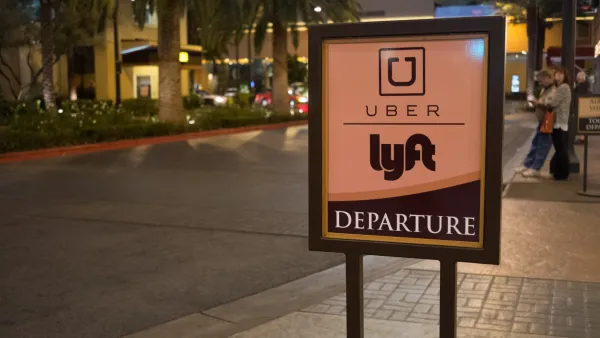
Driving Uber, Sleeping in Parking Lots
In San Francisco, many who drive for Uber sleep in parking lots and live elsewhere to avoid sky-high rents.

Planetizen Federal Action Tracker
A weekly monitor of how Trump’s orders and actions are impacting planners and planning in America.

Amtrak, CN end decades-long dispute with eight-year agreement
The new operating agreement establishes an updated framework for the companies to work together, including processes to resolve disputes.

Judges permit Denver to divert 77,000 acre feet from the Colorado River for reservoir expansion
Overuse and climate change have caused the Colorado River’s water levels to plummet.

NYC DOT wants faster, more permanent street upgrades
The city is examining ways to build more concrete infrastructure without getting entangled in 'decades-long' projects.

'Something we’ve never seen before:' rising utility rates could strain city finances nationwide
Data centers, climate change and other factors have caused utility rates in the United States to increase by 38% since 2020.

Trump to overrule local leaders, lease millions of acres of America’s Pacific Island territories’ seafloors to mining companies
International law says that the Indigenous people of America’s territories have a right to prior and informed consent regarding projects that impact their countries.

FREE Course: Walkable City 1: Why Walkability?
After describing his path towards focusing on walkability as the essence of good planning, Jeff Speck marches through his five principal reasons for making more walkable places.
Reinventing Malls: Planning Alchemy—Turning Gray Fields Into Gold
The course focuses on the opportunities and imperatives that shape reinvention of mall sites.

Harvard University Graduate School of Design
KFH Group Inc.
Greater Baltimore Committee
The Architects Foundation
University of Cincinnati Online
The Pocatello Development Authority
The Urban Renewal Agency of the City of Pocatello