Though population growth rates have slowed in cities and suburbs, their increasing interconnectedness has created sets of diverse metropolitan areas, according to the Brookings Institution's Alan Berube.


"This work is showing not only how our country's demographic dynamism confounds conventional wisdom about cities versus suburbs, but also how it complicates traditional notions of regional identity in America.
Indeed, we find that there's a new "metro map" of the nation that unites places not by their age or geographic proximity, but by their demographic similarities. These associations relate to three of the key dimensions of demographic transformation in metro areas-population growth, racial and ethnic change, and educational attainment. Through the lens of these metro areas, we identify seven distinct new demographic regions of the United States."
The new demographic regions include places with higher-than-average educational attainment, high rates of diversity, and places with lower-than-average shares of Hispanic or Asian populations.
Read the full story: The State of Metropolitan America: Suburbs and the 2010 Census


The Child Population in These Cities is Dropping Fast
Cities in the West are seeing sharp drops in their under-5 populations.

The Hollowing Out of Rural Georgia
America’s rural population is declining for the first time in history. In Georgia, it amounts to a demographic crisis.
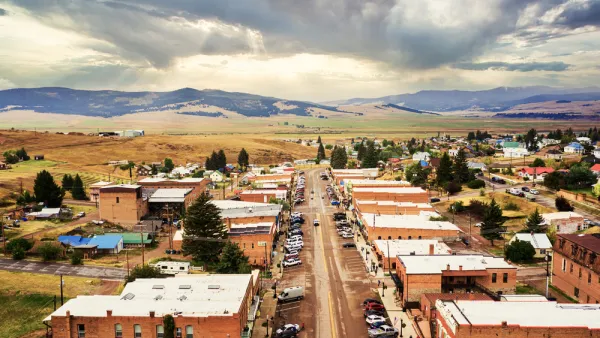
Rural Population Grew Again in 2024
Americans continued to move to smaller towns and cities, resulting in a fourth straight year of growth in rural areas.

Planetizen Federal Action Tracker
A weekly monitor of how Trump’s orders and actions are impacting planners and planning in America.

Amtrak, CN end decades-long dispute with eight-year agreement
The new operating agreement establishes an updated framework for the companies to work together, including processes to resolve disputes.

Northwest rail fans eager for Sept. 30 debut of Amtrak’s Airo fleet
Get ready for that new train smell and more seats. But they won’t go faster or run more frequently on the Cascades route in Washington and Oregon.

Brightline Florida files for bankruptcy
The transit company is over $5 billion in debt.

St. Louis Metro to test if single-car trains can reduce operating costs, maintain rider satisfaction
The pilot program will run from October to spring 2027, and begin with one single-car train operating on Metrolink’s Red and Blue lines.

Pennsylvania is building data centers in abandoned mines
Housing data centers in mines provides an alternative to destroying local forests and may spare residents from data centers’ noise and air pollution.

FREE Course: Walkable City 1: Why Walkability?
After describing his path towards focusing on walkability as the essence of good planning, Jeff Speck marches through his five principal reasons for making more walkable places.
Reinventing Malls: Planning Alchemy—Turning Gray Fields Into Gold
The course focuses on the opportunities and imperatives that shape reinvention of mall sites.

City of Thousand Oaks
City of Wisconsin Rapids
Harvard University Graduate School of Design
The Architects Foundation
University of Cincinnati Online
The Pocatello Development Authority
The Urban Renewal Agency of the City of Pocatello